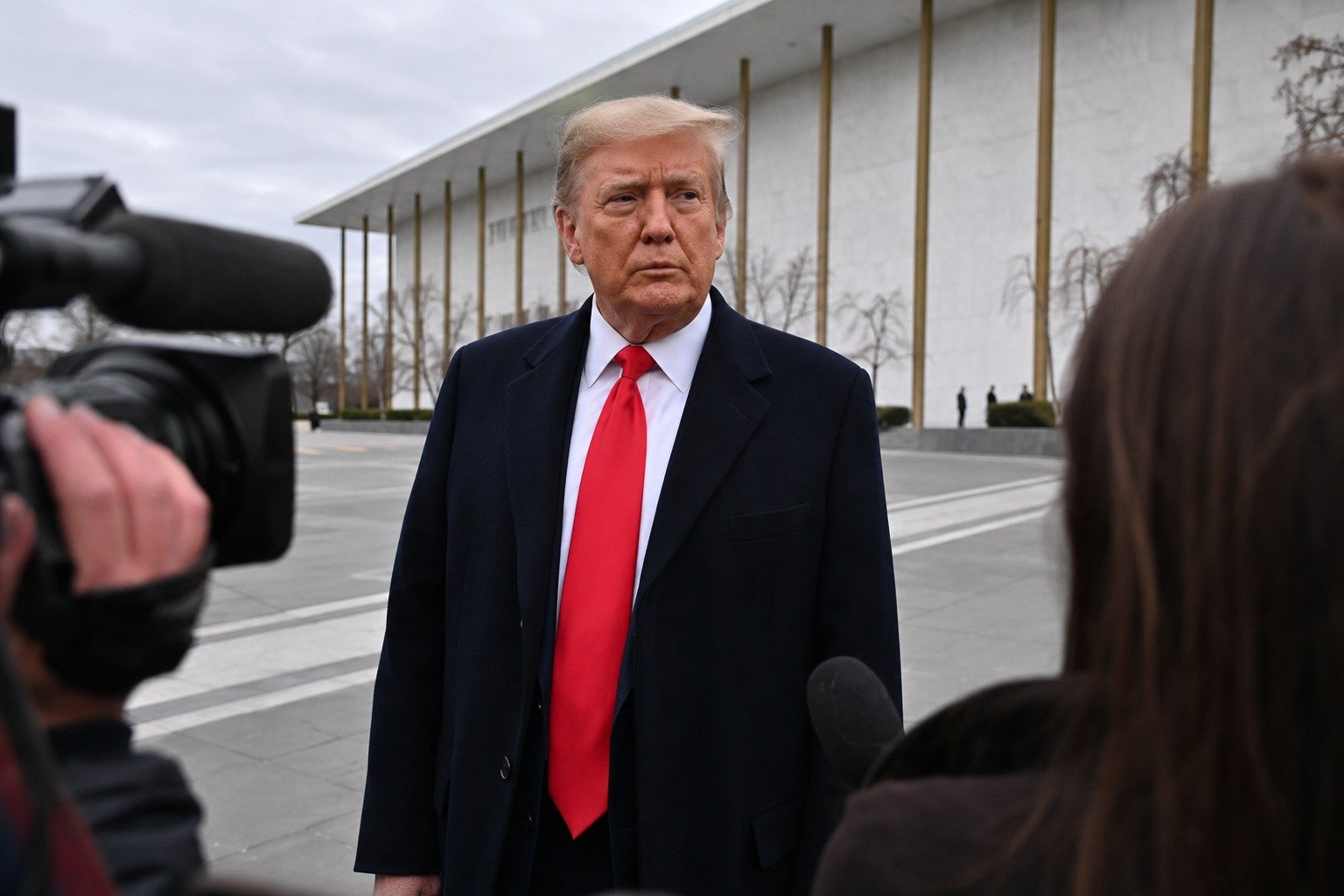
A federal judge has ordered President Donald Trump’s name removed from the John F. Kennedy Center for the Performing Arts, ruling that the center’s board never had the legal authority to rename the building on its own. U.S. District Judge Christopher Cooper issued the order on Friday, giving the administration 14 days to strip Trump’s name from the building and the center’s website.
Why This Ruling Matters
The Kennedy Center is not just any building. It is a national cultural institution created by an act of Congress and named to honor President John F. Kennedy. That detail sits at the heart of the case. When Congress establishes the name of a federal institution by statute, the question becomes whether anyone else has the power to change it — and the judge’s answer was a firm no.
Earlier this year, a reshaped board stacked with Trump appointees moved to rebrand the center and announced a sweeping two-year closure for renovations. Those moves set off a legal challenge that landed in front of Judge Cooper, who was asked to decide whether the board had overstepped its authority.
What the Judge Ruled
Cooper found that the board could not unilaterally rename the institution. He wrote that the Kennedy Center’s organic statute makes it “crystal clear” that the center is to be named for President Kennedy, and that it cannot bear any other formal name based on the board’s say-so alone. In short: only Congress, which named it, can rename it.
The order gives the administration two weeks to remove Trump’s name from both the physical building and the center’s official website. But the judge did not stop at the name. He also temporarily blocked the planned two-year shutdown that was slated to begin in July, sharply criticizing the board for what he described as an “ill-informed” and “seemingly preordained” decision to close the center without properly weighing its full responsibilities.
Reactions and What Comes Next
Trump responded to the ruling by saying he now has “no interest” in the Kennedy Center overhaul. Supporters of the renovation argue the aging building genuinely needs major repairs and that the closure was about preserving the facility for future generations. Critics counter that both the renaming and the shutdown were pushed through too quickly and without the legal authority to back them up — a view that, at least for now, a federal court shares.
The decision is temporary, meaning the legal fight is far from over. The administration could appeal, and the underlying questions about how much control a presidentially appointed board holds over a congressionally chartered institution may still play out in higher courts.
What This Means for Americans
At its core, this is a story about who gets to decide. The Kennedy Center belongs to the public, and the ruling reinforces a basic principle of how power is divided in Washington: when Congress sets something in law, a single board cannot simply rewrite it. For anyone who has visited the center or values it as a national landmark, the case is a reminder that even the most powerful offices operate within limits set by law.
Stay informed on the stories that matter most. Follow Your Daily Updates on Facebook and bookmark yourdailyupdates.news for breaking news and analysis.