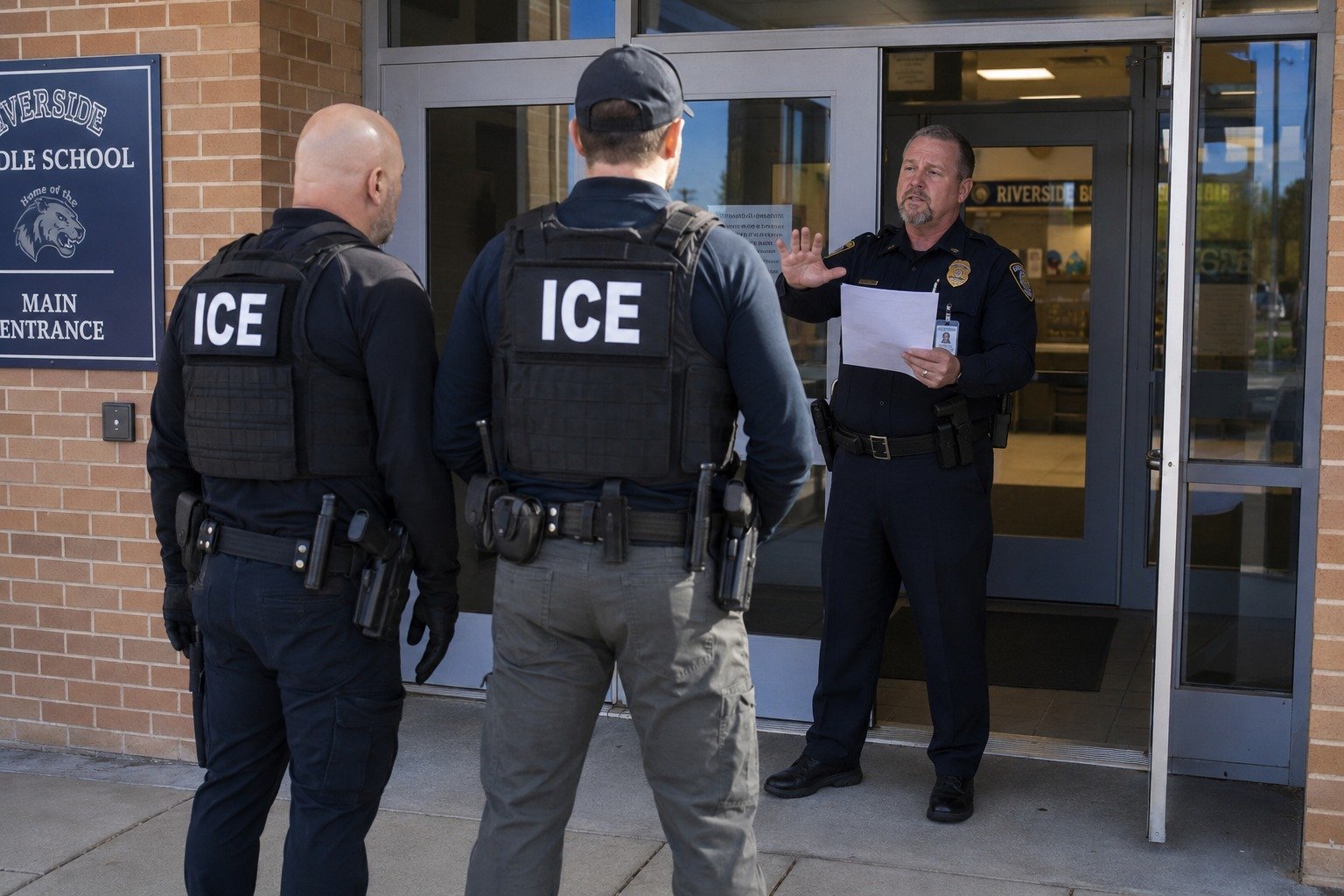
Connecticut just drew a hard line between immigration enforcement and what it calls “sensitive locations.” Governor Ned Lamont signed Senate Bill 397 into law in May 2026, making Connecticut one of just a handful of states in the country to legally restrict where federal ICE agents can make arrests — a move that has sparked immediate national debate about the balance between local authority and federal immigration law.
The law’s most significant provision prohibits ICE from conducting warrantless arrests inside schools, churches, hospitals, and courthouses. Under SB 397, agents cannot enter those locations to detain someone unless they possess a valid judicial warrant — a standard that immigration attorneys say is rarely met in typical enforcement operations. The warrantless arrest restriction is set to take effect in October 2026, giving state and local agencies several months to prepare for implementation.
But the legislation goes further than just limiting where ICE can operate. SB 397 gives Connecticut residents the legal right to sue if they believe their civil rights were violated during an immigration enforcement action. It also restricts how ICE can use license plate reader data collected in the state, creates a publicly accessible dashboard to track enforcement activity across Connecticut, and bans most officers from wearing masks during public-facing interactions. Supporters say each of these provisions addresses documented concerns about enforcement transparency and accountability.
Advocates for the legislation argue the law is about protecting vulnerable people who have real fears about accessing basic services. They say the goal is to ensure that families are not afraid to send their children to school, seek emergency medical care, or attend religious services out of fear that ICE agents might be waiting inside. Under existing federal guidance, “sensitive locations” have long been recognized informally — but Connecticut is among the first states to codify enforceable legal protections at the state level.
Critics, including several Republican state lawmakers and immigration enforcement advocates, argue that Connecticut is crossing a line by placing restrictions on federal law enforcement operations. They contend the state is deliberately obstructing the federal government’s ability to enforce immigration law and effectively creating sanctuary zones that allow people in the country illegally to evade accountability. Some have raised questions about whether state law can legally override federal authority in the realm of immigration enforcement — a question that courts may ultimately be asked to answer.
Connecticut joins a growing list of states — including California, Illinois, and New York — that have enacted laws limiting state and local cooperation with federal immigration enforcement. The signing of SB 397 comes amid heightened tensions between several blue states and the federal government over immigration policy, with legal battles playing out in courts across the country. Whether the federal government will challenge Connecticut’s new law in court, and how quickly such a challenge might come, remains an open question as the October effective date approaches.
The question now being asked in statehouses from coast to coast: will Connecticut’s approach — balancing community protection with federal enforcement realities — become a template for other states, or will federal legal action stop it before it can take effect?