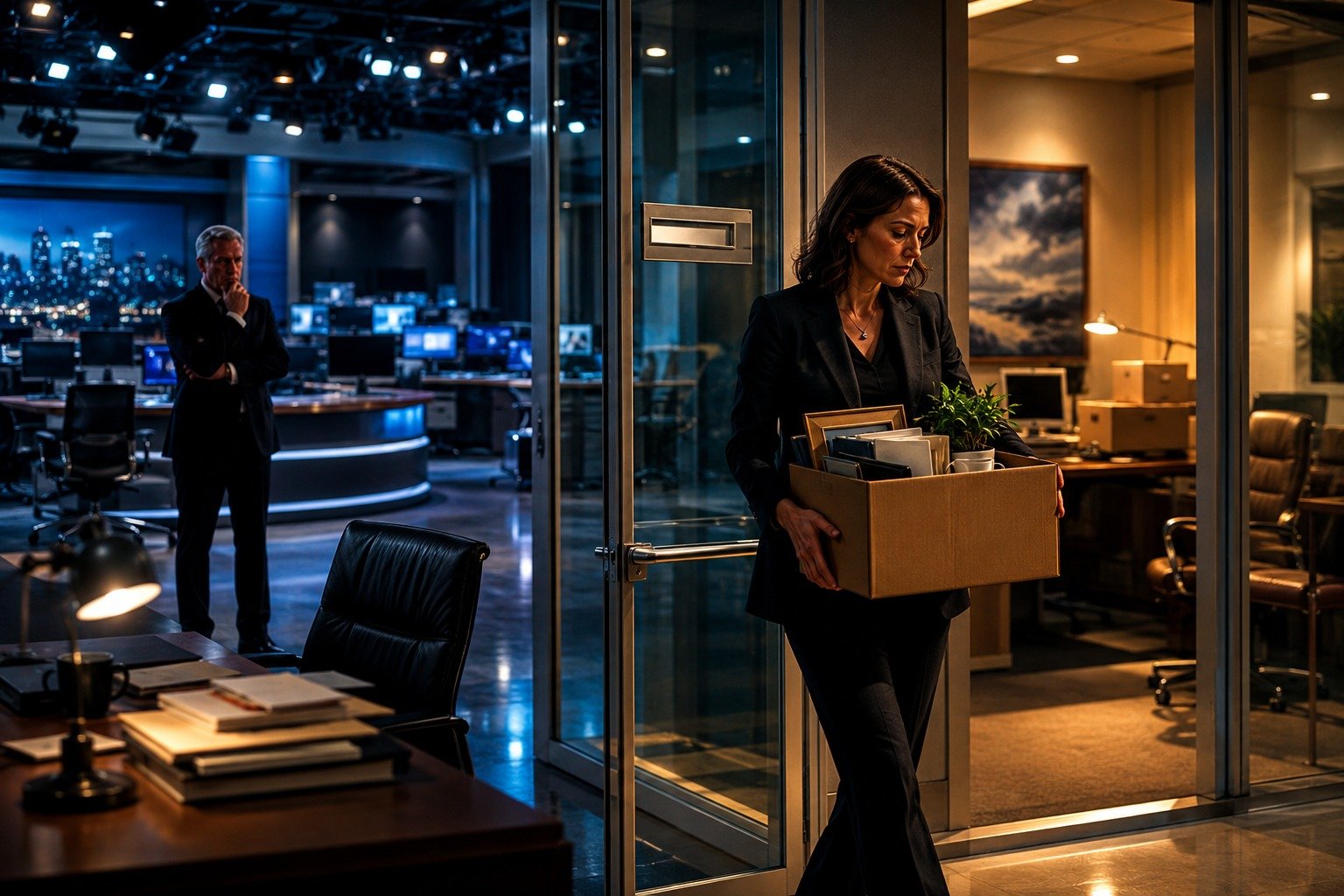
In one of the most sweeping single-day leadership shakeups in American broadcast history, CBS News Editor-in-Chief Bari Weiss ousted the top tier of 60 Minutes on Wednesday — firing the show’s executive producer, two veteran correspondents, and multiple senior producers in a move the network called a push toward “a new approach.”
What Happened
Executive Producer Tanya Simon was the highest-profile casualty. Simon had only been running the show for about a year, stepping into the role after three decades at CBS — but her time at the top was cut short as Weiss moved to reshape the program’s editorial direction. In her place, Weiss named Nick Bilton, a technology journalist and documentarian with no previous experience running a broadcast news program. The appointment signals a dramatic break from the show’s traditional culture.
Two of the program’s best-known correspondents were also shown the door. Sharyn Alfonsi, a 60 Minutes veteran, was fired following a months-long public feud with Weiss that began when a segment Alfonsi produced — about migrants held in a Salvadoran prison — was abruptly pulled from the December broadcast lineup by Weiss. The segment eventually aired a month later after considerable backlash, but the damage to the relationship was irreparable. Cecilia Vega, another prominent correspondent, was also let go. Executive Editor Draggan Mihailovich and Senior Producer Matthew Polvoy received pink slips in the same sweep.
The Memo and the Message
In a memo sent to staff, Weiss and CBS News President Tom Cibrowski framed the purge in corporate terms, saying their goal was “building a show that thrives in the 21st century.” The language of reinvention masked what critics immediately called a politically motivated gutting of one of television’s most trusted editorial teams. Weiss, who joined CBS News in a high-profile hire, has positioned herself as a disruptor of legacy media norms — and Wednesday’s firings were the most concrete demonstration of that agenda yet.
60 Minutes is not just a cultural institution — it is a financial one. The Sunday evening program generates roughly $206 million in advertising revenue annually and averages 9 million viewers per episode, making it one of the most profitable shows on American broadcast television. It has been on the air continuously since 1968, surviving wars, political scandals, media consolidation, and the rise of streaming. What it had never survived — until now — was a wholesale replacement of its senior editorial leadership in a single day.
The Reaction
Reaction in the media industry was swift and divided. Supporters of Weiss argued that legacy news organizations have been too slow to adapt to changing audience habits, and that bold leadership changes are necessary to prevent 60 Minutes from becoming irrelevant. Critics — including some current and former CBS staffers — called the firings a politically motivated purge designed to soften the show’s investigative edge and align it more favorably with the current political climate in Washington. The pulled Alfonsi segment, which dealt with a Trump administration immigration policy, became the flashpoint for that argument.
Bilton’s appointment drew particular scrutiny. While well-regarded as a technology writer and author, he has no experience managing a large broadcast news operation with multiple correspondents, producers, and a weekly live deadline. Critics questioned whether his selection was driven by editorial vision or by loyalty to Weiss’s broader agenda for CBS News.
What This Means
For viewers, the question is simple: will 60 Minutes still be 60 Minutes? The show built its reputation over nearly six decades on fearless investigative reporting — stories that held governments, corporations, and public figures accountable. If the new leadership team pulls its punches or steers the editorial calendar away from controversy, that legacy erodes quickly. Audiences who tune in expecting hard journalism may find something softer in its place. That’s the gamble Bari Weiss is making — and the result will play out on Sunday nights for millions of Americans who still trust the stopwatch.
Stay informed on the stories that matter most. Follow Your Daily Updates on Facebook and bookmark yourdailyupdates.news for breaking news and analysis.