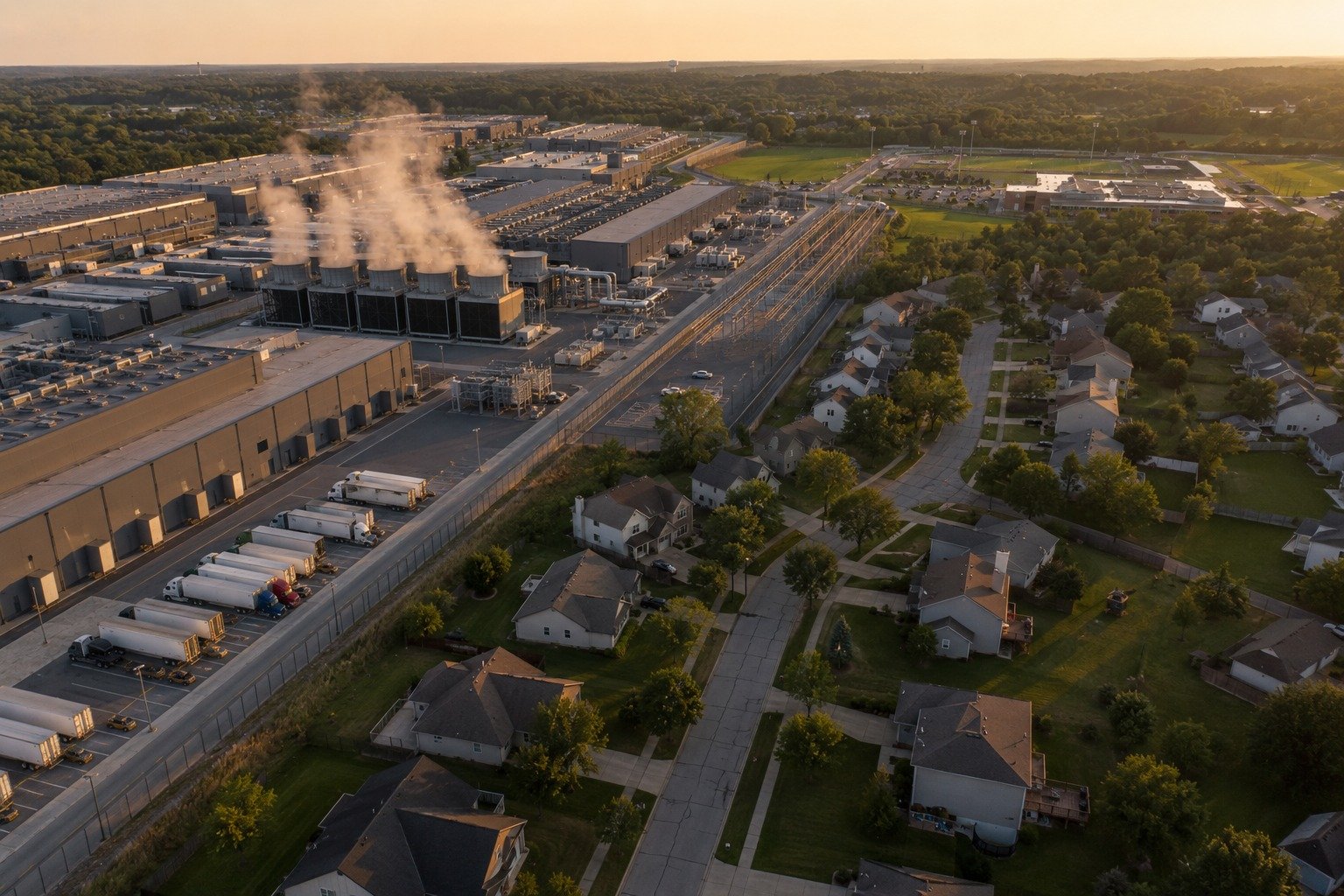
A new Gallup poll released in May 2026 delivers an unmistakable message to the companies racing to build artificial intelligence infrastructure across the United States: most Americans don’t want it in their backyards. According to the survey, conducted March 2–18, 2026, seven in ten U.S. adults — 71% — say they do not want an AI data center built anywhere near them. Nearly half, 48%, said they strongly oppose it.
A Rare Bipartisan Consensus
What makes this poll particularly striking is not just the scale of the opposition — it’s the political breadth of it. Opposition to AI data centers is one of the few issues cutting cleanly across the partisan divide in 2026. Democrats lead in opposition at 56%, but nearly half of independents (48%) and a significant share of Republicans (39%) also said they don’t want a data center near them. In a polarized era, that kind of cross-aisle agreement is rare — and politically consequential.
The Gallup poll, based on telephone interviews with a random sample of 1,000 adults across all 50 states and the District of Columbia, also produced one of its most unexpected findings: more Americans said they would rather live next to a nuclear power plant than an AI data center. That’s a stunning reversal for an industry that has spent years positioning artificial intelligence as a clean, safe, and economically beneficial technology.
What Americans Are Worried About
The opposition isn’t driven by vague technophobia. When Gallup asked those who opposed data centers why, they got specific answers. The top concern — cited by 50% of opponents — was the impact on local resources. AI data centers are among the most resource-intensive industrial facilities ever built. A single large facility can consume tens of millions of gallons of water annually for cooling, and can strain local power grids significantly, sometimes requiring dedicated substations or new transmission lines. For communities already dealing with drought conditions or aging electrical infrastructure, those demands are real and visible.
Quality-of-life concerns came in second at 22%, followed by worries about rising living costs (20%), pollution (16%), and economic impacts (14%). Another 14% simply cited a general negative view of artificial intelligence itself — a sign that public skepticism about the technology is no longer confined to academics and ethicists. Concerns about noise, truck traffic, industrial lighting, and the sheer physical footprint of these massive facilities are driving opposition in communities from rural Virginia to suburban Arizona.
The Trillion-Dollar Buildout vs. Public Pushback
The timing of this poll could not be more consequential. Tech giants including Microsoft, Google, Amazon, and Meta have collectively announced over a trillion dollars in AI infrastructure investment for the coming years. Data centers are being planned or constructed at a pace not seen since the early internet era. The Biden and Trump administrations have both framed this buildout as a national security and economic competitiveness imperative — essential to keeping the United States ahead of China in the global AI race.
But local resistance is mounting. Zoning battles over data center construction have erupted in communities across Virginia, Texas, Ohio, Iowa, and beyond. Some local governments have imposed moratoriums. Utility regulators in multiple states are scrutinizing the power demands of planned facilities. And now a major national poll is giving political voice to what many communities have been saying at town hall meetings: the benefits of the AI boom are flowing to shareholders in Silicon Valley, while the costs — water, power, noise, land — land on local residents.
What This Means for You
Whether you live near a planned AI facility or not, this poll matters for your electricity bill, your water supply, and your local economy. AI data centers are being sited in communities across the country, often with minimal public input. The Gallup findings suggest that if residents were given a real vote, the majority would say no — and that gap between corporate and governmental priorities on one hand, and public sentiment on the other, is exactly the kind of pressure that eventually moves policy. The question is whether Washington and state capitals are listening.
Stay informed on the stories that matter most. Follow Your Daily Updates on Facebook and bookmark yourdailyupdates.news for breaking news and analysis.