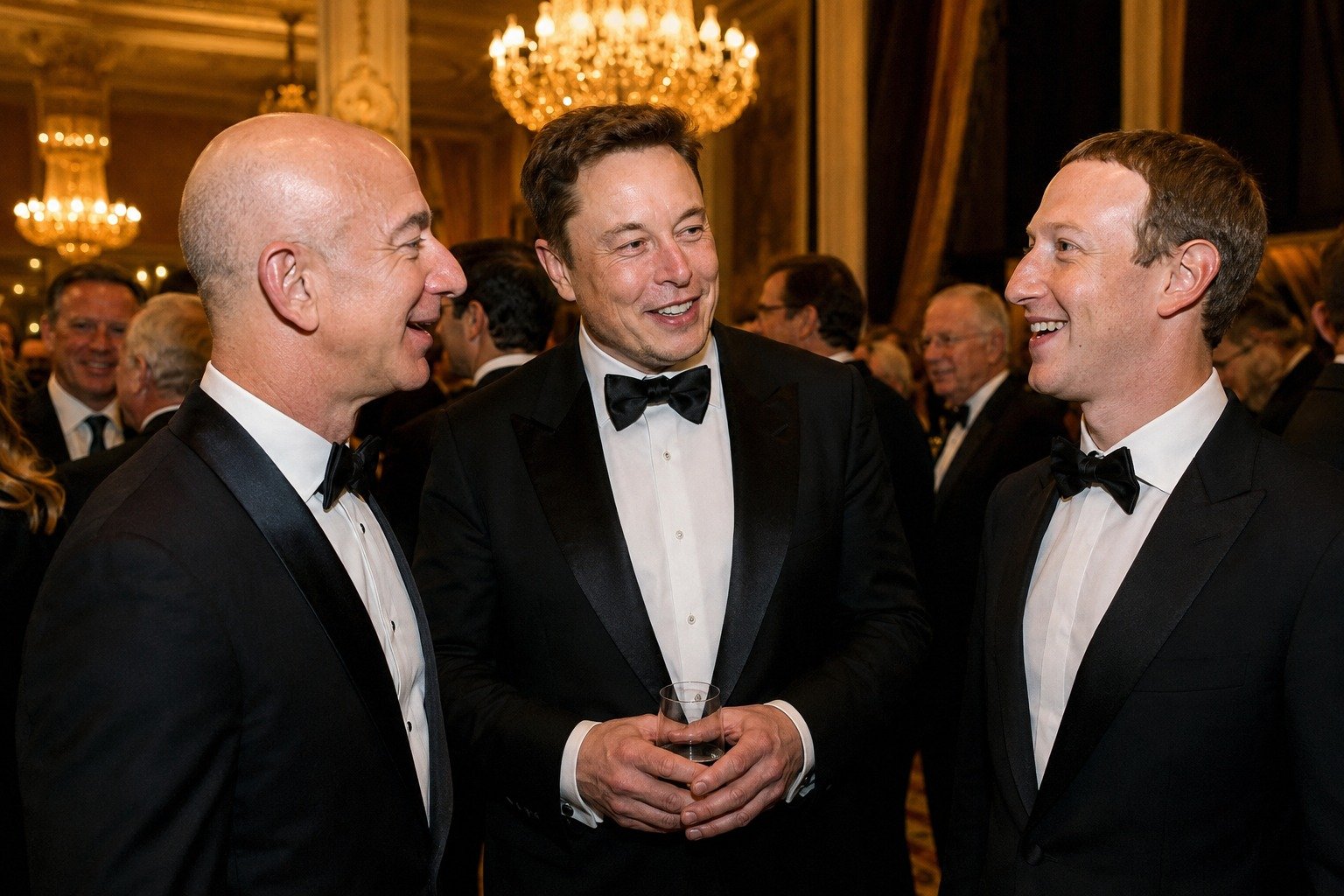
Nearly half the world has already decided: no one — not even a billionaire — should be able to pour unlimited money into political campaigns. A total of 47 countries, including Canada, France, Germany, and Brazil, have enacted outright bans or strict annual caps on how much any individual or corporation can donate to political parties and campaigns. In the United States, the opposite trend has taken hold — and the gap between America and the rest of the democratic world has never been wider.
How the Rest of the World Does It
The contrast is stark. In Canada, individuals can donate no more than roughly $1,775 Canadian per year to a federal political party — a hard cap that applies equally to billionaires and ordinary citizens. In France, corporate donations to political parties are banned outright. Germany imposes hard spending ceilings on all parties, regardless of the financial power of their donors. Brazil, despite its history of political corruption, has moved to ban corporate campaign contributions entirely.
According to data from International IDEA, 47 countries — representing 26% of all nations — now ban corporate donations to political parties entirely. Many more impose strict annual limits on individual giving. The underlying principle is the same across all of them: political influence should not be purchasable by those with the deepest pockets.
What Citizens United Changed in America
In 2010, the U.S. Supreme Court’s Citizens United v. Federal Election Commission ruling reversed a century of campaign finance restrictions, opening the door to unlimited outside political spending by corporations, unions, and wealthy individuals. The decision effectively created the super PAC era — entities that can raise and spend unlimited amounts on elections, provided they do not directly coordinate with candidates.
The results have been staggering. Outside spending has exploded by more than 2,800% since Citizens United. In the 2024 federal election cycle, just 100 billionaire families contributed a record $2.6 billion — accounting for one out of every six dollars spent by all candidates, parties, and outside committees combined. That figure is two and a half times the roughly $1 billion spent by individual billionaire donors in the 2020 cycle.
The Numbers That Tell the Story
Perhaps the most striking comparison is between the U.S. and the United Kingdom. In the 2019 UK general election — a nationwide vote that determined control of Parliament — the Conservative Party, which won a decisive majority, spent approximately £16 million, or roughly $21 million at current exchange rates. In the United States, that sum would not be enough to fund a single competitive congressional race. During the 2024 cycle, Elon Musk alone spent over $278 million to support Republican candidates — making him the single largest political spender in American electoral history.
Critics from across the political spectrum have raised alarm. The core question driving the debate: at what point does political spending stop being constitutionally protected free speech and start being the purchase of governmental influence? Supporters of unlimited spending argue that money is a form of expression and that restricting it amounts to restricting political speech. Opponents counter that the practical effect is to give billionaires a level of political power that no ordinary voter can match.
What This Means for American Voters
For everyday Americans, the implications are direct. When a single individual can spend $278 million on an election cycle — more than the entire campaign budget of many countries — the question of whose interests government ultimately serves becomes unavoidable. Forty-seven nations have concluded that democracy functions better when political influence cannot simply be purchased. Whether the United States will reach the same conclusion remains one of the defining political debates of the decade.
Stay informed on the stories that matter most. Follow Your Daily Updates on Facebook and bookmark yourdailyupdates.news for breaking news and analysis.