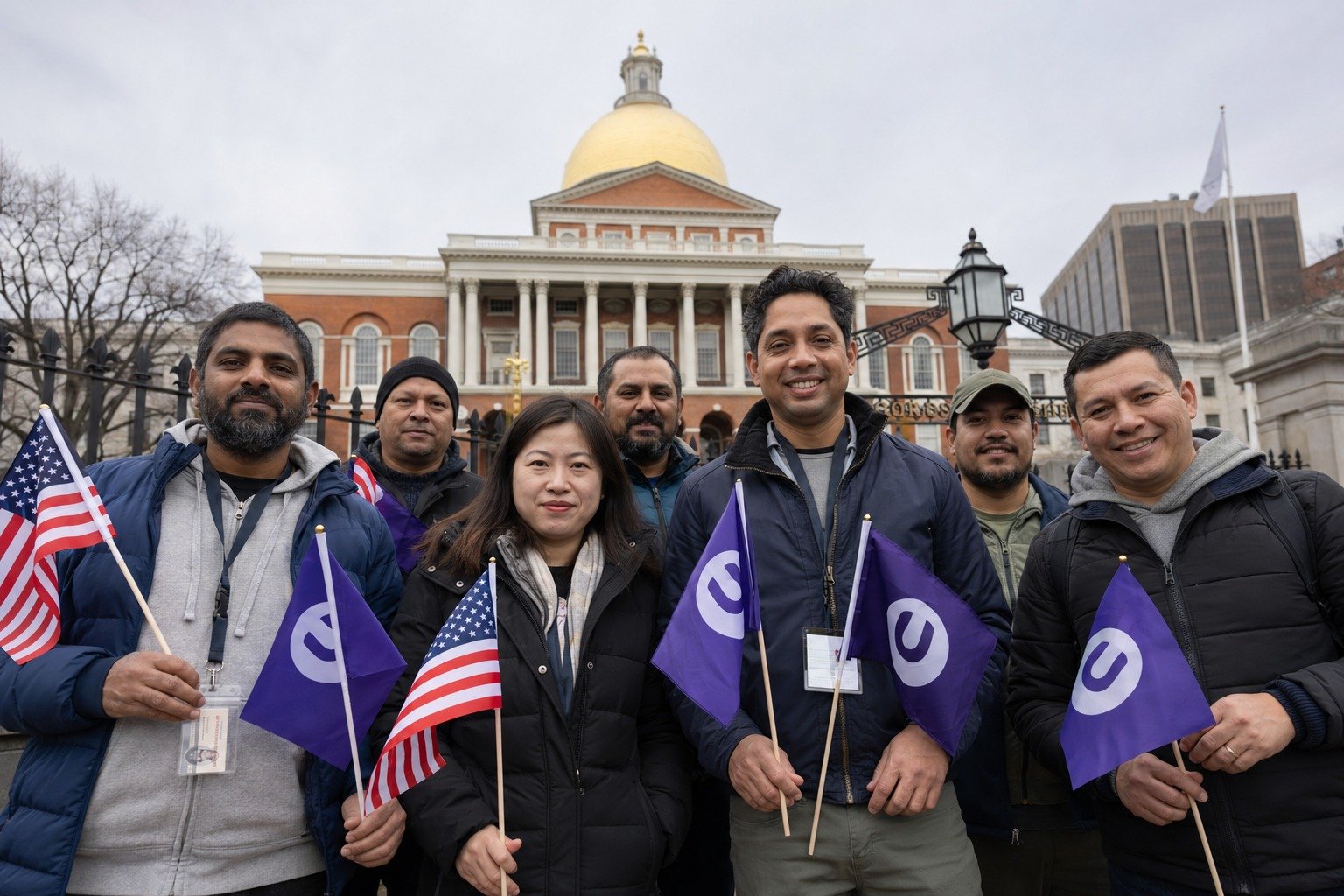
Massachusetts has officially recognized the first union representing rideshare drivers in the United States — a milestone for the gig economy and a major test of how labor law treats app-based workers who are not classified as traditional employees.
How We Got Here
The path to recognition began with a 2024 Massachusetts ballot measure that gave Uber and Lyft drivers the legal right to organize and collectively bargain — while leaving their status as independent contractors intact. Voters approved the measure, setting up a unique framework that doesn’t exist in most other states: drivers stay non-employees, but they can negotiate collectively with the platforms over pay, benefits, deactivations, and working conditions.
With that legal scaffolding in place, organizers — backed by the SEIU and other labor coalitions — moved to certify a union. After meeting the state’s signature and verification thresholds, Massachusetts officially recognized the new union as the bargaining representative for Uber and Lyft drivers operating in the state.
What It Means in Practice
The newly recognized union now has the legal authority to bargain with Uber and Lyft on behalf of all rideshare drivers operating in Massachusetts. Issues at the top of the agenda include minimum pay floors, healthcare contributions, paid sick time, transparency on the algorithms that assign rides, and a formal grievance process for drivers who get suddenly deactivated from the apps.
Crucially, the union does not change the drivers’ tax or benefits status. They remain independent contractors under federal and state law. What’s new is that the companies are now legally required to come to the table — something rideshare drivers have not had before in any U.S. state.
The Industry Reaction
Uber and Lyft have publicly committed to participating in the bargaining process. Both companies supported the 2024 ballot measure that created the framework — viewing it as a workable middle ground that preserves the independent-contractor model while giving drivers a structured voice. Privately, industry observers note that the outcome of the negotiations will set important precedents for other states considering similar approaches.
A National Test Case
Other states are watching closely. New York, California, and Washington have all wrestled — and litigated — for years over how to give gig workers labor protections without forcing them into the W-2 employee model. Massachusetts has now provided a working example of one possible answer: keep them as contractors, but make collective bargaining mandatory.
Whether the model holds up depends on what the first bargaining cycle actually produces. If drivers secure meaningful gains and the platforms continue to operate, expect copycat measures in other states soon.