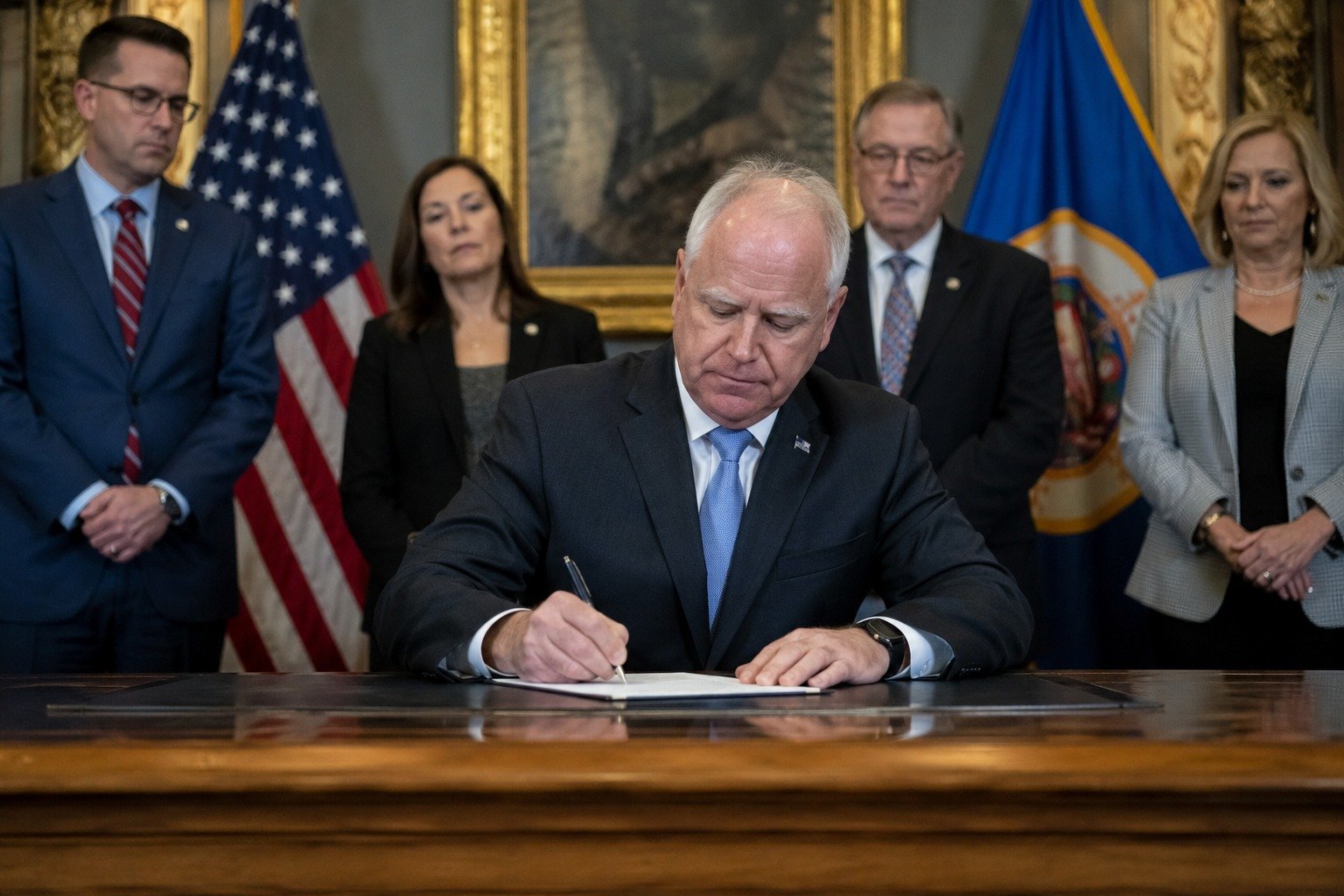
Minnesota just took a major step in the ongoing fight against AI-generated abuse. The state has criminalized the apps themselves — not just the images they produce — making it the first state in the country to go directly after the technology that creates fake explicit imagery of real people without their consent.
What the New Law Does
Under the new statute, companies and developers that knowingly create, market, or distribute AI tools designed to generate s*xually explicit “deepfake” images of identifiable real people face criminal penalties. The law also creates a private right of action — meaning victims can sue both the people who shared the images AND the platforms and developers that produced them.
Governor Tim Walz signed the legislation as part of a broader push by Minnesota to tackle non-consensual deepfake abuse, which has surged with the explosion of generative AI tools. State officials say victims have included high schoolers, teachers, and public figures alike — and that existing laws targeting only the people who share such images have not kept pace with the technology producing them.
Why This Is Different
Most U.S. states — and a growing number of federal proposals — have focused on criminalizing the act of creating or distributing non-consensual deepfake images. Minnesota’s approach goes a step further: it makes the apps themselves illegal when their primary purpose is generating that content.
Supporters argue that going after the apps is the only way to actually stop the harm. “If the tool exists, the abuse continues. Going after individual users one at a time is a losing game,” advocates have said. By making the developer and the platform liable, Minnesota’s law shifts enforcement upstream.
The Free-Speech Pushback
Critics — including some tech industry groups and civil liberties organizations — argue that the law’s reach could create First Amendment problems for legitimate AI image-generation tools that weren’t designed for abuse but could be misused. Defenders of the law note that it specifically targets apps whose purpose is generating non-consensual explicit content of real people, not general-purpose image generators.
Legal experts expect at least one court challenge. The question of whether software can be criminalized as a category — separate from how it is used by any individual — has not been fully tested at the federal constitutional level.
What Happens Next
For now, Minnesota’s new law is on the books, and other state legislatures are watching closely. Several have introduced similar bills targeting AI tools that produce non-consensual explicit content, but Minnesota is the first to actually enact one.
If the law survives the inevitable legal challenges, it will mark the start of a new chapter in how the United States regulates not just AI-generated content, but the AI technology itself.