Most Americans assume the rules governing political money are roughly the same everywhere — they aren’t. Across much of the developed democratic world, lawmakers have spent the last several decades drawing increasingly hard lines around private donations, corporate giving, and outside spending. The United States went the opposite way, opening the floodgates almost completely after a single Supreme Court ruling in 2010. The result is one of the starkest contrasts in modern democratic governance, and it’s now spilling back into the public conversation.
How France, Canada, and South Korea Closed the Door
France was one of the first major democracies to treat private money in elections as a corruption risk rather than a free-speech matter. Since 1995, French law has prohibited companies, unions, and other legal entities from contributing to political campaigns at all. Individuals are capped at roughly €7,500 per year in donations to a political party, with a separate cap on contributions to individual candidates. Campaign spending itself is strictly limited, and candidates who meet a vote threshold are partially reimbursed by the state — a design intended to keep elections accessible to ordinary citizens rather than only the wealthy.
Canada took a similar path. After a series of political fundraising scandals in the early 2000s, Parliament passed the Federal Accountability Act, which banned corporate and union donations to federal political parties and candidates outright. Today, individual Canadians can contribute up to roughly $1,700 per year — adjusted upward slightly each January — to a registered party. There are no SuperPACs, no unlimited outside-spending vehicles, and no corporate dark money. The system is built on the principle that political donations are a form of citizen participation, not corporate speech.
South Korea operates under its own tight regime: corporate political donations are prohibited entirely, and individual donations are capped. Several other democracies — including Belgium, Portugal, and Israel — operate under similar frameworks. The specific limits differ, but the underlying philosophy is consistent: democracies have a public interest in preventing wealthy donors and corporations from drowning out ordinary voters.
The American Path: Citizens United and What Followed
The United States made a fundamentally different choice. In January 2010, the Supreme Court ruled 5-4 in Citizens United v. FEC that the government could not restrict independent political spending by corporations, nonprofits, or unions. The majority grounded the decision in the First Amendment, concluding that political spending is a form of protected speech and that limiting outside-group expenditures would amount to censorship.
The practical result was the rise of SuperPACs — political action committees that can accept unlimited contributions from individuals, corporations, and unions, provided they do not formally coordinate with a candidate’s campaign. Combined with so-called dark-money 501(c)(4) groups that are not required to disclose their donors, the post-2010 system allows essentially unlimited private money to flow into American elections.
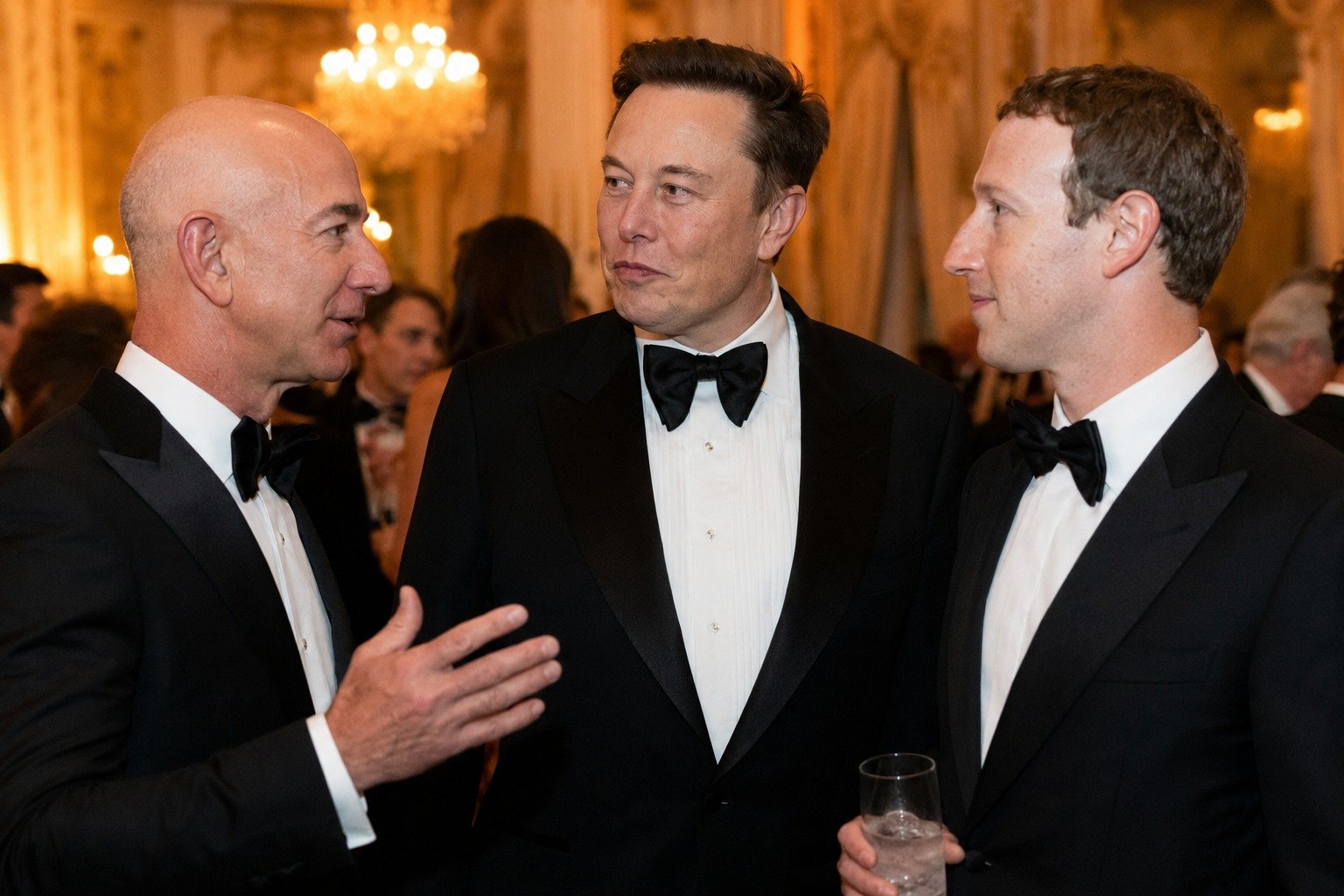
The 2024 presidential cycle made the scale of that system clear. Nonpartisan campaign-finance trackers estimated total spending across federal races at more than $15 billion — making it the most expensive election in human history. A relatively small number of billionaires, including tech executives and hedge fund founders, accounted for a disproportionately large share of that total.
The Debate, in Plain Terms
The case for the American system rests on the First Amendment. Supporters argue that political spending is speech, that limiting it requires the government to police who is allowed to participate in democratic debate, and that voters — not the state — should decide whose messages they find persuasive. They also note that no system, however restrictive, fully eliminates wealthy influence in politics; it only changes its form.
Critics argue the opposite. They point to the soaring cost of competitive federal races, the dependency of candidates on a small donor class, and survey data showing that overwhelming majorities of Americans — across both parties — believe big money has too much influence in U.S. politics. To these critics, the choice that France, Canada, and South Korea made is not a constitutional aberration but a more honest acknowledgement that unlimited campaign spending creates a structural advantage for the wealthy that ordinary voters cannot overcome.
The Question Now in Front of Americans
The contrast is no longer theoretical. Several democracies have demonstrated for more than a decade that strict limits are workable, enforceable, and politically durable. The argument over whether the United States should join them — or whether Citizens United correctly identified an immovable constitutional principle — is increasingly central to how Americans think about reform.
Should the U.S. make it illegal for corporations and billionaires to fund political campaigns?