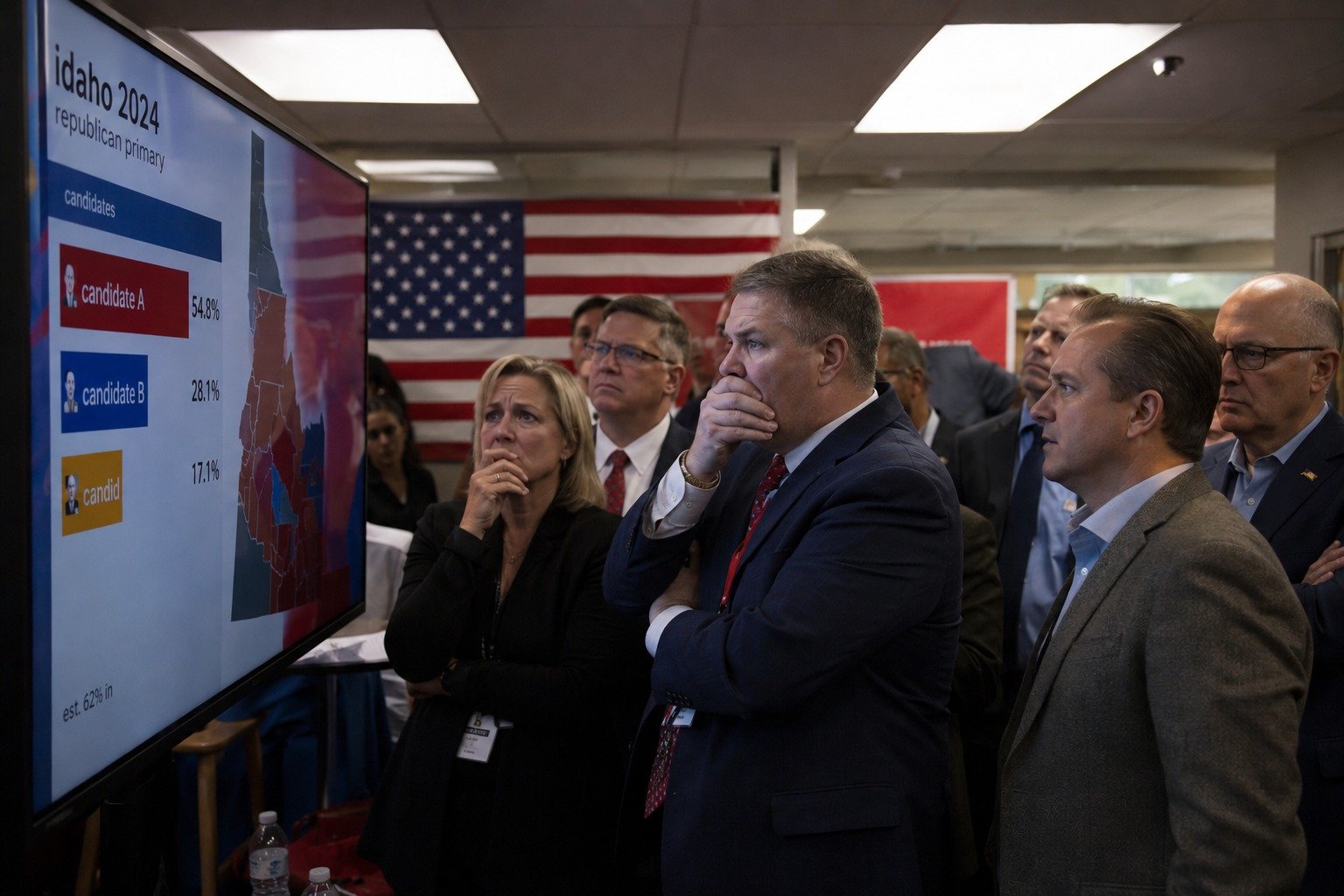
Nine of Idaho’s most extreme far-right Republican legislators have been defeated — not by Democrats, but by fellow Republicans in their own primary elections. The results represent a dramatic political reckoning inside one of the most conservative states in the country, as mainstream GOP voters drew a hard line against candidates they viewed as too radical, too combative, and too disconnected from the real concerns of working Idahoans.
A Republican Civil War at the Ballot Box
Idaho has long been a reliably red state, but in recent election cycles, the Idaho Republican Party has become the battleground for an internal war between the traditional conservative wing and a hard-right faction that has pushed the state party toward increasingly extreme positions. The nine defeated incumbents were aligned with the latter — legislators who had earned reputations for blocking legislation, deepening internal party divisions, and prioritizing ideological purity over governing effectiveness.
The primary losses came across legislative districts spanning rural, suburban, and small-city Idaho — a sign that voter dissatisfaction with the extreme wing was not localized. Moderate Republicans backed by business groups, law enforcement associations, and local civic leaders mounted successful challenges, arguing that the ousted incumbents had spent more energy on political theater than on delivering results for their constituents.
Who Were the Nine?
The defeated incumbents represented the most vocal members of the Idaho Freedom Caucus — a bloc known for blocking budgets, challenging Republican leadership, and opposing any compromise as a matter of principle. Among the issues that fueled voter backlash: repeated refusals to pass state budgets on time, opposition to education funding, and a series of inflammatory public statements that drew national attention and embarrassed the state’s Republican establishment. Several had also aligned themselves with fringe national figures, further alienating mainstream GOP voters who prioritize results over rhetoric.
What Drove Voters to Reject Their Own
Republican primary voters in Idaho expressed clear frustration with governance that had ground to a halt. Business owners cited regulatory uncertainty. Parents pointed to education funding battles that had left school districts in limbo. Law enforcement officials, who typically align with the conservative base, endorsed moderate challengers in several races — a striking signal that the hard-right incumbents had lost credibility even among their natural allies.
Turnout in key contested primaries ran higher than usual, suggesting that voters were motivated specifically by the desire to remove incumbents they saw as ineffective. The results are a case study in the limits of performative politics: voters who had elected these legislators expecting bold conservative leadership instead found themselves with representatives more interested in national culture war battles than in local governance.
Reactions and What Comes Next
Idaho Republican leadership largely welcomed the results, viewing the defeats as an opportunity to restore functionality to the state legislature. Governor Brad Little, who has clashed repeatedly with the Freedom Caucus, did not comment publicly on individual races but has consistently advocated for a Republican Party focused on governing rather than confrontation. The Idaho Freedom Caucus itself dismissed the losses as the result of outside money and establishment interference, vowing to rebuild for the next election cycle.
National conservative commentators were divided. Some viewed the primary losses as a healthy self-correction within the GOP. Others framed them as establishment moderates suppressing true conservatives — a narrative the defeated incumbents were quick to amplify. The reality, as seen in race after race, was simpler: Republican voters chose candidates who could actually pass legislation over those who had repeatedly blocked it.
What This Means for Americans
Idaho’s Republican primary results offer a rare window into a tension playing out in red states across the country: the conflict between governing conservatism and ideological absolutism. The voters who turned out made a pragmatic choice — picking representatives they believed could get things done over those who had proven they could not. Whether that shift holds through general elections remains to be seen, but the message from Idaho’s GOP base was unmistakable: effectiveness matters, even in the most conservative corners of America.
Stay informed on the stories that matter most. Follow Your Daily Updates on Facebook and bookmark yourdailyupdates.news for breaking news and analysis.