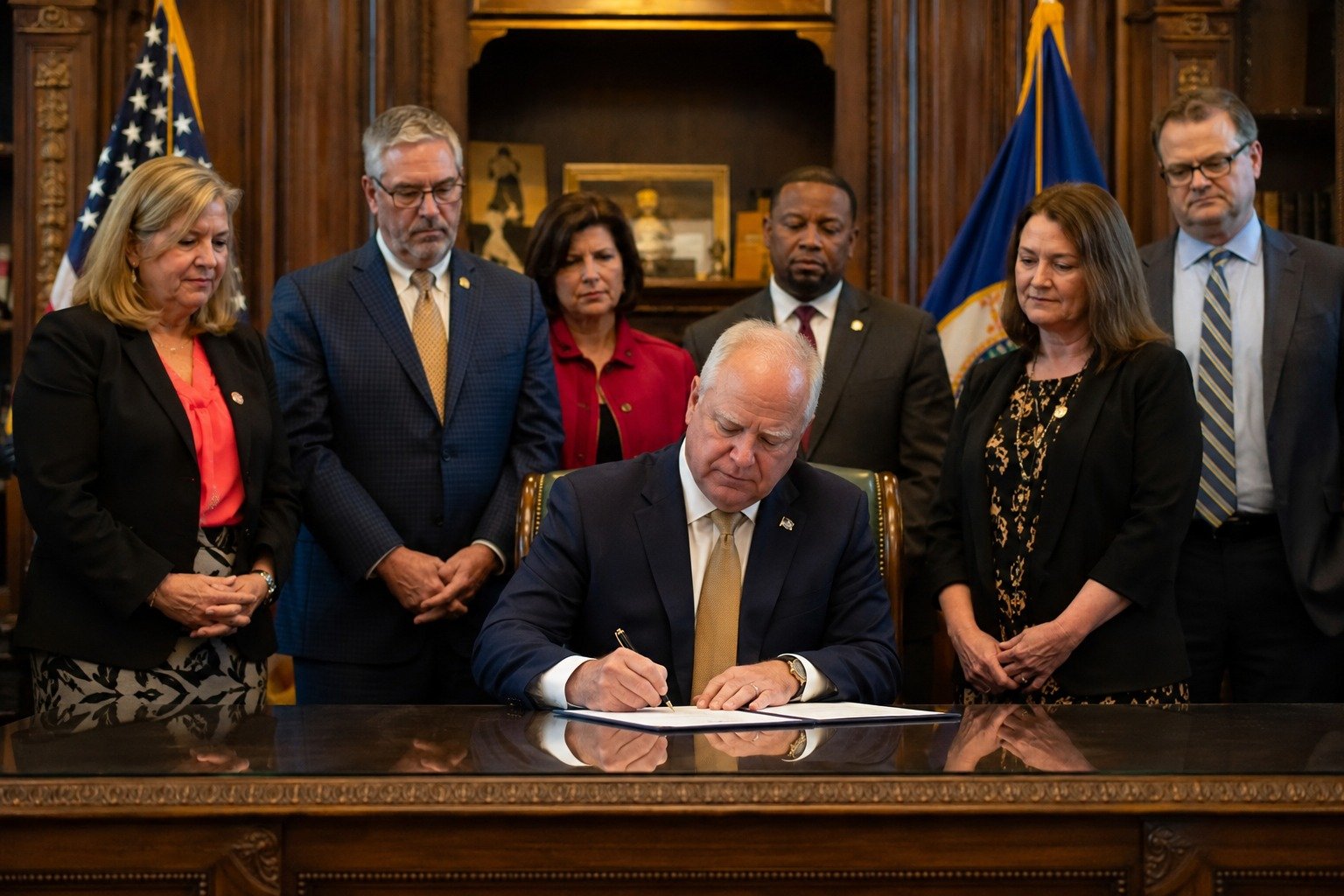
Minnesota made history this year as the first state in the nation to ban prediction markets — the online platforms where users wager real money on the outcomes of elections, legislative votes, and other political events. Governor Tim Walz signed the legislation into law, and the state became an immediate flashpoint in a rapidly escalating national debate. Within days of the law taking effect, federal regulators filed suit to block it.
What Are Prediction Markets and Why Did Minnesota Act?
Prediction markets are online platforms — the most prominent being Kalshi and Polymarket — where participants buy and sell contracts based on whether specific future events will occur. Will a particular candidate win an election? Will Congress pass a specific bill? Will inflation rise above a certain threshold? Users trade these contracts like financial instruments, with prices fluctuating based on collective sentiment.
Supporters of prediction markets argue they are powerful forecasting tools that aggregate information more accurately than polls or expert opinion. Economists have long studied them as potential signals of real-world outcomes. But critics — including the Minnesota state legislature — argue that allowing people to profit from election outcomes fundamentally corrupts democratic participation. When your investment portfolio benefits from one political outcome over another, the argument goes, democracy itself becomes a financial instrument to be manipulated rather than a civic institution to be protected.
Minnesota’s law was sweeping in scope. It banned prediction markets from being accessible to Minnesota residents and imposed penalties on operators who allowed participation from within the state. Governor Walz signed it without hesitation, calling it a necessary step to protect the integrity of democratic processes from the corrosive effects of political gambling.
Why the Federal Government Sued to Stop It
The Commodity Futures Trading Commission, the federal agency that oversees derivatives and futures markets, moved quickly to challenge Minnesota’s law. The CFTC’s position is straightforward: prediction markets are federally regulated financial instruments, not gambling, and individual states cannot unilaterally ban instruments that fall under federal jurisdiction. The agency had previously approved at least one major prediction market platform to operate legally under federal oversight, making Minnesota’s ban a direct challenge to that regulatory authority.
The legal conflict sets up a classic federalism battle — state authority versus federal regulatory power — with enormous implications either way. If Minnesota prevails, other states could quickly pass similar bans, effectively balkanizing the prediction market industry and rendering federal approval meaningless. If the federal government wins, prediction markets gain a legal shield that makes them nearly impossible for states to restrict, regardless of local concerns about gambling, democratic integrity, or social harm.
The Political and Legal Stakes
Legal experts are divided on the outcome. The federal government has historically held broad authority over financial instruments under the Commerce Clause, but states retain significant police powers over gambling and public welfare. The question of whether a prediction market is primarily a financial instrument or primarily a form of gambling — and which legal framework governs — is one that courts have not definitively resolved. Both parties to this lawsuit have strong arguments, and the case is widely expected to be appealed regardless of the initial ruling.
For ordinary Americans, the stakes are more concrete. Prediction markets have exploded in popularity, particularly around elections. Platforms like Polymarket reportedly saw hundreds of millions of dollars in trading volume during the 2024 presidential election cycle. Proponents argue this represents Americans freely participating in a legal market. Opponents argue it represents a new form of financial incentive to influence, manipulate, or undermine the democratic process itself — and that the government has a compelling interest in keeping elections free from that kind of financial entanglement.
What This Means for Americans
Whether you see prediction markets as innovative forecasting tools or dangerous political gambling, this legal battle will directly shape what Americans can and cannot do online. If the federal government wins, prediction markets will likely expand rapidly into every state, normalized as mainstream financial products. If Minnesota wins, a wave of state bans could follow, making prediction markets effectively unavailable to millions of Americans and triggering one of the most significant federalism showdowns of the decade. The courts will decide — but the outcome will affect every voter in the country.
Stay informed on the stories that matter most. Follow Your Daily Updates on Facebook and bookmark yourdailyupdates.news for breaking news and analysis.