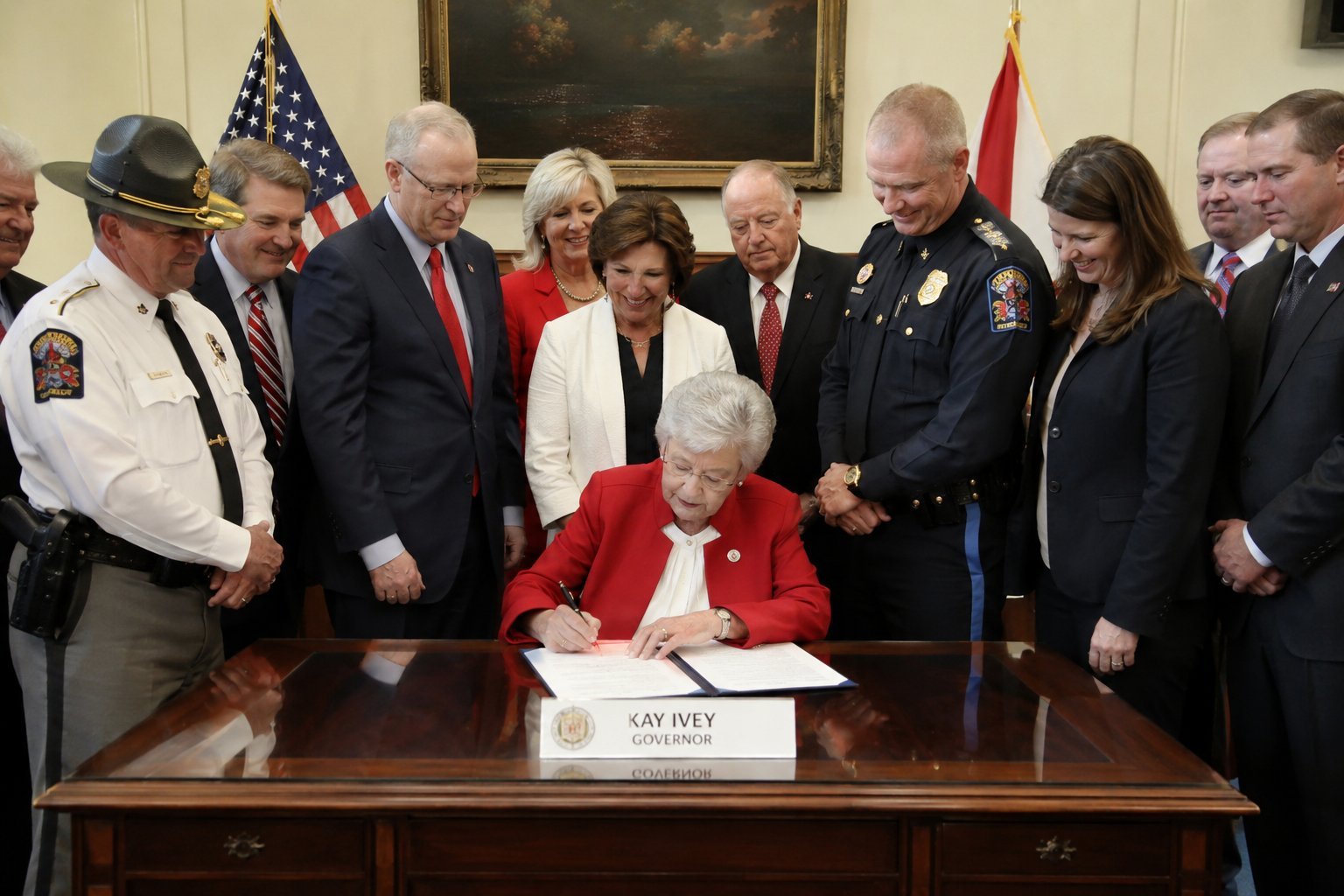
Alabama Governor Kay Ivey has signed the Child Predator Death Penalty Act into law — making Alabama one of the toughest states in the nation on convicted child sex offenders. The law takes effect October 1, 2026.
What the Law Does
Under the new law, anyone convicted of first-degree rape, first-degree sodomy, or first-degree s*xual assault against a child under the age of 12 is now eligible for the death penalty. These crimes were already among the most severely punished in Alabama — the new act makes them capital offenses, opening the door to execution for those convicted.
The legislation was sponsored in the Alabama House by Rep. Matt Simpson and in the Alabama Senate by Sen. April Weaver. Governor Ivey signed it on February 12, 2026, with law enforcement officials and child advocacy groups standing alongside her. It becomes enforceable on October 1, 2026.
The Case That Helped Drive It
The signing followed what officials described as a wave of high-profile child predator cases in the state — most notably what became known as the Bibb County bunker case, which drew widespread outrage and intensified calls for harsher penalties. Supporters of the legislation framed it as the strongest child protection measure Alabama has ever enacted, arguing that the most brutal crimes against the youngest victims demand the ultimate legal response.
The Legal Battle Ahead
The law faces an immediate constitutional challenge. The U.S. Supreme Court ruled in Kennedy v. Louisiana in 2008 that imposing the death penalty for child rape — where the victim survives — violates the Eighth Amendment’s prohibition on cruel and unusual punishment. That precedent has blocked similar laws in other states for nearly two decades.
But advocates for Alabama’s new law are betting that the current Supreme Court’s composition gives them a real shot at overturning or limiting Kennedy v. Louisiana if the case is appealed all the way up. Civil liberties groups, including the ACLU, are expected to challenge the law in court before it can be applied. A legal fight that could reshape capital punishment law across the country appears inevitable.
What This Means for Americans
Alabama’s law puts a sharp national question on the table: should the death penalty apply to those who commit the worst s*xual crimes against children? The answer from Montgomery is yes. Whether federal courts agree will define not just Alabama’s law — but potentially every state’s ability to pursue capital punishment for child predators going forward. The October 1 effective date makes this a live legal and political issue right now.
Stay informed on the stories that matter most. Follow Your Daily Updates on Facebook and bookmark yourdailyupdates.news for breaking news and analysis.