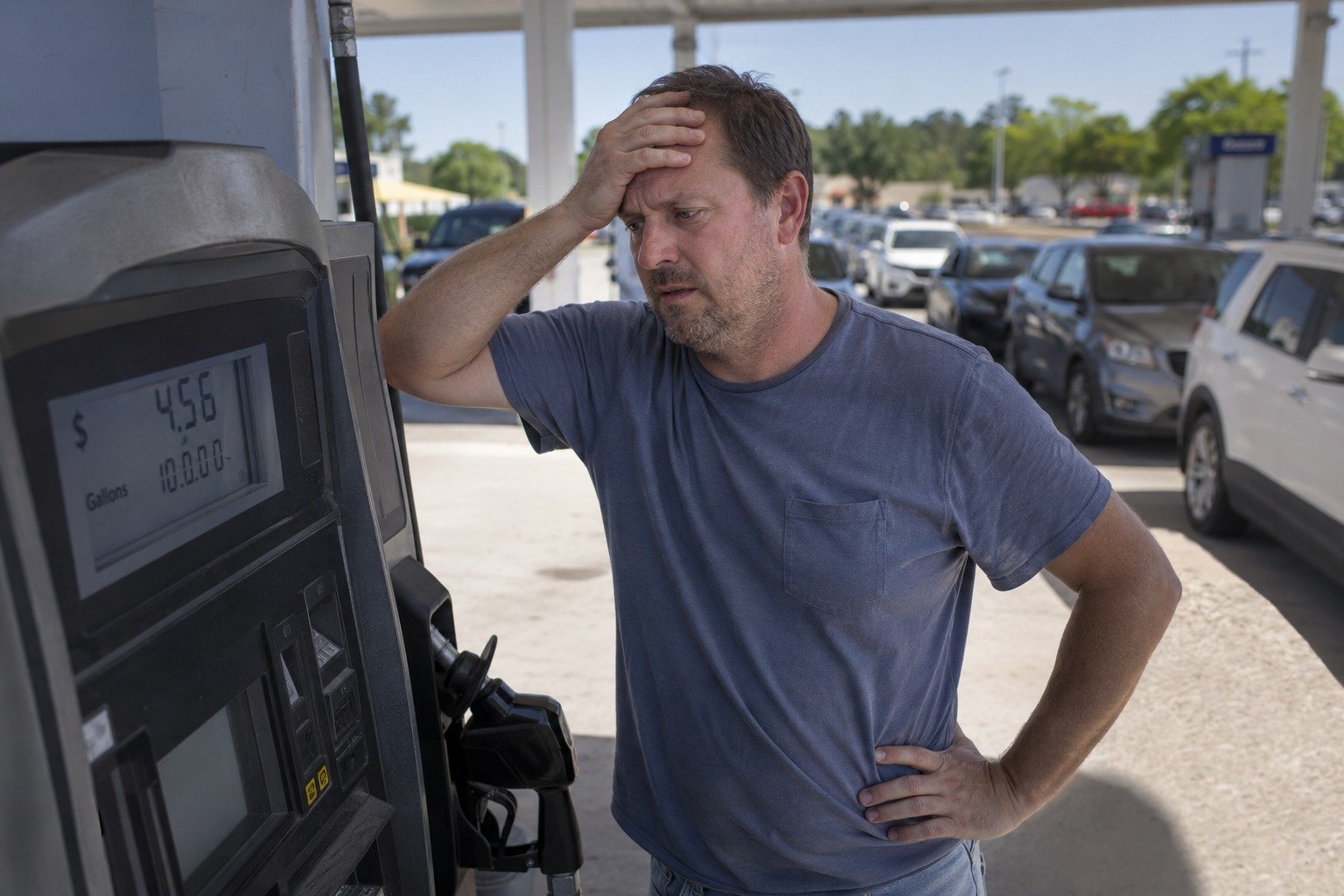
For the first time in American history, gas prices have topped $4 per gallon in all 50 states and Washington, D.C., simultaneously. The national average now stands at $4.56 a gallon — a 53% increase since the United States launched strikes on Iranian nuclear facilities in early March. The milestone marks a grim first: there is no longer any state in the country where Americans can fill up for under four dollars.
The Strait of Hormuz Is the Chokepoint
The price surge traces directly to a single geographic pressure point: the Strait of Hormuz. When U.S. military operations against Iran began, Iran moved to restrict traffic through this narrow waterway — the channel through which approximately one-fifth of the world’s daily oil supply normally flows. The disruption sent immediate shockwaves through global energy markets, and those shockwaves have been compounding for three months with no end in sight.
Before the conflict, the national gas average hovered around $2.98 per gallon. Within weeks of the first U.S. strikes, prices began climbing sharply. The impact wasn’t gradual — it was a shock to the system that has accelerated as the conflict drags on, with no credible ceasefire negotiations underway as of late May.
Where Prices Are Worst — and Where They Are “Least Bad”
The damage is not evenly distributed across the country. California has been hit hardest, now averaging $6.15 per gallon — the highest in the nation. Seven states have crossed the $5 mark: Hawaii, Alaska, Oregon, Washington, Nevada, Illinois, and Connecticut. For drivers in these states, filling a standard sedan now costs north of $75.
Even in the states where prices are lowest, the situation is historically severe. Georgia is the cheapest state in the country — at $4.01 per gallon. Mississippi, Alabama, and South Carolina are also in the low $4 range. These states, which had traditionally benefited from lower state fuel taxes and proximity to Gulf Coast refineries, have never seen prices this high. The floor has risen dramatically. There is no longer a cheap-gas state.
The Economic Ripple Is Already Spreading
The consequences extend far beyond the gas pump. Trucking costs are up sharply, and those costs flow through to every product those trucks carry — groceries, building materials, appliances, medications. Airfare is rising as jet fuel prices climb in lockstep with crude oil. Small businesses that depend on fuel — delivery services, landscapers, contractors, food distributors, home health aides — are absorbing margin compression they can’t fully pass on to customers.
Economists tracking the broader inflation picture say energy is now contributing meaningfully to core price increases after a period of relative stability. The Federal Reserve, which had been signaling potential rate cuts, is now navigating the tension between slowing economic growth and energy-driven inflationary pressure. The war’s economic cost isn’t being counted only in military dollars — it’s being counted every day at gas stations from Bangor to Honolulu.
What Happens Next
The conflict is entering its third month with no ceasefire framework in place. Economists and energy analysts warn that prices will remain elevated — and potentially climb further — as long as the Hormuz disruption continues. A sustained escalation, particularly any scenario that further reduces tanker traffic through the Strait, could push prices toward $5 nationally. A de-escalation agreement or resumption of normal Hormuz transit could bring relief relatively quickly, as crude markets tend to respond faster to resolution than they do to conflict.
What This Means for American Families
For most American households, the Iran war has been an abstract geopolitical event — until now. A 53% increase in gas prices is the most direct and universal economic consequence most Americans have felt from a foreign conflict in a generation. The family filling up a minivan, the contractor driving a work truck, the nurse commuting to a hospital — all of them are paying a measurable daily tax on this war. How long it lasts, and how high prices go before it ends, may shape public opinion on the conflict more than any military development.
Stay informed on the stories that matter most. Follow Your Daily Updates on Facebook and bookmark yourdailyupdates.news for breaking news and analysis.