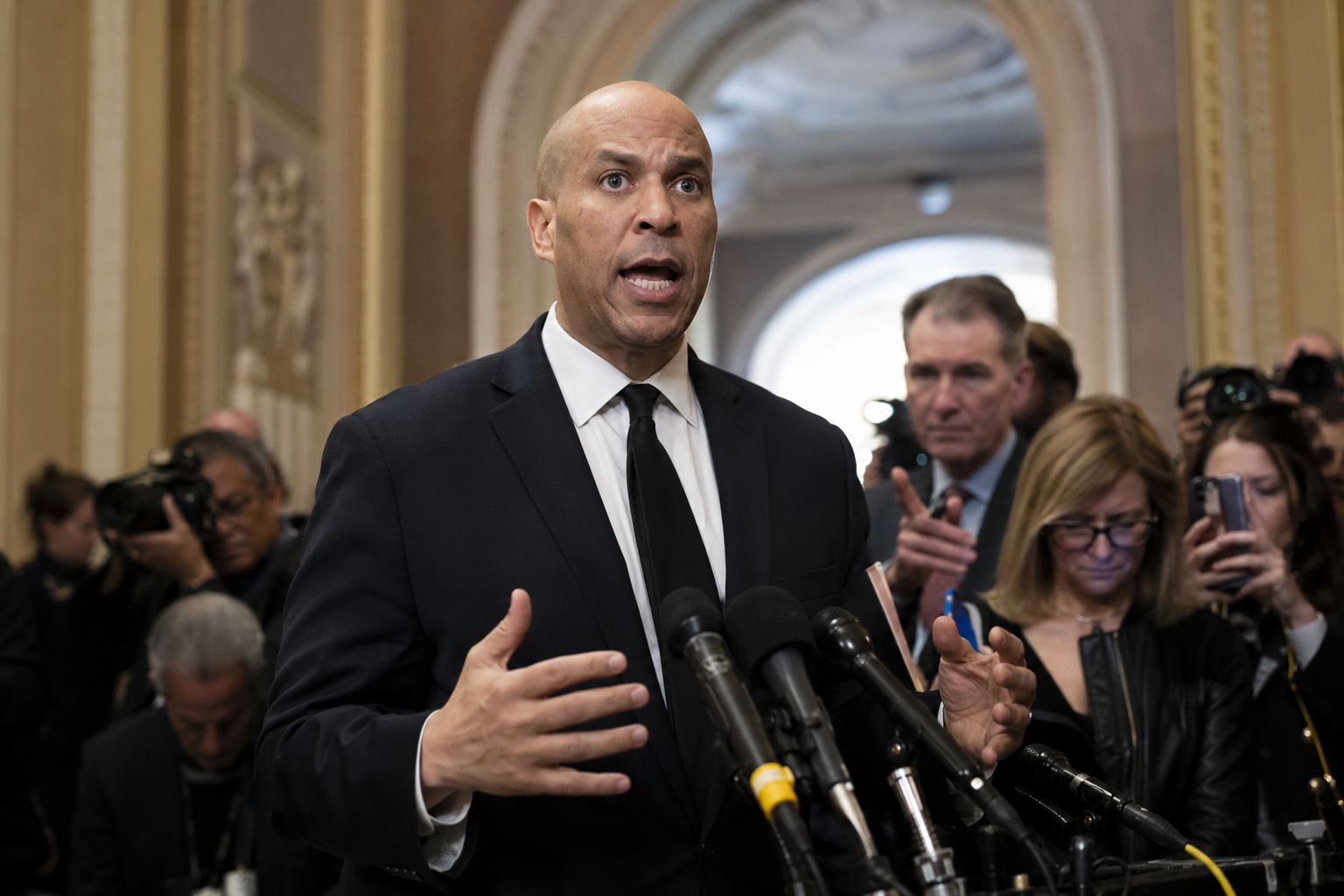
Sen. Cory Booker delivered one of the most pointed critiques of his own party in recent memory on Sunday, declaring on CNN’s “State of the Union” that the Democratic Party “desperately needs new leadership” — a stunning rebuke from within the party’s own ranks just months before the 2026 midterms.
Booker’s Blunt Diagnosis
The New Jersey senator didn’t mince words. Appearing alongside host Jake Tapper, Booker laid out what he sees as the core failure driving Democratic losses: a party apparatus that has lost the trust of the American people. “You cannot lead the people if they don’t trust you, and that’s what’s lacking right now with the party apparatus,” Booker said. While he stopped short of naming Senate Minority Leader Chuck Schumer directly, few observers missed the implication.
The statement landed at a particularly raw moment for Democrats. The party is locked out of the White House, operating without a House majority, and struggling to define a coherent message heading into the 2026 election cycle. Booker’s willingness to say publicly what many Democrats have been saying privately signals that the frustration inside the party has reached a boiling point.
The New Names He’s Lifting Up
Booker also did something notable: he named names. Rather than simply criticizing the current leadership structure, he pointed to a new generation of Democratic voices he believes represent a different path forward. He highlighted incumbent Sen. Jon Ossoff of Georgia, North Carolina’s Roy Cooper, and Texas’ James Talarico — Democratic Senate nominees in those states — as examples of leaders who are “stepping up and saying, ‘I don’t give a damn about parties. I care about people.'”
That framing was deliberate. Booker is drawing a contrast between old-guard Democratic leaders who have presided over a string of electoral losses and a newer class of candidates willing to break from party orthodoxy. Whether that emerging coalition can actually coalesce around a shared identity — and survive in deep-red or purple states — remains to be seen.
The Electoral Warning
On strategy, Booker was equally blunt. “You are not going to win this election just by what you’re against,” he warned. “You need to start articulating who you’re for and what you’re for. Have a vision that’s compelling that not only engenders trust but makes sense for the American people.”
That message cuts directly against the current Democratic playbook, which has leaned heavily on anti-Trump messaging since 2016. It worked in 2018 and 2020 — but the 2022 and 2024 cycles offered a harder lesson. Voters rewarded Democrats when they had a clear affirmative case to make. When that case was absent, opposition alone wasn’t enough to drive turnout or persuade swing voters.
What This Means for Americans
For everyday Americans watching their kitchen-table issues — healthcare costs, housing affordability, border security, and the economy — the Democratic Party’s internal struggle is more than political theater. It directly affects whether voters heading into 2026 will have a credible alternative to weigh. If one of the party’s own senators is publicly saying Democrats lack a compelling vision and have lost the public’s trust, that’s not spin. That’s a diagnosis. Whether the party’s leadership listens — or circles the wagons — will shape the choices voters have in November.
Stay informed on the stories that matter most. Follow Your Daily Updates on Facebook and bookmark yourdailyupdates.news for breaking news and analysis.