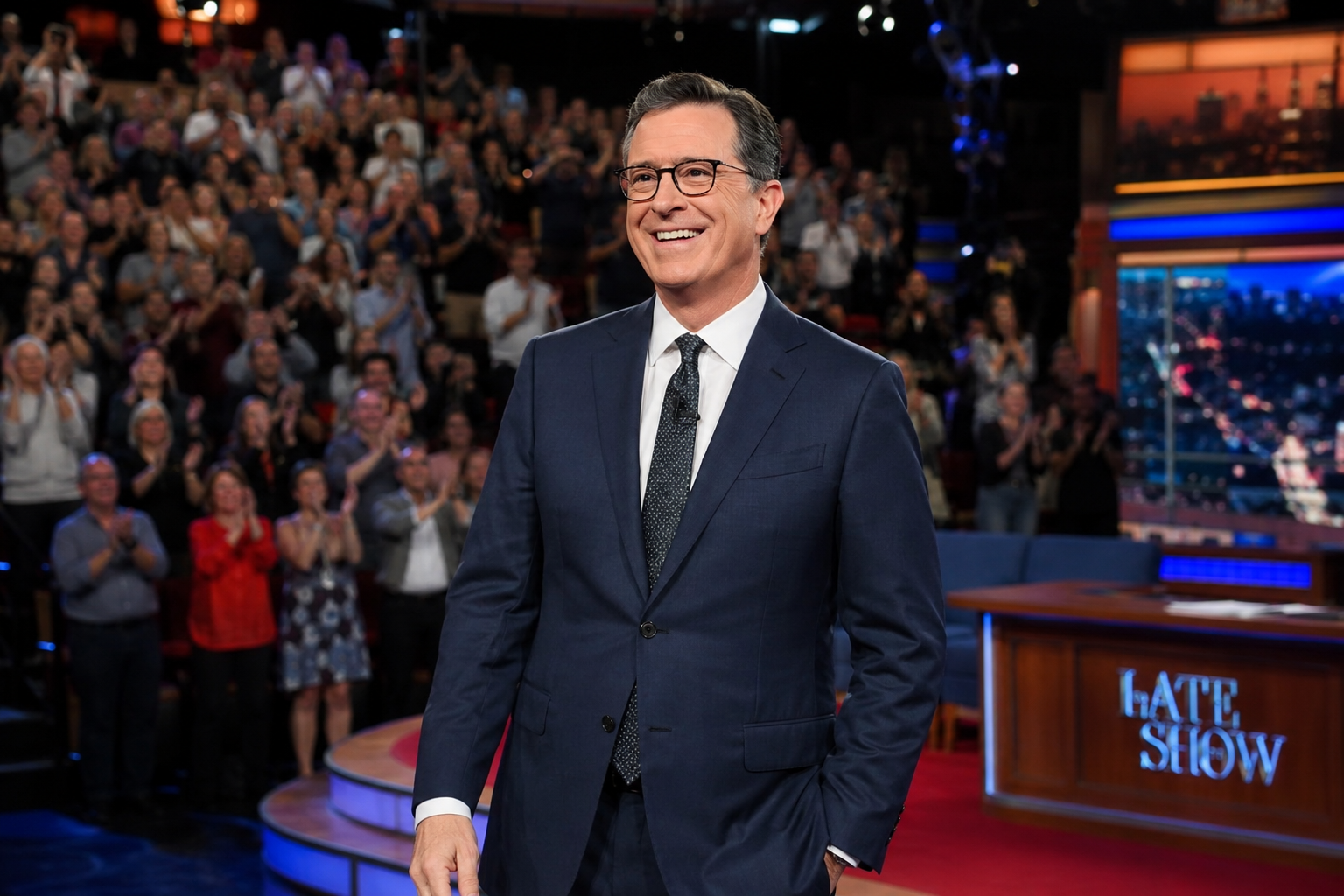
6.74 million people tuned in to watch Stephen Colbert sign off from The Late Show on Thursday night — and in doing so, they handed the show the biggest weeknight audience it had ever recorded in its 11-year run. The number didn’t just break a record. It nearly tripled the program’s entire 2026 average of 2.69 million nightly viewers and edged past the show’s own September 2015 premiere, which had drawn 6.55 million.
A Send-Off That Dwarfed Everything That Came Before It
The Late Show with Stephen Colbert launched in September 2015, when Colbert stepped into one of the most storied jobs in television — the desk David Letterman had occupied at the Ed Sullivan Theater in New York for more than two decades. The premiere drew massive curiosity, pulling 6.55 million viewers. It was one of the most-watched late-night debuts in years.
Then the audience slowly drifted away — not just from Colbert’s show, but from late-night television as a whole. Streaming services pulled viewers off scheduled television and onto on-demand content. The DVR eroded live ratings. By 2026, a typical night for The Late Show meant roughly 2.69 million viewers, a fraction of the Letterman-era peaks the Ed Sullivan Theater once commanded.
The finale changed everything, at least for one night. The send-off was exactly what the moment called for — a full-scale celebration packed with famous faces and a closing musical performance that nobody in the audience will forget.
Paul McCartney Closed the Night
The finale’s biggest moment came at the very end, when Paul McCartney walked out onto the Ed Sullivan Theater stage — the same stage where the Beatles made their legendary American television debut in 1964. McCartney and Colbert performed the Beatles’ “Hello Goodbye” together, joined by Elvis Costello, former bandleader Jon Batiste, current bandleader Louis Cato, and dozens of Late Show staffers who filled the stage for the final performance.
It wasn’t just McCartney. The broadcast was stacked with celebrity appearances throughout the night, including Bryan Cranston, Paul Rudd, and Ryan Reynolds — some of the biggest names in entertainment turning out to mark the end of an era. Fellow late-night hosts also joined the occasion. The cumulative effect was a finale that felt less like a television broadcast and more like a genuine farewell.
What the Numbers Say About Late-Night TV
The audience breakdown tells a story the television industry is still trying to process. For years, executives and media analysts have argued that late-night TV is in structural decline — that audiences simply don’t gather around a television at 11:30 PM the way they once did. The data has backed that narrative up. Colbert’s show, like virtually every other late-night program, has spent the last decade averaging audiences that would have been considered catastrophic failures during the Letterman or Carson eras.
Then 6.74 million people showed up for the goodbye.
That number raises an uncomfortable question for CBS, for Colbert’s successor, and for late-night television as a format: if nearly 7 million Americans can still find The Late Show on a Thursday night when it matters enough, why do only 2.69 million show up on a typical one? The farewell audience suggests the appetite is there. The daily habit, it seems, is what’s broken.
What Comes Next
CBS has not announced Colbert’s permanent replacement. The network now faces the task of rebuilding a late-night institution from scratch, knowing that whoever sits behind that desk will immediately be compared to a farewell that attracted nearly three times the show’s recent average. That’s a difficult legacy to follow.
For Colbert himself, the finale closes out a run that began as a dramatic pivot from his satirical Comedy Central persona and evolved into one of the most politically engaged broadcasts on American television. Over 11 years, he covered elections, impeachments, a pandemic, and a transformation in American political life that would have been hard to imagine when he first sat down at that desk in 2015.
For Americans who grew up watching late-night television, the record farewell audience is both a celebration and a reminder — that even in a world of infinite streaming options, some moments still pull people back to the same screen at the same time. Colbert’s final night was one of them.
Stay informed on the stories that matter most. Follow Your Daily Updates on Facebook and bookmark yourdailyupdates.news for breaking news and analysis.