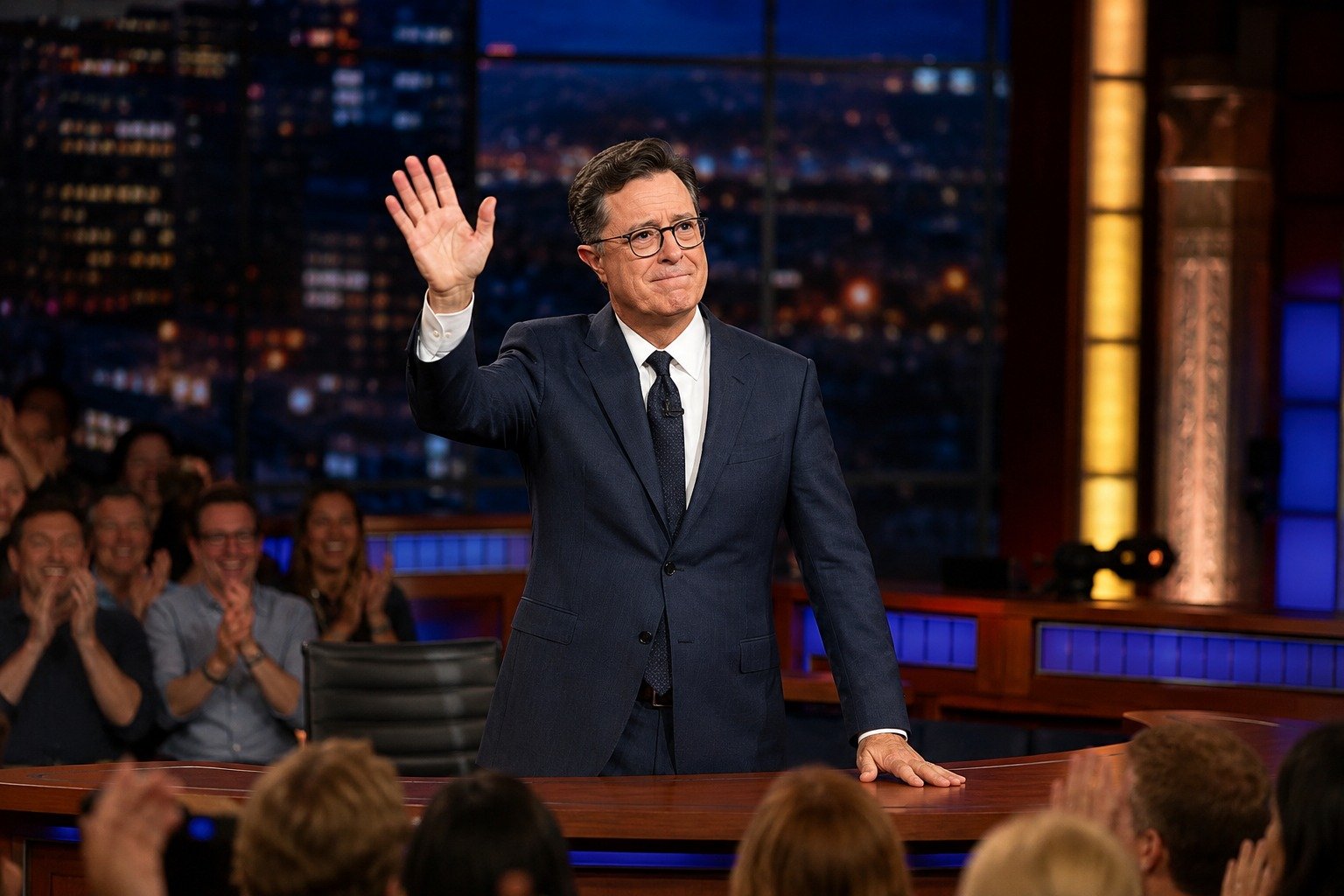
Stephen Colbert closed out The Late Show with the biggest weeknight audience the program has ever recorded — 6.74 million viewers tuning in to watch the host sign off for the final time.
For a genre that has spent years watching its audience drift to streaming and social clips, the number was a jolt. It topped the show’s own series premiere in September 2015, which drew 6.55 million, and it dwarfed the program’s 2026 nightly average of roughly 2.69 million viewers.
A Star-Studded Send-Off
The finale leaned all the way into the moment. Paul McCartney joined Colbert on stage to perform the Beatles’ “Hello Goodbye,” a fitting bookend for a host saying farewell. The broadcast was stacked with famous faces, including Bryan Cranston, Paul Rudd, Ryan Reynolds, and a lineup of Colbert’s fellow late-night hosts who turned out to mark the occasion.
The emotional, celebratory tone gave longtime viewers exactly the kind of send-off they had hoped for — part variety show, part reunion, part goodbye letter to an audience that had followed Colbert for the better part of a decade.
The End of an Era
Colbert took over The Late Show in 2015, stepping into the desk David Letterman had occupied for more than two decades. Over the years, the program became a fixture of the late-night landscape and a reliable engine of next-day viral clips, monologues, and interviews that traveled far beyond their broadcast slot.
The most-watched episode of Colbert’s entire run remains his post-Super Bowl broadcast in February 2016, which pulled an enormous 20.55 million viewers thanks to the football lead-in. But among ordinary weeknights, nothing in the show’s history matched the farewell.
What It Says About Late Night
The size of the finale audience cuts both ways. On one hand, it proves that a marquee late-night moment can still command nearly 7 million live viewers — a figure most cable programs would envy. On the other, it underlines the central challenge facing the format: those audiences show up for the big occasion, but not for the everyday broadcast.
That gap is the story networks are wrestling with as they decide what late night looks like going forward. The farewell numbers suggest the appetite is still there — the question is whether traditional nightly TV is still the way to reach it.
What This Means for Viewers
For fans, the finale was a chance to say goodbye to a familiar nightly companion. For the industry, it is a data point that will shape what fills that time slot next — and whether the next generation of hosts gets a nightly desk at all, or something built for the clip-and-stream era instead.
Stay informed on the stories that matter most. Follow Your Daily Updates on Facebook and bookmark yourdailyupdates.news for breaking news and analysis.