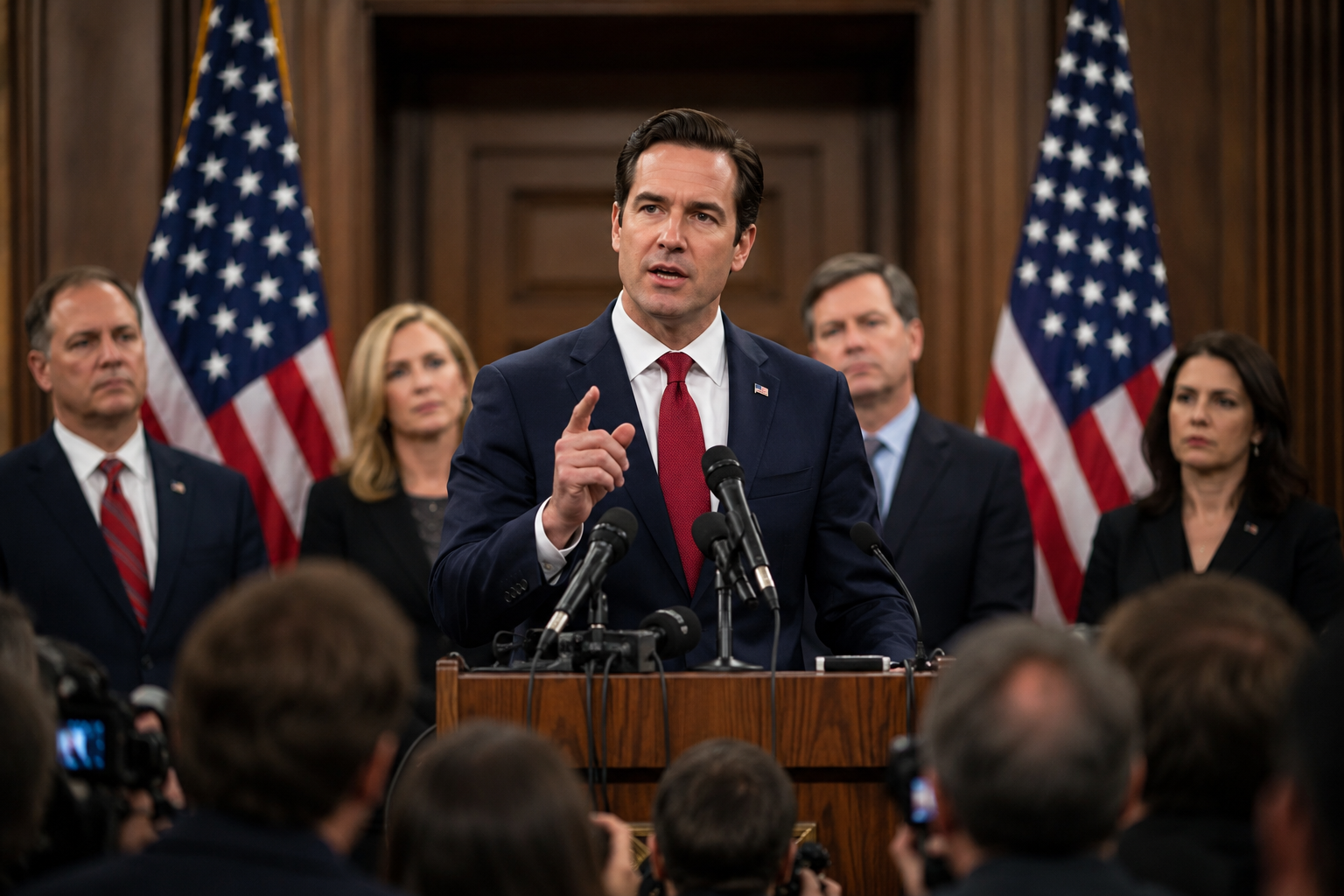
Sen. Josh Hawley (R-MO) introduced legislation this week that would strip federal pension benefits from any sitting or former member of Congress convicted of sexual abuse, sexual misconduct, or related offenses — closing a gap in current law that has allowed convicted predators to continue collecting taxpayer-funded retirement checks for life.
The Loophole No One Fixed
Under existing federal law, members of Congress can lose their pensions if convicted of certain serious felonies — including bribery, treason, and public corruption. But sexual offenses were never added to that list. The result: a congressman convicted of preying on staff or constituents could still receive a government-funded pension for the rest of their life. Hawley’s bill, formally titled the No Pensions for Congressional Predators Act, would close that gap permanently.
The omission isn’t a technicality — it reflects the way the original pension forfeiture statute was written. It was designed to address corruption and crimes against the government, not crimes against individuals. Sexual offenses were simply never included, and no Congress has moved to fix it since.
What the Bill Actually Does
The No Pensions for Congressional Predators Act adds sexual abuse, sexual misconduct, and related criminal offenses to the list of convictions that automatically trigger pension forfeiture for members of Congress. The forfeiture applies regardless of when the conviction occurs — meaning a former member convicted years after leaving office would still lose their pension. There is no statute of limitations on the penalty once a conviction is secured.
The legislation was introduced directly in response to a wave of sexual misconduct allegations and resignations that rocked Capitol Hill. Former Rep. Eric Swalwell (D-CA) resigned after five women — including a former member of his staff — accused him of sexual misconduct and rape. His departure, alongside other back-to-back House resignations tied to misconduct allegations, renewed long-standing questions about whether Congress holds its own members to the same standards it applies to everyone else.
The Double Standard on Accountability
Federal employees convicted of serious crimes lose their pension rights automatically. Military personnel face similar consequences for certain criminal conduct. But the statute governing congressional pensions was written narrowly — bribery, treason, espionage, corruption. Sexual crimes against staff, constituents, or anyone else were left off the list. Congress has effectively given itself a carve-out, whether intentional or not, that no other class of federal workers enjoys.
Hawley’s bill would remove that double standard. A member convicted of the same conduct that would cost a federal employee their pension would face the same consequence. The bill does not require a new criminal standard — it simply applies the existing forfeiture framework to a category of offenses it currently excludes.
Political Dynamics and the Path Forward
Few lawmakers will publicly oppose a bill that strips pensions from convicted predators — the political optics of defending those benefits are nearly impossible. But congressional inertia is its own obstacle. Many accountability measures with broad theoretical support never make it out of committee, blocked not by opposition but by the absence of urgency. Whether Hawley can build enough pressure to force a vote remains the central question.
What Hawley does have is timing. The bill arrives as public attention on congressional misconduct is unusually high, and as multiple members have already resigned under pressure. That context gives the legislation a momentum it might not have had in a quieter political environment.
What This Means for You
Congressional pensions are funded by taxpayers. Under current law, a member of Congress convicted of sexually abusing a staffer or constituent can still draw that pension for the rest of their life. Every dollar of that benefit comes from public funds. Hawley’s bill would end that arrangement — ensuring that a conviction for predatory conduct carries a real financial consequence, not just a resignation and a retirement package.
Stay informed on the stories that matter most. Follow Your Daily Updates on Facebook and bookmark yourdailyupdates.news for breaking news and analysis.