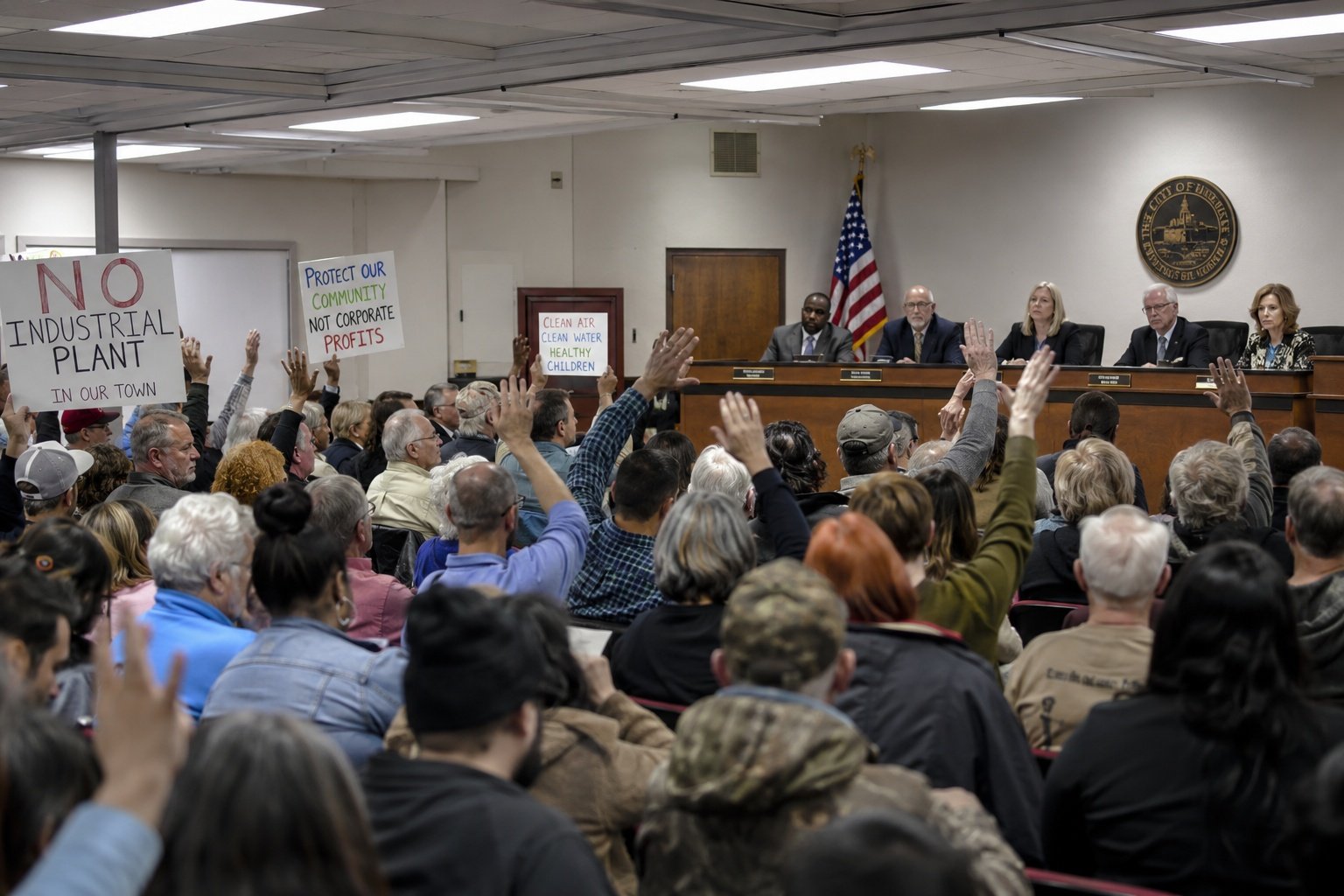
One year ago, 8 American communities had taken formal action to block AI data centers from being built in their backyards. Today that number is 78 — and four of those communities have made their bans permanent. The resistance is no longer a fringe movement. It’s a national revolt.
The Numbers Behind the Backlash
Across the United States, there are now 69 active moratoriums on AI data center construction, 4 permanent bans, and active legislation moving in at least 10 states. Seventeen proposed AI data center projects have been canceled outright due to local opposition. Another 18 have been delayed indefinitely. These aren’t symbolic resolutions passed to make a political point — they’re legally binding actions that have stopped billion-dollar construction projects in their tracks.
The pace of the opposition is accelerating in ways that caught even critics of the industry off guard. In 2024, the opposition was scattered and local. In 2025, it became organized, cross-jurisdictional, and increasingly successful at stopping projects before ground is broken.
Why Communities Are Saying No
The common complaint is remarkably consistent regardless of geography or party affiliation: tech companies move at what residents describe as “speed, scale, and secrecy.” They secure approval for massive construction projects — often framed as generic commercial developments — before communities fully understand what they’re agreeing to. By the time locals realize a 500,000-square-foot AI hyperscale facility is going up next to their homes, the permits are signed and the bulldozers are ready.
Once the facilities are operational, the reality sets in quickly. AI hyperscale data centers are among the most energy-intensive structures ever built. A single large facility can consume as much electricity as a small city. They require millions of gallons of water daily for cooling systems — a serious concern in drought-prone regions. They generate continuous industrial noise around the clock. And they frequently drive utility rate increases for surrounding residents who never asked for the facility in the first place. In many documented cases, the communities most directly affected by these impacts were not consulted at any point in the approval process.
The Scale of the Build — and the Pushback
To understand why the backlash is so intense, you have to understand the scale of what’s being built. The United States now has roughly 3,000 operational data centers, with more than 700 additional facilities currently under construction. Total data center capacity has nearly quadrupled since 2021, driven almost entirely by the explosive demand from AI model training and inference. The major cloud and AI companies — Microsoft, Google, Amazon, Meta — have committed hundreds of billions of dollars to expansion over the next five years. Big Tech has the capital, the lobbying firepower, and the political relationships to move fast. What it increasingly doesn’t have is permission from the people who live where it wants to build.
A Bipartisan Coalition
Perhaps the most significant aspect of this movement is who’s leading it. This is not a coalition that fits neatly into existing political categories. On the left, Sens. Bernie Sanders and Rep. Alexandria Ocasio-Cortez have called for a federal freeze on hyperscale data center construction, citing energy consumption and environmental impact. On the right, rural Republican county commissioners in states like Texas, Indiana, and Virginia have passed emergency moratoriums to protect local water supplies and prevent utility rate spikes for their constituents. In the middle, suburban communities that lean both ways have organized to block projects through local zoning and environmental review processes.
The opposition spans the entire political spectrum for the same core reason: the people bearing the costs of AI infrastructure — higher electric bills, strained water systems, industrial noise — are not the same people benefiting from it. That imbalance is becoming impossible for elected officials at every level to ignore.
What Happens Next
The question now is whether the pushback can outpace the build. The AI industry is not slowing down its construction plans — if anything, the pace is accelerating. But the political environment is shifting. With 78 communities having taken formal action, with permanent bans on the books in four jurisdictions, and with legislation advancing in 10 states, the era of frictionless data center expansion appears to be ending. How this tension resolves — through federal preemption, negotiated community benefit agreements, or continued local bans — will shape where and how AI infrastructure gets built in America for the next decade.
Stay informed on the stories that matter most. Follow Your Daily Updates on Facebook and bookmark yourdailyupdates.news for breaking news and analysis.