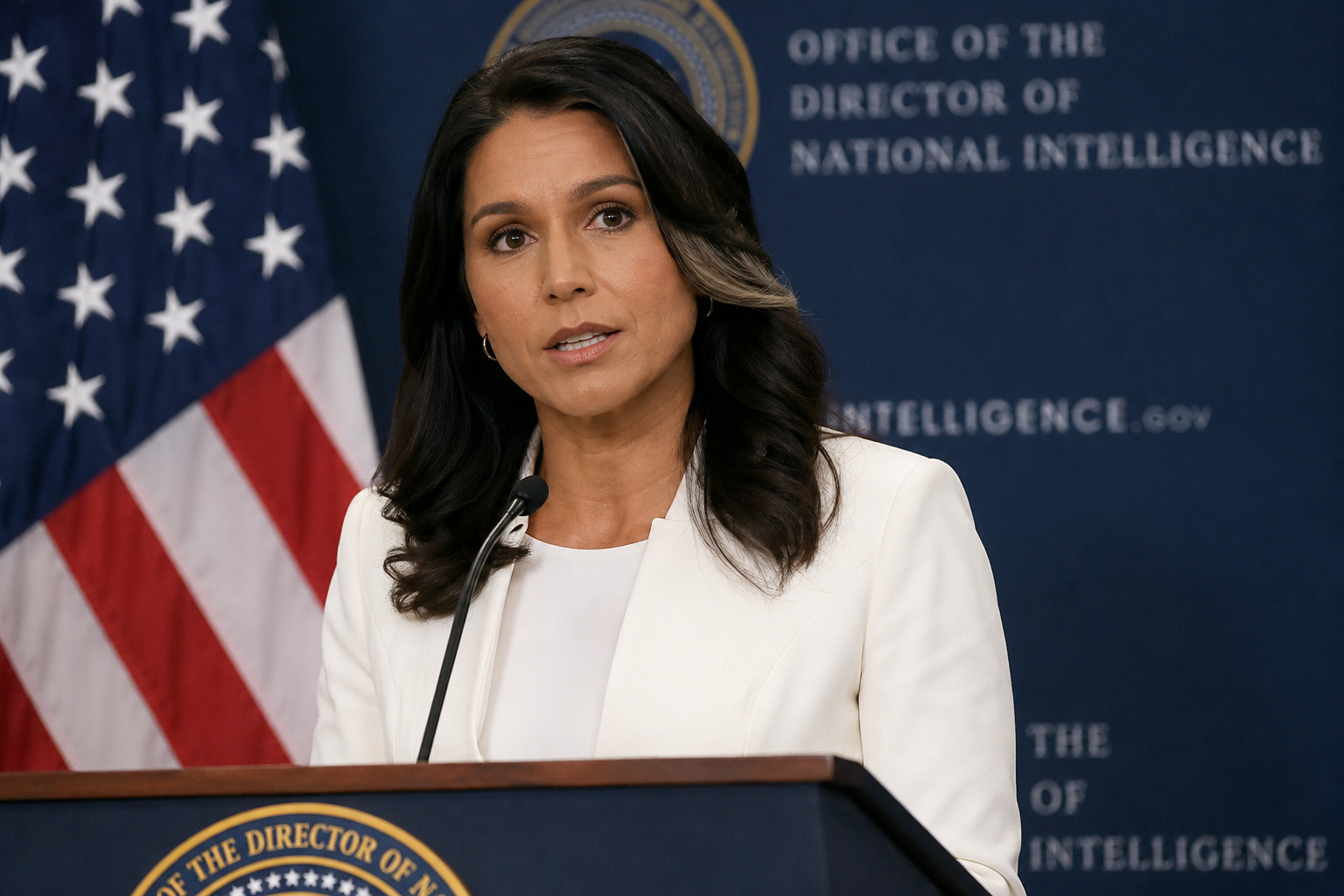
Tulsi Gabbard resigned Friday as President Trump’s Director of National Intelligence, citing her husband’s recent diagnosis with an extremely rare form of bone cancer. The resignation, effective June 30, 2026, ends a tenure of approximately 15 months at the helm of America’s intelligence community.
A Statement Focused Entirely on Family
Gabbard’s resignation letter made no mention of policy disputes, political disagreements, or dissatisfaction with the administration. Her departure is, by all accounts, personal — driven entirely by her husband’s health crisis. The diagnosis involves an extremely rare form of bone cancer, and Gabbard made clear that being present for her family takes priority over any role in Washington.
Principal Deputy Director of National Intelligence Aaron Lukas will serve as acting DNI while the White House begins the search for a permanent replacement. That process will require a presidential nomination and Senate confirmation — a timeline that could stretch several months, leaving the intelligence community without confirmed permanent leadership during a period of significant global tension.
The Fourth Cabinet Departure of Trump’s Second Term
Gabbard’s exit makes her the fourth Cabinet-level official to leave Trump’s second administration. The pattern of departures has raised questions in Washington about the stability of the President’s inner circle, though the White House has consistently characterized each exit differently. In this case, the circumstances are unambiguous — a family medical emergency that no political calculus can override.
The announcement landed quickly and caught many in Washington off guard. Gabbard had shown no public signs of stepping back, and the news arrived with little advance warning. That swiftness underscored the severity of the personal circumstances driving her decision.
From Democratic Congresswoman to America’s Top Intelligence Official
Gabbard’s path to the DNI role was one of the more remarkable political journeys in recent American history. She served as a Democratic congresswoman from Hawaii for eight years and launched a presidential campaign in 2020 before gradually distancing herself from the Democratic Party. By 2022, she had left the party entirely, and her alignment with Trump positioned her as one of the most prominent crossover figures in contemporary politics.
Her confirmation as DNI came after significant Senate scrutiny, with critics questioning her foreign policy stances and past statements on intelligence matters. Supporters argued she brought a needed outsider perspective to a post often dominated by career intelligence officials. During her tenure, she oversaw all 18 U.S. intelligence agencies during a period marked by ongoing conflicts abroad and heightened competition with China and Russia.
What This Means for National Security
The DNI role sits at the top of the American intelligence apparatus, coordinating the work of agencies ranging from the CIA and NSA to the Defense Intelligence Agency. The position was created after the September 11 attacks specifically to improve coordination across the intelligence community. A prolonged vacancy — or an extended period under acting leadership — can slow decision-making at a time when speed and clarity matter enormously in national security contexts.
For ordinary Americans, the DNI’s work rarely makes headlines until something goes wrong. But the intelligence assessments that reach the President’s desk each morning, the threat analyses that shape policy, and the coordination that keeps agencies sharing information rather than competing — all of that flows through this office. Who leads it, and how quickly that leader is confirmed, matters in ways that extend well beyond Washington politics.
Stay informed on the stories that matter most. Follow Your Daily Updates on Facebook and bookmark yourdailyupdates.news for breaking news and analysis.