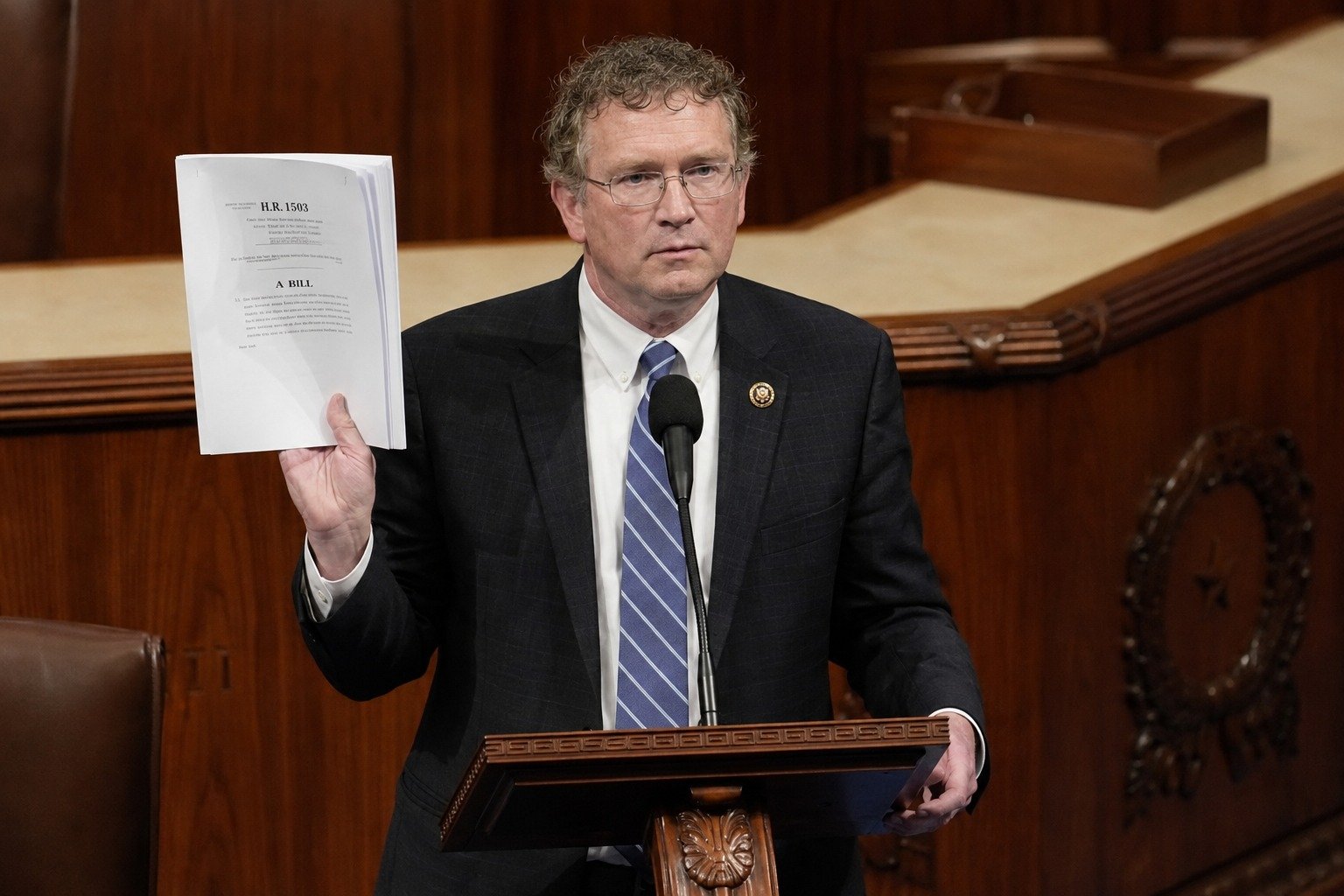
Republican Congressman Thomas Massie stood on the floor of the United States House of Representatives in May 2026 and did something no member of Congress had done before — he named three billionaires he says are among those “likely incriminated” by Jeffrey Epstein’s unredacted files, files the Department of Justice has been sitting on while keeping key names blacked out from the public record.
The Redactions That Sparked a Congressional Confrontation
In February 2026, Massie and fellow Congressman Ro Khanna became among the first members of Congress granted access to the unredacted Epstein files held by the DOJ. What they found was, by both lawmakers’ accounts, deeply troubling — not just for the content of the documents, but for what federal prosecutors had chosen to hide.
At least six names appeared in the files in a manner that, according to both Massie and Khanna, directly implicated those individuals in Epstein’s criminal network. Federal prosecutors had blacked those names out entirely. No explanation was provided. No charges had been filed. No public statement offered any justification for why those specific people received the protection of redaction while others did not.
The DOJ has not publicly explained its redaction criteria, and as of the time of Massie’s floor speech, no additional names from the unredacted files had been disclosed by the government itself.
Massie Names Three on the House Floor
Unwilling to let the silence stand, Massie walked to the House floor and said the names out loud. He identified three of the six redacted individuals: Leon Black, the billionaire former CEO of Apollo Global Management; Jes Staley, the former CEO of Barclays; and Leslie Wexner, the billionaire founder of L Brands and the parent company of Victoria’s Secret.
These were not peripheral figures, according to Massie. He stated clearly that these men were among those the DOJ appeared to be actively shielding — that the redactions were not routine procedure but a deliberate act of concealment. No charges have been filed against any of the three individuals. All three have denied wrongdoing in past statements related to Epstein.
Leon Black acknowledged a financial relationship with Epstein but said it was limited to estate planning advice. Jes Staley, a former JPMorgan executive who later led Barclays, has been the subject of regulatory scrutiny related to his Epstein ties in the UK and US. Leslie Wexner was Epstein’s longest and most prominent financial patron — Epstein managed Wexner’s fortune for years and lived in a Manhattan mansion Wexner transferred to him — and has publicly distanced himself from Epstein since his 2019 arrest.
The Silence from the DOJ
The central issue Massie is raising is not guilt — no court has determined that. The issue is why federal prosecutors chose to black out these specific names while others appeared without redaction in the same documents. If there are legitimate legal reasons — ongoing investigations, procedural protections, classified intelligence — the DOJ has not stated them.
That silence is what drove Massie to use the one venue where he has absolute protection to speak: the House floor, where members cannot be prosecuted for their speech under the Speech or Debate Clause of the U.S. Constitution. It was a deliberate choice. He wasn’t holding a press conference or posting on social media — he was making a formal congressional statement in the one place the government cannot legally punish him for saying it.
Reactions and What Comes Next
The move drew immediate attention from both sides of the aisle. Ro Khanna, a Democrat who reviewed the same files, has been aligned with Massie on the need for greater transparency — unusual bipartisan agreement that has only deepened public suspicion about why the files remain partially sealed. Critics of the redactions argue that the continued concealment serves the interests of the wealthy and powerful rather than any legitimate law enforcement purpose.
Others caution that redactions in ongoing federal investigations are standard procedure and that naming individuals without charges could harm reputations unfairly. The distinction between those arguments, however, hinges entirely on the DOJ being forthcoming about its reasoning — which it has not been.
What This Means for Americans
The Epstein story has never fully gone away because the public has never gotten full answers. The core question — who knew, who participated, and who is being protected — remains unanswered years after Epstein’s 2019 death in federal custody. Massie’s floor speech doesn’t resolve that question, but it forces the DOJ to either explain its redactions or face mounting congressional pressure to release the complete files. For Americans who believe the justice system applies equally to everyone regardless of wealth or connections, the test is simple: either the names come out, or a credible explanation for why they’re hidden does. Right now, there’s neither.
Stay informed on the stories that matter most. Follow Your Daily Updates on Facebook and bookmark yourdailyupdates.news for breaking news and analysis.