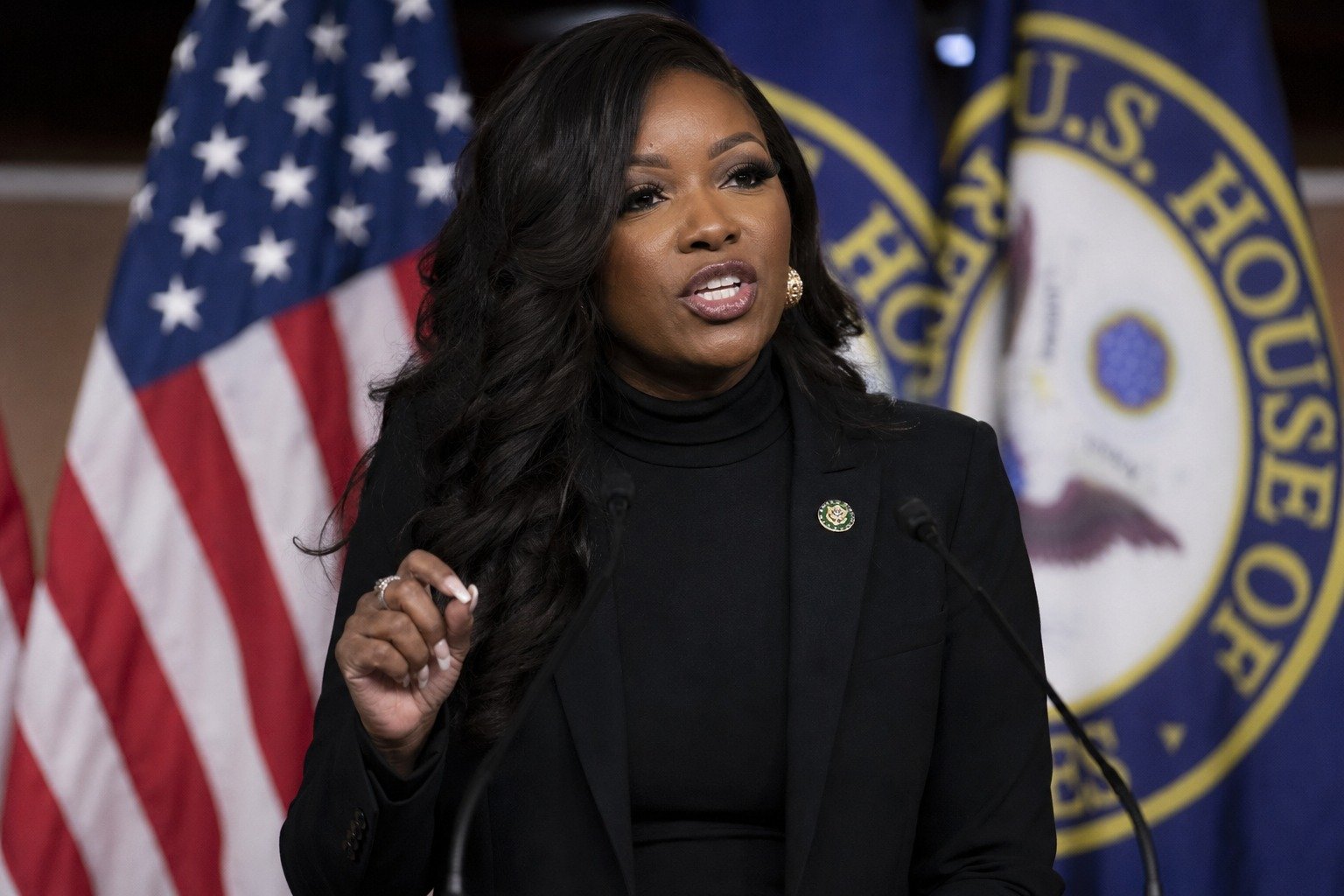
Rep. Jasmine Crockett of Texas has introduced sweeping legislation that would cut off all federal taxpayer funding going to former President Donald Trump, his political allies, and individuals convicted in connection with the January 6 Capitol attack — and force the government to recoup billions already spent. The bill, known as the STOP TRUMP Act, dropped in Congress this week and immediately ignited a firestorm on both sides of the aisle.
What the Bill Does
The STOP TRUMP Act — formally, the Stop Taxpayer-funded Reimbursement for Unlawful Misconduct by Presidents Act — targets a broad category of expenditures. It would prohibit the use of any federal funds to pay legal fees, settlements, or other expenses incurred by Trump, his allies, and those convicted or charged in connection with the January 6 insurrection at the U.S. Capitol.
The bill’s most aggressive provision: a clawback mechanism requiring the federal government to recover an estimated $1.7 billion already disbursed on behalf of Trump and related defendants. Crockett argues that expenditure was made without proper congressional authorization, making it constitutionally suspect. That number has drawn immediate pushback from Republicans, who dispute both the figure and the legal theory behind the clawback.
Crockett’s Argument
Crockett, a first-term Democrat who has become one of the most vocal critics of Trump on Capitol Hill, framed the legislation as a matter of basic constitutional accountability. “Congress has a constitutional obligation to control the purse,” she said in her announcement, arguing that allowing federal money to flow toward Trump’s legal defense without explicit legislative approval sets a dangerous precedent — one that could shield future presidents from financial consequences for their conduct in office.
Crockett also pointed to the January 6 defendants specifically, arguing it is unconscionable for taxpayers to foot the bill for individuals convicted of attacking the democratic process. The bill names that class of recipients explicitly, not just the former president himself.
The Political Chess Move
Republican leadership has signaled the bill will never reach the floor for a vote in the current Congress. But that may not be the point. Crockett’s team has structured this as a forced accountability vote — every member of Congress who declines to support the bill is now on record as having voted, in effect, to allow taxpayer funds to cover Trump’s legal costs. In an election environment where government spending and corruption are key voter concerns, that’s a calculated political liability to impose on opponents.
The legislation has quickly picked up co-sponsors from the progressive wing of the Democratic Party, and advocacy groups are already organizing campaigns to pressure swing-district Republicans who have run on fiscal responsibility platforms.
What This Means for the Broader Debate
The STOP TRUMP Act lands in the middle of an ongoing legal and constitutional debate about presidential immunity, the scope of executive privilege, and what obligations the federal government has — and doesn’t have — to cover the legal expenses of a former president. The Supreme Court’s recent immunity ruling has made some of those questions murkier, not clearer, and Crockett is directly challenging Congress to draw a cleaner line.
Critics, including some moderate Democrats, worry the bill is too broadly written and could set precedents that constrain future presidents from legitimate legal defense. Supporters argue that nothing in the bill would stop Trump or January 6 defendants from using their own private funds — it simply ends the taxpayer subsidy.
What This Means for Americans
At its core, this bill is about one question: should American taxpayers pay for the legal defense of a former president and those convicted of attacking the Capitol? If the $1.7 billion clawback figure is accurate, that’s money that could have gone to veterans’ benefits, infrastructure, or deficit reduction. Whether you support or oppose Trump, the question of who pays his legal bills is a real one with real dollar amounts attached — and Crockett has now forced that question into the open on Capitol Hill.
Stay informed on the stories that matter most. Follow Your Daily Updates on Facebook and bookmark yourdailyupdates.news for breaking news and analysis.