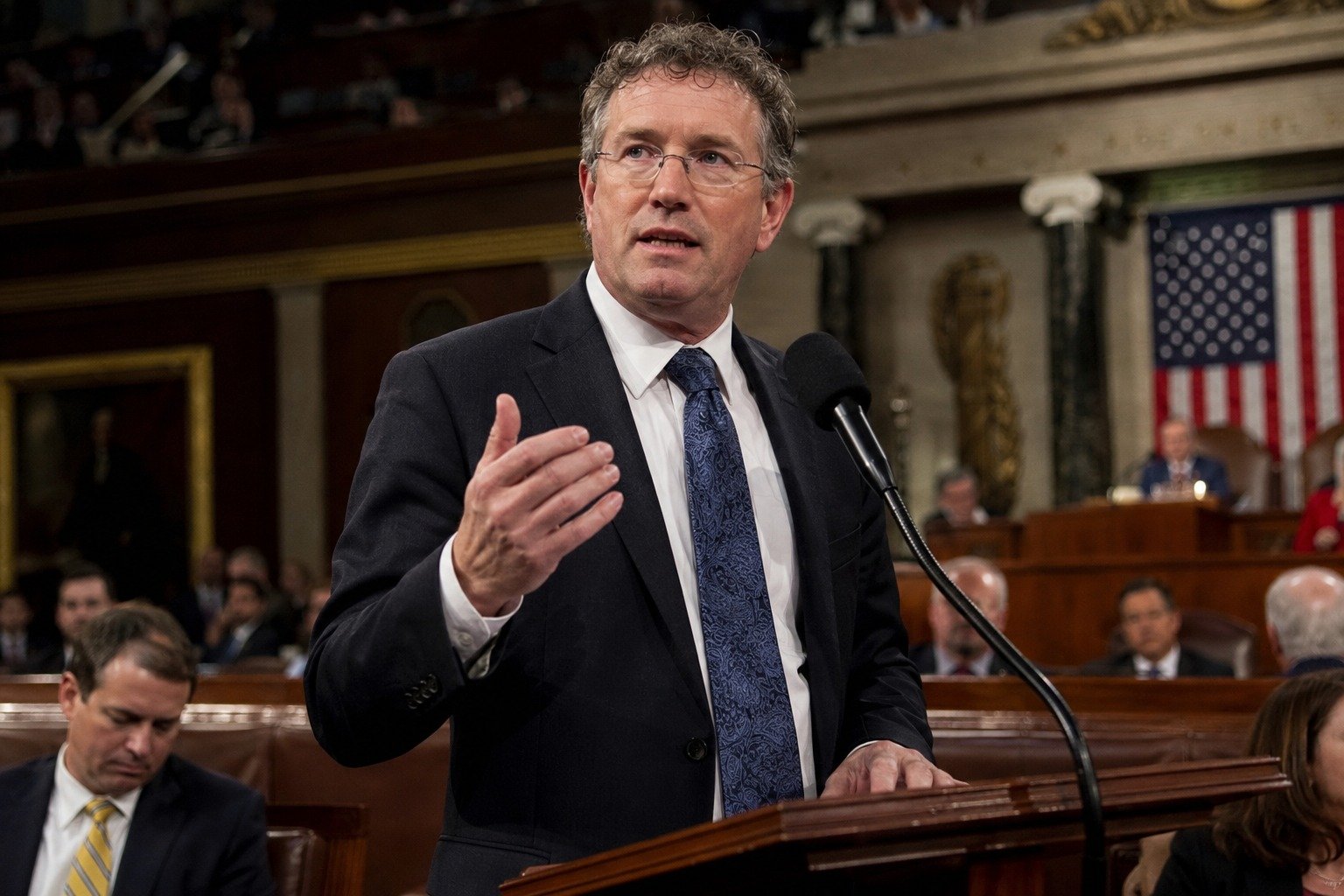
When the Justice Department released portions of the Jeffrey Epstein files, it blacked out the names of dozens of men its own investigators linked to the disgraced financier’s network. On February 25, 2025, Republican Rep. Thomas Massie of Kentucky walked to the floor of the U.S. House of Representatives and read three of those names aloud — names the DOJ had gone to considerable lengths to keep hidden.
The Epstein Files and the Missing Names
The Epstein files saga has stretched across multiple presidencies. Jeffrey Epstein, the convicted sex offender who died in federal custody in August 2019, had documented connections to powerful figures in business, government, and media. In early 2025, the DOJ released a batch of documents related to the case — but with significant redactions that shielded the identities of alleged associates from public view. The redactions drew immediate criticism from members of both parties, who demanded full transparency.
Massie and Khanna Review the Unredacted Files
Massie and Rep. Ro Khanna (D-CA) were among the lawmakers who gained access to review unredacted versions of the documents at the Justice Department. After that review, the two congressmen — a Republican and a Democrat working together — stated publicly that they found at least six men they believe are “likely incriminated” in the files. All six names had been deliberately hidden in the public release.
Massie chose to act. Protected by the speech and debate clause of the Constitution — which shields lawmakers from legal consequences for statements made in official congressional proceedings — he took to the House floor and named three of them.
The Three Names Massie Read
Leon Black is the billionaire founder and former CEO of Apollo Global Management, one of the world’s largest private equity firms. According to the files reviewed by Massie and Khanna, Epstein assisted Black with managing significant tax liabilities — reportedly involving hundreds of millions of dollars. Black previously acknowledged paying Epstein over $150 million for financial advice, a figure that led to his departure from Apollo in 2021.
Jes Staley is the former chief executive of Barclays, the British multinational bank. The Epstein documents allegedly show that Staley had a significant number of contacts with Epstein. Staley was forced out of Barclays in 2021 after UK regulators launched an investigation into his ties to Epstein — ties he had previously described as more distant than the evidence suggested.
Leslie Wexner is the Ohio billionaire who built L Brands, the retail conglomerate behind Victoria’s Secret. Wexner had one of the longest and most documented relationships with Epstein — Epstein served as his money manager for years and at one point lived in a property Wexner owned in Manhattan. Investigators have long described their relationship as “unusually close.”
Where Things Stand Now
As of this report, no criminal charges have been filed against any of the three men Massie named on the House floor. All three have previously denied engaging in criminal conduct. The DOJ has not publicly explained why those names appeared in the Epstein files, why they were redacted from the public release, or what the agency plans to do with the information its investigators compiled.
The move drew immediate reaction. Supporters praised Massie for forcing transparency on a case many Americans believe has never received full accountability. Critics raised questions about naming individuals without formal charges. But the bipartisan nature of the investigation — Massie and Khanna standing together across party lines — added weight to the call for answers.
What This Means
For millions of Americans who have followed the Epstein case for years, the question has always been the same: who else was involved, and will they face consequences? Massie’s floor speech doesn’t resolve that question — but it forces it back into the open. Three names are now permanently on the congressional record. The DOJ’s silence on the redactions has become harder to justify.
Stay informed on the stories that matter most. Follow Your Daily Updates on Facebook and bookmark yourdailyupdates.news for breaking news and analysis.