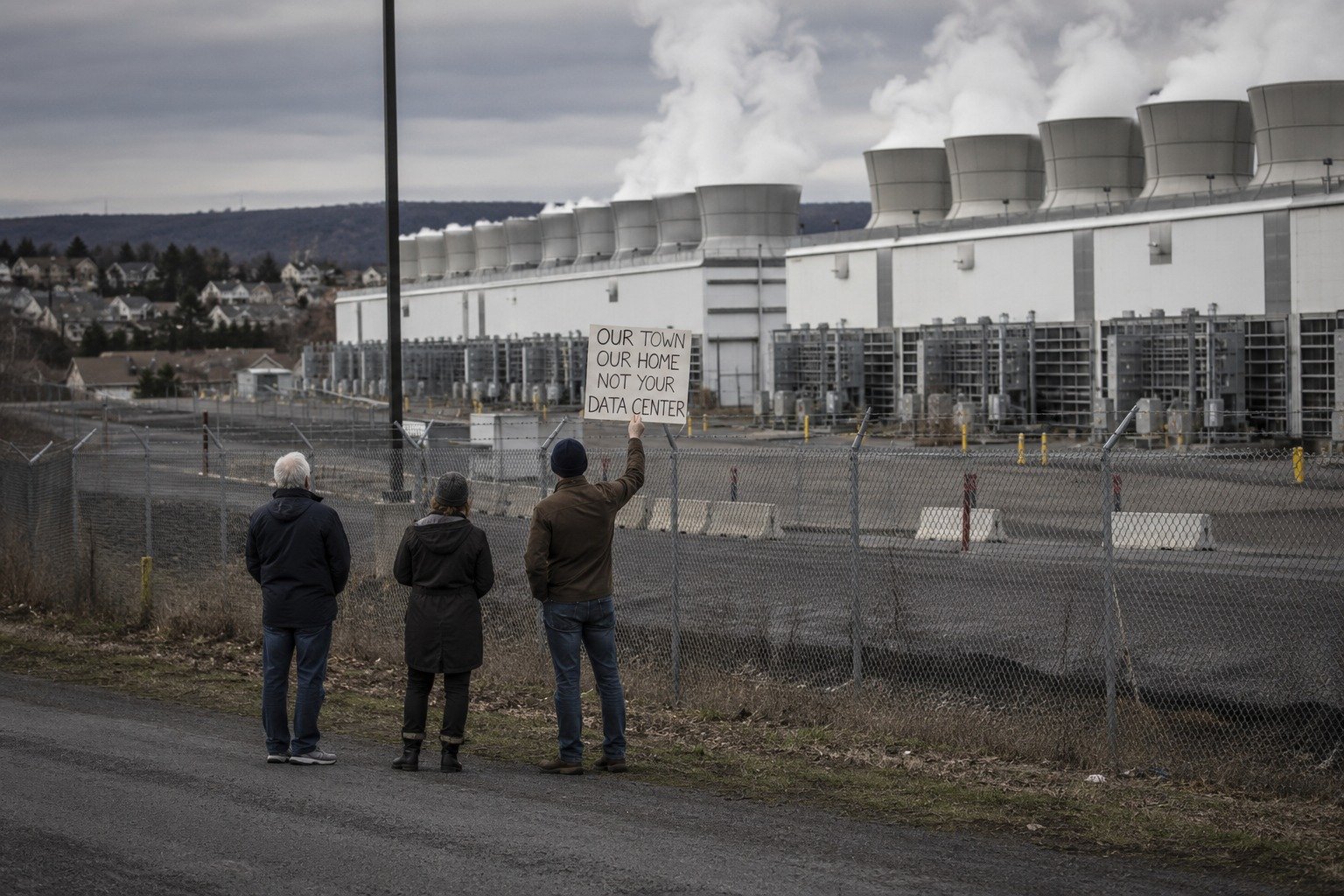
They started as a trickle. Just one year ago, only eight jurisdictions across the United States had any kind of moratorium on AI data center construction. Today, that number has exploded to 78 — with 69 active restrictions and four permanent bans. Communities in nearly every region of the country are saying no to the massive facilities tech giants and AI companies are desperate to build. And the pace of new bans is accelerating: 14 new restrictions were added in just the two months between March and April 2026 alone.
The backlash is being driven by something concrete: the sheer scale of what these facilities demand from the communities that host them. A single large-scale AI data center can consume five million gallons of water every single day — the equivalent of a small city’s entire daily water supply — and enough electricity to power tens of thousands of homes. In Minnesota, 13 proposed data centers would collectively require as much energy as every one of the state’s 2.3 million homes combined. And over the past five years, electricity bills in areas that host major data centers have surged 267% on average — a cost that falls directly on local residents and small businesses, not on the tech companies driving the demand.
Maine Leads the Way — First State to Act
Maine made history in May 2026 by becoming the first U.S. state to pass actual legislation — not just a local ordinance or zoning change, but a formal state law — temporarily blocking construction of large-scale AI data centers that draw more than 20 megawatts of power. The moratorium runs through November 2027, giving Maine time to develop regulations that protect its communities, water supplies, and electrical grid from being overwhelmed by unchecked infrastructure expansion.
Maine’s move signals a shift in the conversation. For years, local governments had been the frontline of resistance — city councils, county commissions, and zoning boards trying to block individual projects on a case-by-case basis. Maine’s statewide action represents a new phase: state governments stepping in with formal legislative authority to slow the buildout and establish guardrails before communities are locked in.
A Federal Push Takes Shape
The fight is moving to Washington as well. On March 25, 2026, Sen. Bernie Sanders and Rep. Alexandria Ocasio-Cortez jointly introduced the Artificial Intelligence Data Center Moratorium Act — a bill that would impose a nationwide halt on constructing or significantly upgrading any data center with a power demand of 20 megawatts or more until, in the bill’s language, “strong national safeguards” are in place to protect communities, energy grids, and water supplies.
The bill faces long odds in a Republican-controlled Congress, where many members have framed AI infrastructure expansion as a matter of national economic competitiveness. But its introduction — and the attention it’s drawn — underscores how far this issue has traveled in a short period. A year ago, opposition to data centers was largely a local story. Today it’s a federal legislative fight with two of the Senate and House’s most prominent progressives leading the charge.
Why 78 Communities Said No
The communities that have enacted bans or moratoriums are diverse — they span rural counties, suburban townships, and small cities across dozens of states. What they share is a common experience: being approached by data center developers promising jobs and tax revenue, then watching as the scale of what was actually planned came into focus. The water consumption. The electrical demand. The noise from cooling systems running 24 hours a day. The strain on local grids that drives up everyone’s bills.
One national poll found that nearly half of all Americans say they would oppose having a data center built near their home. That number has translated into direct action in 78 jurisdictions and counting — with four communities concluding that a temporary moratorium isn’t enough and making their bans permanent.
What This Means for You
The AI industry’s explosive growth depends on an enormous and rapidly expanding physical infrastructure — one that has to be built somewhere, powered by something, and cooled by water drawn from somewhere. For years, the costs of that infrastructure have been quietly borne by the communities that host it. The 78-jurisdiction movement is, at its core, a demand that those costs be acknowledged and addressed before more communities are locked into decades-long agreements they didn’t fully understand when they were signed. Whether the AI industry, state legislatures, and Congress respond — or whether the number of bans keeps climbing — is the story to watch in the months ahead.
Stay informed on the stories that matter most. Follow Your Daily Updates on Facebook and bookmark yourdailyupdates.news for breaking news and analysis.