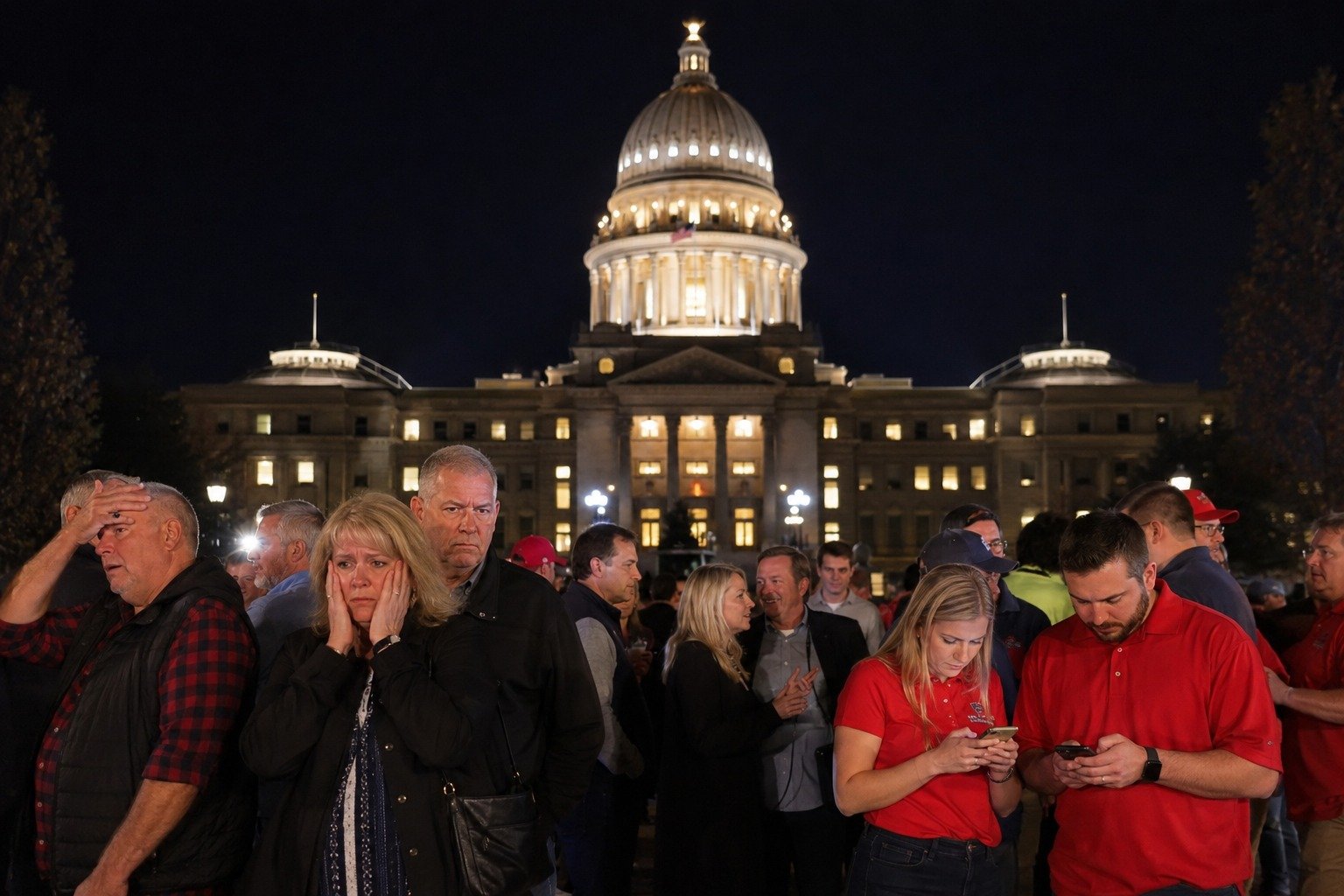
Idaho is one of the reddest states in the country. Its Republican primary is effectively the general election — whoever wins the GOP nomination wins the seat. That’s why what happened Tuesday night sent shockwaves through political circles across the nation: voters in Idaho decisively rejected five members of the legislature’s most extreme faction, the so-called “Gang of Eight,” in their own party’s primary.
The losses were swift and decisive. Five of the eight members of the hard-right bloc lost their primary races to more moderate Republican challengers. Senators Josh Kohl and Glenneda Zuiderveld of Twin Falls were unseated. Representatives Lucas Cayler of Caldwell, David Leavitt of Twin Falls, and Faye Thompson of McCall all went down as well. The three surviving members of the Gang of Eight now represent a rump faction, effectively reduced from eight votes to three in a single election night.
Who Are the Gang of Eight?
The “Gang of Eight” was a bloc of eight hard-right Idaho state legislators who had spent years pushing an aggressive agenda inside one of America’s most conservative legislatures. Their priorities included dramatic cuts to state spending, strict state-level immigration enforcement, and a sweeping rollback of government services. They frequently clashed with more mainstream Republicans who viewed their approach as counterproductive and damaging to Idaho’s economy and communities.
Their immigration enforcement push, in particular, proved to be their undoing. Idaho’s agricultural economy depends heavily on immigrant labor — the farms, ranches, and dairies of the Magic Valley region employ tens of thousands of workers who would be directly impacted by the kind of aggressive state-level enforcement the Gang of Eight championed. When the lawmakers doubled down on those positions, they made a powerful enemy: the agricultural industry that has long been the economic backbone of Idaho’s rural communities.
The Ag Money Turned Against Them
Agricultural groups in the Magic Valley played a central and decisive role in ousting Kohl, Zuiderveld, and Leavitt. Farmers and ranchers mobilized financial resources and voter outreach campaigns against the three lawmakers, making clear that their immigration enforcement votes were not just bad policy — they were an existential threat to the industries that keep rural Idaho running. The message to primary voters was direct: these legislators are hurting Idaho’s economy, and they need to go.
The strategy worked. In primary races that might otherwise have been foregone conclusions in favor of the incumbents, the ag-backed challengers won. It was a demonstration of how quickly political winds can shift even in reliably red territory when economic interests are directly threatened.
A Warning Shot Inside the Republican Party
The results send a striking message that extends far beyond Idaho’s borders. The internal war inside the Republican Party isn’t just playing out in Washington, D.C., or in competitive swing states where Democrats can tip the balance. It’s now breaking out inside the party’s own strongholds — places where Democrats aren’t a factor and the only real contest happens in the primary.
For years, the pattern in deeply red states had been one-directional: hard-right candidates pushed out moderates, primary after primary, moving the legislature further to the right with each cycle. Tuesday’s results in Idaho represent a reversal of that trend. Moderate Republicans, backed by business interests and frustrated constituents, demonstrated that they can still win in a primary fight — even against incumbents with established bases in some of the most conservative districts in the country.
What This Means for Everyday Idahoans
For residents of Idaho, the immediate impact is a legislature that is likely to be less combative and more focused on practical governance. The Gang of Eight’s hard-line positions frequently gridlocked the Idaho Statehouse, creating budget standoffs and policy fights that delayed action on issues everyday Idahoans care about — from education funding to infrastructure. With five of the eight members gone, the incoming legislature may find it easier to move on priorities that directly affect people’s daily lives.
The results also send a message to hard-right legislators in other red states: economic coalitions and business interests still have the power to shape primary outcomes, and voters — even deeply conservative ones — have their limits when political ideology starts costing them real money.
Stay informed on the stories that matter most. Follow Your Daily Updates on Facebook and bookmark yourdailyupdates.news for breaking news and analysis.