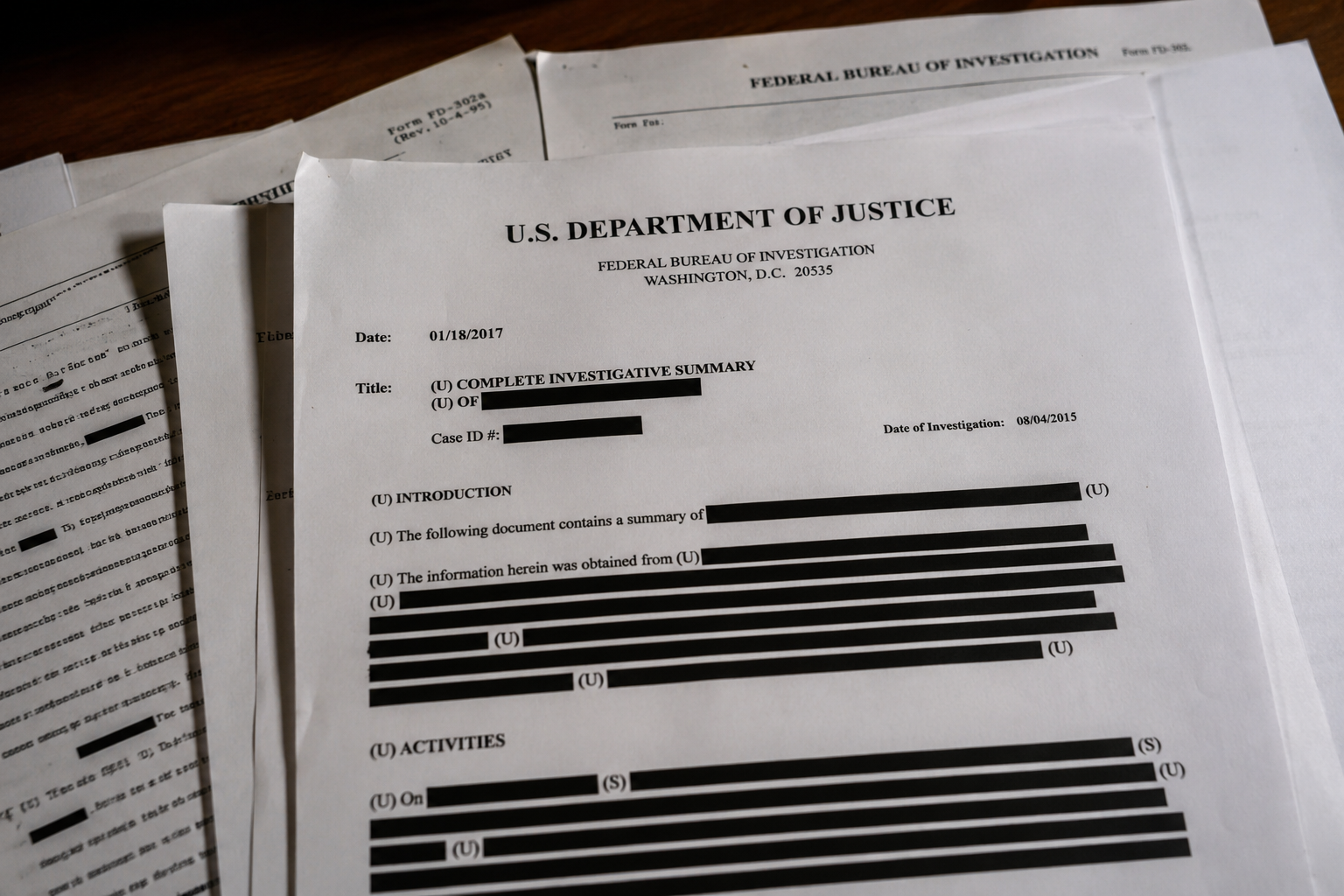
The Department of Justice released a batch of FBI files connected to Jeffrey Epstein’s sex trafficking operation — but what Americans received was not transparency. It was a masterclass in strategic concealment. Entire sections of the documents were blacked out with thick redaction bars, and the names of men described as connected to Epstein’s network were gone entirely. In their place: black boxes, and silence.
What the DOJ Chose to Hide
The Epstein files had been a political pressure point for years. Advocacy groups, congressional members, and members of the public had demanded full disclosure of who was involved in Epstein’s crimes — a trafficking network that prosecutors said operated for decades and reached into the highest levels of politics, finance, and entertainment. When the DOJ finally moved to release a portion of the files under pressure from the Trump administration, many expected answers.
What they got instead was a document dump with critical information removed. The names of individuals who investigators believed had access to or benefited from Epstein’s operation were systematically blacked out. Critics immediately accused the DOJ of protecting powerful people rather than serving the public interest. Even supporters of the release admitted it fell far short of full accountability.
Massie Takes It to the House Floor
Rep. Thomas Massie of Kentucky had had enough. The outspoken Republican congressman walked onto the floor of the House of Representatives and, speaking directly into the congressional record, began naming the men whose names the Department of Justice had worked to conceal. His remarks — now a permanent part of the official congressional record — cannot be redacted, scrubbed, or blacked out by any government agency.
The floor address quickly spread across social media and news outlets, drawing both praise from transparency advocates and furious pushback from those named or connected to those named. Massie was unapologetic. In his remarks, he made clear that the government’s decision to redact the names was itself an act of obstruction — and that the only way to break the cycle was to say out loud what the bureaucrats had chosen to hide.
Pressure Mounts on the DOJ
The move puts significant political pressure on the Justice Department, which has already been under scrutiny for what critics call a slow and selective approach to releasing Epstein-related documents. Congressional investigators have pushed repeatedly for a fuller accounting of Epstein’s network, and the redactions in the latest release have reinvigorated those calls. Multiple lawmakers are now demanding the DOJ explain specifically who authorized the redactions and on what legal basis.
What This Means for Americans
The Epstein case has become a defining test of whether accountability in America applies equally to the powerful and the powerless. For millions of Americans who watched Epstein escape serious consequences for years before his 2019 arrest — and then die in federal custody under disputed circumstances — the continued redactions feel like confirmation that the system protects its own. Massie’s floor speech was not just a political act. It was a reminder that elected officials still have tools to pierce through institutional silence — and at least one of them is willing to use them.
Stay informed on the stories that matter most. Follow Your Daily Updates on Facebook and bookmark yourdailyupdates.news for breaking news and analysis.