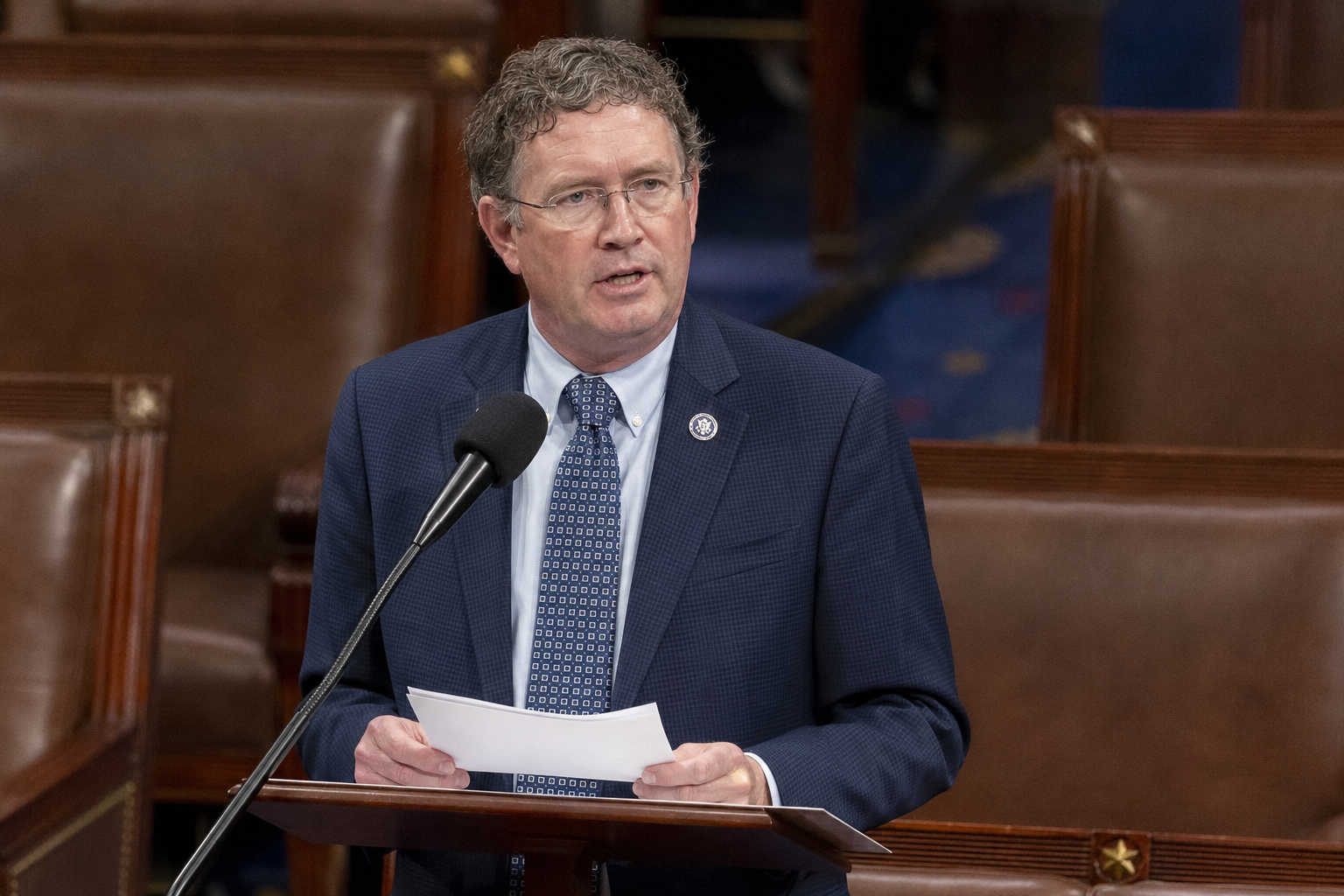
When Rep. Thomas Massie (R-KY) walked into the Department of Justice in February 2026 to review the unredacted Epstein files, he expected answers. What he found was more stonewalling. After reviewing the documents alongside Rep. Ro Khanna (D-CA), Massie said at least six men appeared “likely incriminated” by the evidence — but their names had been blacked out by federal prosecutors with zero explanation.
The two lawmakers were among the first members of Congress to view the unredacted files at the DOJ’s secure facilities. What they saw alarmed them. According to Massie and Khanna, the Justice Department had redacted the identities of multiple individuals the evidence pointed toward — people who, based on the documents reviewed, appeared deeply connected to Jeffrey Epstein’s criminal network. Their names remained hidden, shielded by prosecutorial decisions that had no public justification.
Massie put the DOJ on notice: unredact those names or he would handle it himself. Under the Constitution’s Speech and Debate Clause, members of Congress cannot be prosecuted or sued for anything said during official legislative proceedings — giving him full legal immunity to name anyone, no matter how powerful, from the floor of the House. It was a legal trump card, and Massie made clear he was willing to use it.
The DOJ didn’t act fast enough. On February 24th, Massie walked to the floor of the U.S. House of Representatives and named three men he said federal prosecutors should be investigating: Leon Black, the billionaire former CEO of Apollo Global Management; Jes Staley, the former chief executive of Barclays bank; and Leslie Wexner, the billionaire founder of L Brands and Victoria’s Secret. All three had documented connections to Epstein that had previously been reported in the press — but the formal Congressional naming on the House floor was a different matter entirely.
The message was blunt: despite the evidence sitting inside those files, the DOJ had taken no action. No charges. No arrests. No investigations of any of the individuals implicated. Massie made it plain — if the government wouldn’t act, he would at minimum ensure that the American public knew what was in those documents. “Let me drop the names now,” Massie declared. So he did — live, on the record, with cameras rolling, protected by the full weight of the Constitution.
The move sent shockwaves across Washington. Critics demanded to know why the Justice Department had been protecting the identities of men implicated in one of the most explosive criminal investigations in modern American history. Legal analysts noted that Massie’s use of the Speech and Debate Clause was both strategically sound and effectively unchallengeable — no civil suit, no criminal referral could touch him for what he said on that floor. Supporters called it a rare moment of a lawmaker actually using the power of his office rather than simply posturing for cameras.
The Epstein files saga has dragged on for years, with successive administrations promising transparency while delivering redactions. Massie’s floor speech represented a direct challenge to that pattern — and raised a question that neither party has fully answered: if the evidence is as damning as these lawmakers suggest, why has the Department of Justice moved so slowly to act on it? As of May 2026, no charges have been filed against any of the three men Massie named on the House floor.