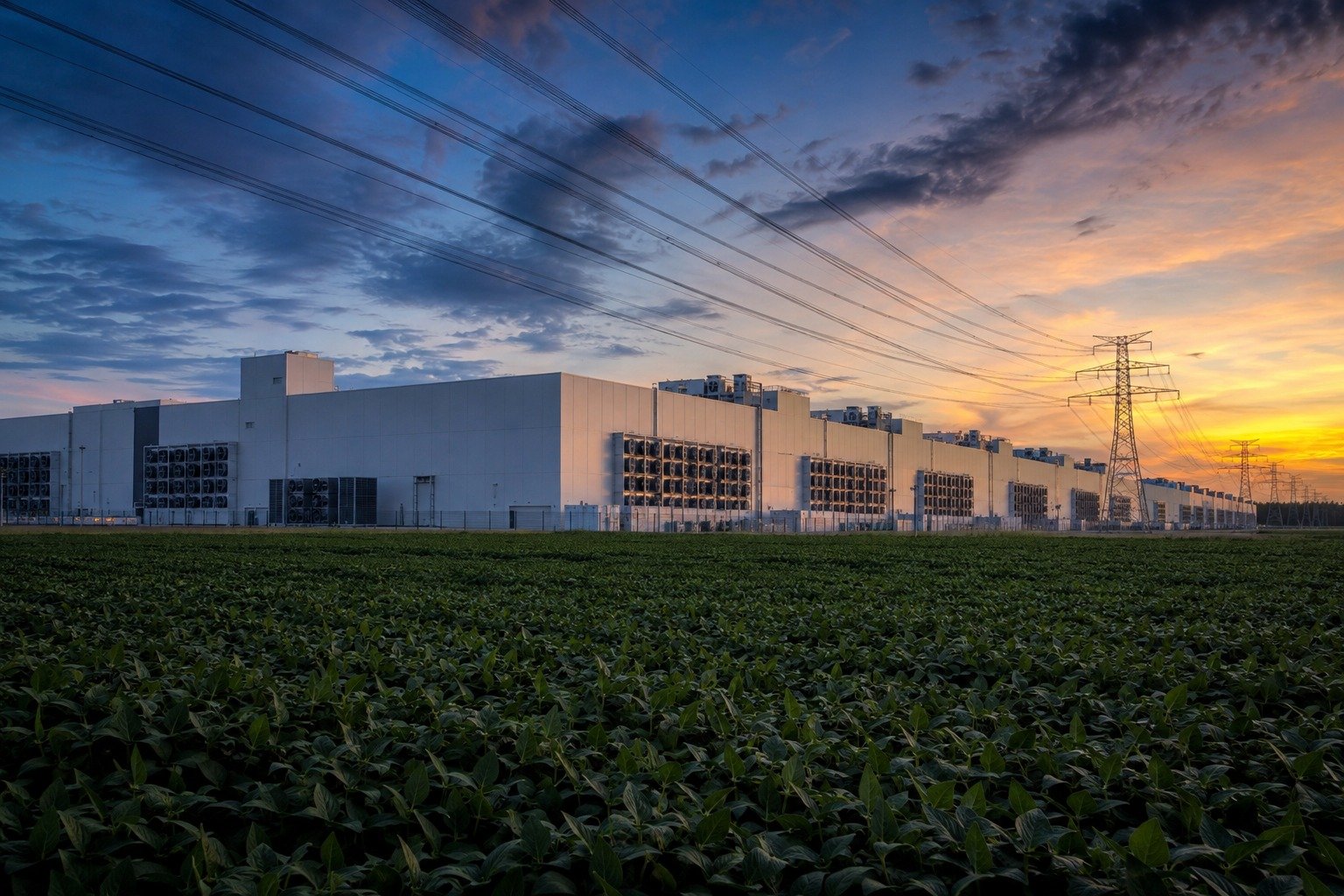
A grassroots movement in Ohio is taking direct aim at Big Tech — and it has already gathered 25,000 signatures in just five weeks. The group, Ohio Residents for Responsible Development, is pushing for a constitutional amendment that would ban large-scale AI data centers from being built anywhere in the state, marking one of the most aggressive local responses to the artificial intelligence infrastructure boom in American history.
The Proposed Amendment
The proposed ballot amendment would prohibit construction of any data center with an aggregate power demand exceeding 25 megawatts. That threshold is specifically calibrated to target the massive hyperscale facilities being built by Amazon, Google, Meta, Microsoft, and other technology giants racing to expand their AI infrastructure. Rather than seeking a simple law — which could be reversed by a future legislature — organizers are going straight for Ohio’s constitution, making the ban far more difficult to undo.
To get there, the group must collect 413,488 valid signatures by July 1, 2026, in order to appear on Ohio’s November 2026 ballot. The 25,000 signatures collected so far represent roughly six percent of the total needed, with just weeks remaining before the deadline. Organizers say additional signatures are still being counted and expressed confidence in hitting the threshold, pointing to strong turnout at community events and growing online engagement.
Why Ohio? The Data Center Capital Nobody Asked For
Ohio has quietly emerged as one of the most active data center corridors in the United States. The state offers a combination of cheap land, available water, established power infrastructure, and tax incentives that have made it a magnet for corporate investment. Billions of dollars have poured into Ohio data centers over the past several years, and more projects are in the pipeline. What looked like an economic win to state officials has, for many residents, become a source of growing alarm.
The concerns are not abstract. Large data centers consume enormous amounts of electricity — comparable to small cities — and require significant water for cooling systems. Local power grids face increased strain, potentially driving up energy costs for nearby residents and businesses. Critics also point out that for the scale of investment involved, data centers create relatively few permanent local jobs compared to traditional manufacturing or commercial developments. Many communities near planned or existing facilities report noise from industrial cooling equipment and worry about long-term infrastructure degradation.
A National Flashpoint
The Ohio effort is part of a broader national backlash against the rapid expansion of AI infrastructure. Across the country, local governments have seen pushback from residents objecting to data centers being built in their communities. Some jurisdictions have enacted temporary moratoriums. Others have passed zoning restrictions. But a constitutional amendment — if it succeeds — would go further than anything attempted at the state level in the United States, and would set a precedent with implications far beyond Ohio’s borders.
Technology companies and business groups have not been silent. Industry representatives argue that data centers are essential infrastructure for America’s economic competitiveness and national security, and that restricting their construction at the state level could push critical investment to other countries. Supporters of the amendment counter that communities should have meaningful say over what gets built in their backyards, particularly when the environmental and infrastructure costs are borne locally while corporate profits flow elsewhere.
What Happens Next
If organizers certify enough valid signatures before the July 1 deadline, Ohio voters will decide in November 2026 whether to write the prohibition directly into their state constitution. A successful vote would immediately halt any new data center construction above the 25-megawatt threshold and would place Ohio in uncharted legal territory as tech companies almost certainly challenge the amendment in federal court. Win or lose at the ballot box, the campaign has already accomplished something significant: it has demonstrated that grassroots opposition to the AI infrastructure boom is organized, motivated, and capable of reaching the democratic process.
Stay informed on the stories that matter most. Follow Your Daily Updates on Facebook and bookmark yourdailyupdates.news for breaking news and analysis.