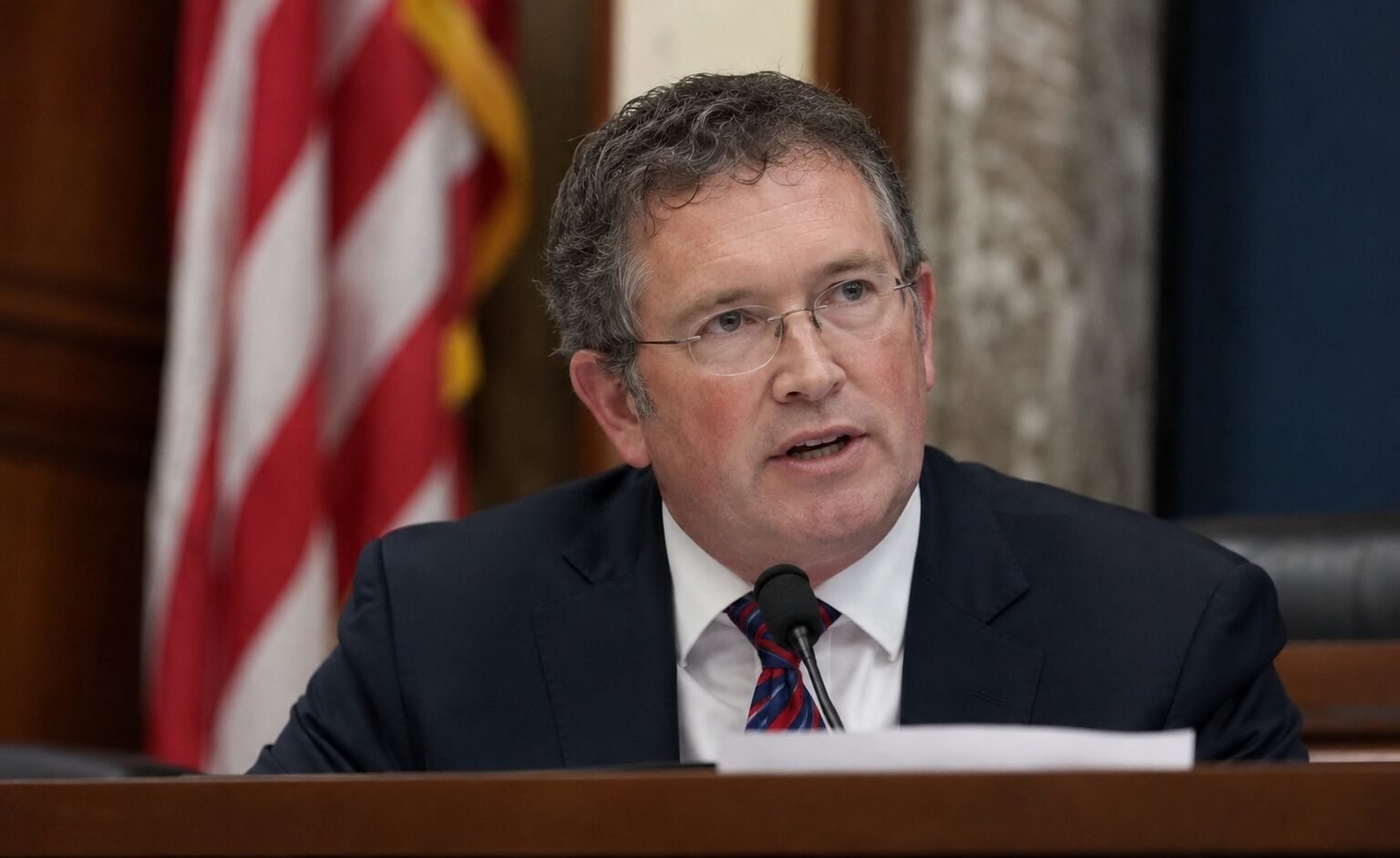
One of the most powerful lobbying organizations in Washington may soon face a legal reckoning that its leaders never anticipated. Rep. Thomas Massie, a libertarian-leaning Kentucky Republican, introduced the “Americans Insist on Political Agent Clarity (AIPAC) Act” on May 15, 2026 — legislation that would force the American Israel Public Affairs Committee to register under the Foreign Agents Registration Act, the same federal law that governs lobbyists working directly on behalf of foreign governments.
What Is FARA — and Why Does It Matter?
The Foreign Agents Registration Act has been on the books since 1938, originally created to expose Nazi propaganda operations inside the United States. Today, FARA requires any person or organization acting as an agent of a foreign principal — a government, political party, or entity — to register with the Department of Justice, disclose their activities publicly, and label all materials they distribute as coming from a foreign agent.
FARA violations are serious federal crimes carrying penalties of up to five years in prison and substantial fines. High-profile enforcement actions in recent years — including cases against former Trump campaign chairman Paul Manafort and lobbyists connected to foreign governments — have put the law back in the spotlight. The question Massie’s bill forces Americans to confront: should the same disclosure rules apply to AIPAC?
AIPAC’s History and the Case for Registration
AIPAC — the American Israel Public Affairs Committee — has operated for decades as one of the most influential lobbying organizations in Washington without FARA registration. The organization argues it is a domestic group representing American citizens who support a strong U.S.-Israel relationship, not an agent of the Israeli government.
But critics have long argued that when an organization’s primary function is advancing the interests of a specific foreign nation — and when it spends tens of millions of dollars to elect or defeat American candidates based entirely on their positions toward that nation — FARA registration is exactly what Congress intended the law to require. Massie’s legislation would make that argument official federal policy.
The spending numbers are hard to ignore. AIPAC poured over $100 million into the 2022 election cycle and is believed to have spent more than $25 million targeting Democratic primaries in 2024 — largely going after progressive incumbents who had taken pro-Palestinian positions. In several races, AIPAC’s outside spending made individual House primaries the most expensive in American history. Massie contends that scale of foreign-policy-driven political spending is precisely what FARA’s disclosure requirements were designed to expose.
Why This Bill Is Different
Calls for AIPAC to register as a foreign agent have existed for years — but they have almost always come from the progressive left, from figures like Rep. Ilhan Omar and other members of the Squad who have clashed directly with AIPAC over its spending in their districts. Thomas Massie is not from the progressive left. He is a libertarian-leaning Republican from rural Kentucky who has built his political identity around limited government, civil liberties, and foreign policy restraint.
His sponsorship of the AIPAC Act signals something significant: the skepticism of AIPAC’s unregistered lobbying status is no longer ideologically confined. Concerns about foreign influence operations in American elections — regardless of which nation or which political cause is driving them — are gaining traction across party lines. In a Washington where almost nothing crosses the partisan divide, that is worth noting.
AIPAC’s Defense and the Counter-Argument
AIPAC and its defenders push back hard on the foreign agent framing. The organization maintains that its membership is entirely American, that it receives no funding or direction from the Israeli government, and that its advocacy reflects the genuine views of millions of American citizens who believe a strong U.S.-Israel alliance serves American interests. Under that framework, forcing AIPAC to register as a foreign agent would be both legally incorrect and a politically motivated attack on pro-Israel Americans.
Legal experts are divided. The Justice Department has historically been reluctant to apply FARA to domestic advocacy organizations even when their work clearly benefits a foreign government, preferring to reserve the law for cases involving direct foreign government control or funding. Whether Massie’s bill could survive constitutional challenges — particularly First Amendment arguments about political speech — remains an open question that courts would ultimately have to resolve.
What This Means for Americans
At its core, Massie’s bill is about one question every American should care about: who is actually influencing your elections, and should they have to tell you? Foreign-policy-driven spending that targets American candidates — whatever the foreign policy or whatever the nation — raises legitimate questions about transparency and democratic accountability. Whether AIPAC ultimately qualifies as a foreign agent under FARA is a legal question. Whether Americans deserve to know the full picture of who is spending to shape their elections is a democratic one.
Stay informed on the stories that matter most. Follow Your Daily Updates on Facebook and bookmark yourdailyupdates.news for breaking news and analysis.