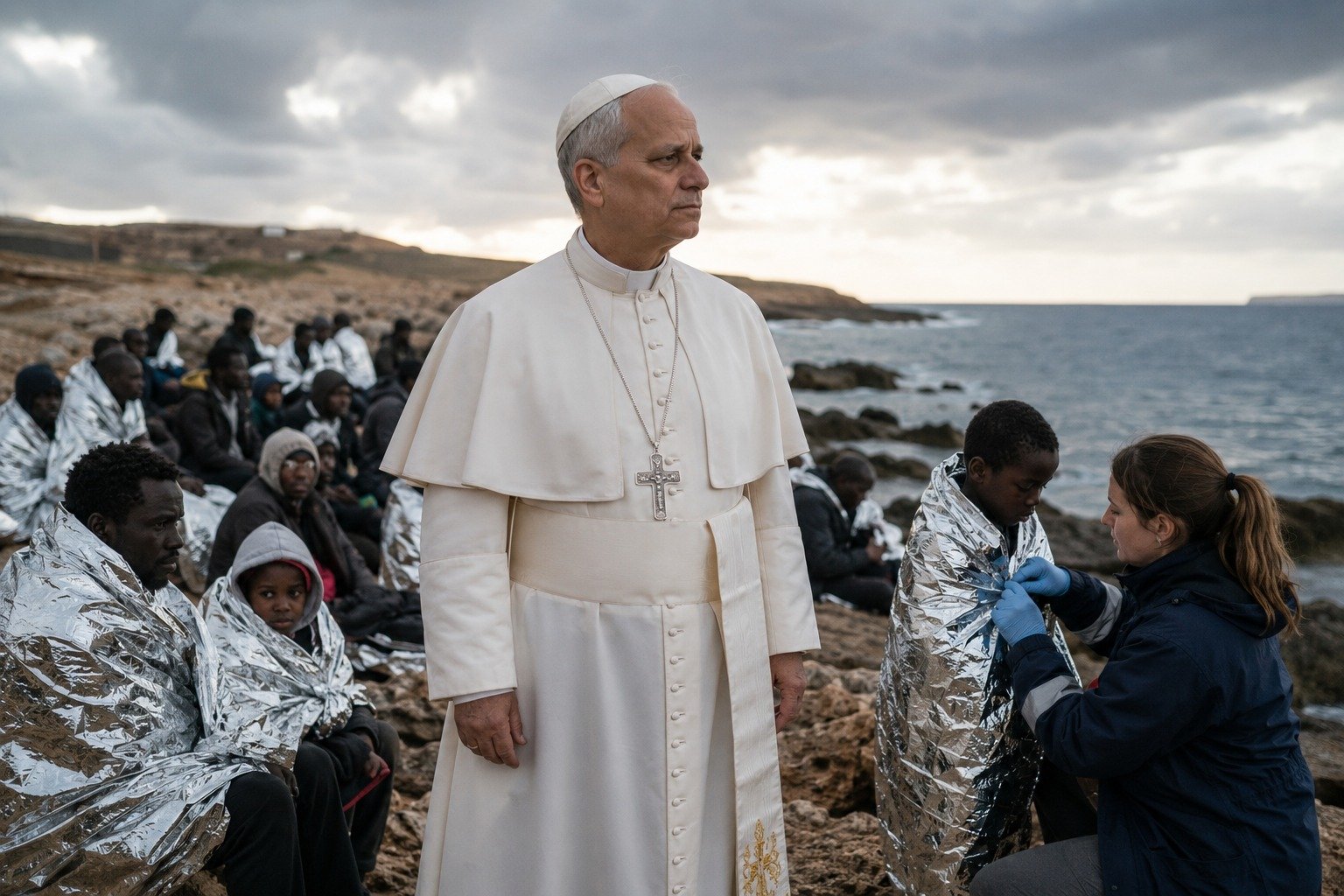
Pope Leo XIV, the first American-born pope in the history of the Catholic Church, will spend this July 4th on the Italian island of Lampedusa — not in the United States. As America prepares to celebrate its 250th birthday, the pontiff who grew up in Chicago has chosen to stand with migrants on the Mediterranean’s front line instead of returning home for the milestone event.
The First American Pope Chooses Migrants Over Milestones
Robert Francis Prevost was elected as Pope Leo XIV earlier this year, making history as the first American to ever lead the world’s 1.4 billion Catholics. His election sparked enormous pride across the United States — a Chicago native ascending to the most powerful seat in the Catholic Church was seen as a defining moment in American Catholic history. The Vatican’s announcement that he would skip the U.S. 250th anniversary celebration was therefore unexpected for many Americans who had hoped the new pope would mark the milestone with a homecoming visit.
Lampedusa is a small island located between Sicily and North Africa, and for the past decade it has served as the primary landing point for migrants and asylum seekers crossing the Mediterranean from Libya and Tunisia. Hundreds of thousands have arrived on its shores by boat — many in flimsy, overcrowded vessels. Thousands more have died at sea before reaching it. The island has become a symbol of Europe’s immigration crisis and of the human cost of irregular migration.
What the Vatican Announced — and Why It Matters
The Vatican confirmed in February 2026 that Pope Leo XIV would travel to Lampedusa on July 4th as part of a deliberate symbolic gesture. A Vatican spokesperson described the visit as a “direct act of solidarity” with migrants and refugees, echoing the kind of visit Pope Francis made to the same island in 2013, shortly after his own election. The parallel is unmistakable — Leo XIV is signaling from the very beginning of his papacy that the global refugee crisis will remain a central moral priority of his leadership.
The Liberty Medal — one of the United States’ most prestigious civic honors — will be awarded to Pope Leo XIV in connection with the July 4th celebrations. Rather than accepting the medal in person on American soil, the pontiff will participate in a remote broadcast from Lampedusa. The decision to accept a major American honor while physically standing on a migrant island sent an unmistakable message about where his priorities lie.
The pope’s July 4th plans stand in striking contrast to what many expected from the first American pope. Previous pontiffs have made historic visits to the United States during their papacies, and many American Catholics had anticipated that Pope Leo XIV might use the country’s 250th anniversary as the backdrop for a landmark homecoming. That visit, if it comes at all, will have to wait.
Divided Reaction at Home and Abroad
Reaction has been divided. Catholic leaders who share the pope’s focus on social justice have praised the decision as a bold and spiritually courageous act — prioritizing the marginalized over the celebratory. Critics, including some American Catholic commentators, have questioned why the first American pope would choose to be absent from such a historic national milestone. Social media has erupted with debate, with many asking whether the decision reflects a broader statement about American immigration policy.
The Vatican has not indicated whether the pope plans to visit the United States later in the year. His July 4th choice has, however, cemented his early image as a pope who leads with symbolic gestures on migration and humanitarian issues — a continuation of themes that were central to Pope Francis’s papacy for more than a decade.
What This Means for American Catholics — and Everyone Else
For American Catholics — roughly 70 million people — the decision raises complex questions about identity, leadership, and moral priorities. The first pope to come from the United States is making it clear from day one that his role is global, not national. Whether that sits well with American believers may shape the entire early tone of his papacy at home. For non-Catholic Americans watching from the outside, the image of a Chicago-born pope on a migrant island on the Fourth of July will be impossible to ignore — and impossible to forget.
Stay informed on the stories that matter most. Follow Your Daily Updates on Facebook and bookmark yourdailyupdates.news for breaking news and analysis.