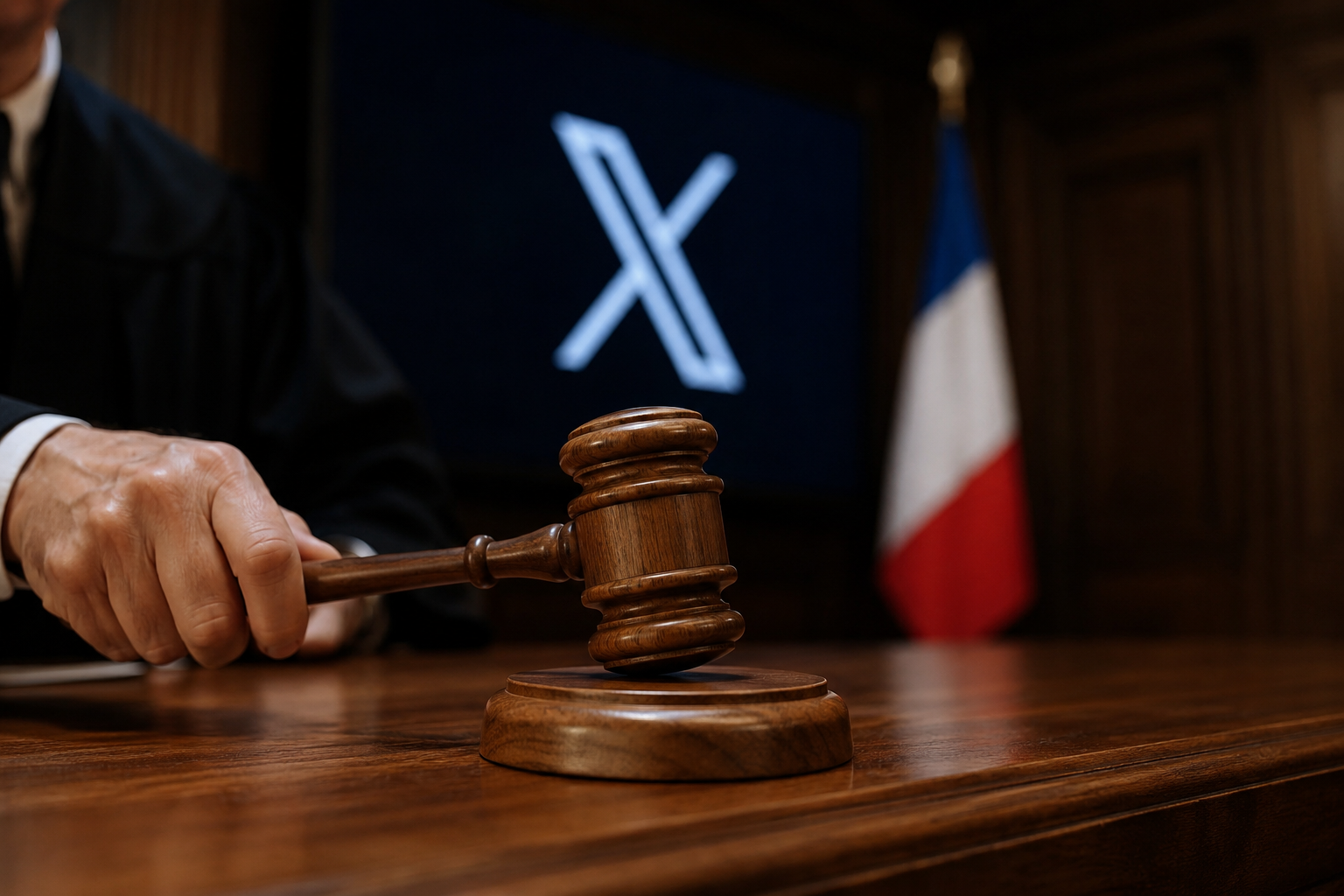
France has officially opened a criminal investigation into Elon Musk and his social media platform X, with French prosecutors alleging the platform deliberately manipulated its algorithm to interfere in French political discourse — a charge that carries serious criminal liability under French law. The probe represents one of the most aggressive legal actions any government has taken against a major U.S. tech company and its billionaire owner.
How the Investigation Began
The case has been building since early 2025, when French lawmaker Éric Bothorel filed an initial complaint against X with French authorities. What started as a parliamentary-level inquiry has now escalated to the most serious tier of criminal investigation under the French legal system. The escalation was not gradual — it was driven in large part by what investigators say was deliberate non-cooperation from Musk and X’s leadership.
France’s cybercrime prosecutors have jurisdiction over a broad range of digital offenses, and the charges assembled against Musk and X fall squarely within that mandate. French law treats algorithmic manipulation of political content as a threat to democratic integrity — and unlike the United States, France has both the legal framework and the political will to treat it as a criminal matter.
The Charges: Algorithm Manipulation, Deepfakes, and Holocaust Denial
The charges against Musk and X are layered and serious. The core allegation is that X’s algorithm was deliberately configured to amplify certain political viewpoints in French users’ feeds — effectively using the platform’s reach to tilt France’s political discourse in a specific direction. French prosecutors call this illegal interference in the country’s democratic process.
Beyond the algorithmic manipulation allegations, Musk and X face a second set of charges tied to Grok, X’s AI chatbot. Prosecutors allege that X knowingly allowed Grok users to generate and distribute Holocaust denial content and nonconsensual sexually explicit deepfake images. Both are criminal offenses under French law — and the allegation that X did this knowingly is what elevates it from a content moderation failure to potential criminal liability.
Both Musk and Yaccarino Refused to Appear
French authorities didn’t move quietly. They formally summoned both Musk and former X CEO Linda Yaccarino to appear before investigators and answer questions about the platform’s conduct. Both refused. The French prosecutor’s office confirmed the no-shows on the record — a decision that almost certainly accelerated the probe’s escalation to full criminal investigation status. Declining a formal legal summons in France is not without consequence, and investigators appear to have taken it as a signal to move faster, not slower.
The U.S. Government Is in Musk’s Corner
The United States government has not stayed neutral. The Department of Justice reportedly informed French investigators that it would not cooperate with any probe targeting Musk or X — and went a step further, formally accusing France of inappropriately interfering with an American business operating abroad. It’s a significant escalation: the U.S. government is not just refusing to help, it’s actively pushing back against France’s right to pursue the case at all.
Musk’s allies have echoed that framing, calling the investigation a politically motivated attack by a foreign government on a private American company. France, they argue, is using its legal system to punish a platform that allowed conservative and right-leaning voices to be heard — voices that European governments are uncomfortable with. French officials have dismissed that characterization entirely, pointing to the specific criminal statutes at issue and the formal evidence gathered by prosecutors.
What This Means for Americans
The France-Musk standoff raises a question that goes far beyond Paris: can foreign governments hold American tech companies criminally liable for what their platforms do inside those countries’ borders? If France succeeds, it creates a precedent that could encourage other nations to pursue similar investigations against American social media companies — from X to Meta to Google. If the U.S. government successfully blocks cooperation, it could trigger a broader diplomatic crisis over tech sovereignty, one with real consequences for American companies operating globally. Either way, the outcome of this case will shape how the world regulates Big Tech for years to come.
Stay informed on the stories that matter most. Follow Your Daily Updates on Facebook and bookmark yourdailyupdates.news for breaking news and analysis.