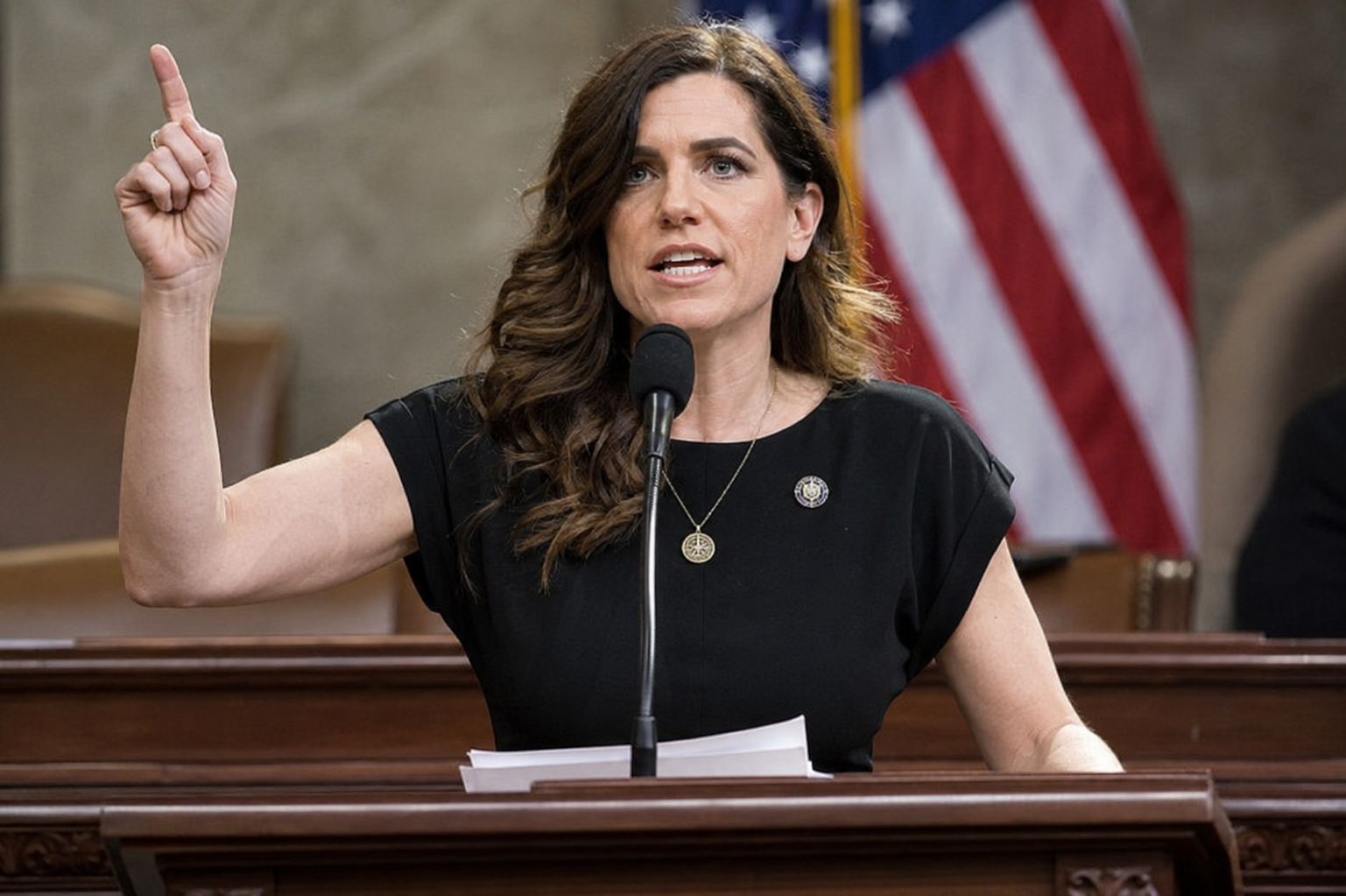
Rep. Nancy Mace introduced the Death Penalty for Child Rapists Act this week, legislation that would authorize the federal government to execute individuals convicted of the most severe sexual crimes against children — and she knows the Supreme Court has already said no.
What the Bill Does
The South Carolina Republican’s legislation targets three categories of federal offenses: aggravated sexual abuse of a child, sexual abuse of a minor, and abusive sexual contact against children. If enacted, those convicted under these statutes would face the possibility of the death penalty. The bill also extends capital punishment eligibility to military courts under the Uniform Code of Military Justice — consistent with a provision Mace already secured in a previous National Defense Authorization Act.
Mace, who has publicly identified herself as a survivor of sexual assault, framed the bill in unambiguous terms. “Rape a child and you don’t get a second chance, you get the death penalty,” she stated when introducing the legislation. “We will never apologize for protecting America’s children.”
The Constitutional Wall
There is a significant legal obstacle standing in the way: Kennedy v. Louisiana, the 2008 Supreme Court decision that ruled 5-4 that executing a person for the rape of a child — when the victim survives — constitutes cruel and unusual punishment under the Eighth Amendment. That ruling remains binding precedent, and legal analysts across the political spectrum have noted that any law authorizing the death penalty for child rape would face near-certain constitutional challenges the moment it reached a federal courtroom.
The five-justice majority found that a national consensus had formed against the death penalty for non-homicide crimes against individuals. Justice Anthony Kennedy wrote for the majority that the Eighth Amendment’s standard of decency had evolved to exclude capital punishment in cases where the victim survives. Four justices dissented, including Chief Justice John Roberts, who argued the majority had substituted its own judgment for that of elected legislatures.
Why Mace Is Pushing Anyway
This is not Mace’s first attempt to expand the death penalty for child sex crimes. She successfully added a provision to the National Defense Authorization Act that authorized capital punishment for child rape within the military justice system — a measure that became law. That victory gives her a template: start with military jurisdiction, where Congress has broader authority, then push for extension to the full federal criminal code.
Supporters argue that the Supreme Court’s composition has shifted significantly since 2008, and that a direct challenge to Kennedy v. Louisiana might now yield a different outcome. The current Court has demonstrated a willingness to overturn established precedent — most notably in Dobbs v. Jackson Women’s Health Organization, which reversed Roe v. Wade in 2022. Whether the current justices would take up and overturn Kennedy remains an open question, but proponents see the political moment as a genuine opportunity.
Reactions and the Debate
Child safety advocates who support stronger criminal penalties have welcomed the bill as a statement of moral clarity, even while acknowledging the legal hurdles ahead. Critics argue that the death penalty for non-homicide offenses could paradoxically increase risk to child victims — by giving perpetrators a greater incentive to silence witnesses. Legal scholars note that even among death penalty supporters, there is active debate about whether capital punishment is appropriate when the victim survives.
What This Means for Every Member of Congress
The bill forces a public position from every legislator: vote to authorize the execution of child rapists and face constitutional challenges in federal court, or vote against it and risk being branded soft on child predators in the next primary. That political calculus is not accidental. Whether or not the bill becomes law, it shapes the debate — and the public record of every member who casts a vote.
For American families, the underlying issue is straightforward: the most vulnerable victims deserve the strongest possible protection, and the question of whether the legal system is capable of delivering it is one Congress can no longer avoid answering on the record.
Stay informed on the stories that matter most. Follow Your Daily Updates on Facebook and bookmark yourdailyupdates.news for breaking news and analysis.