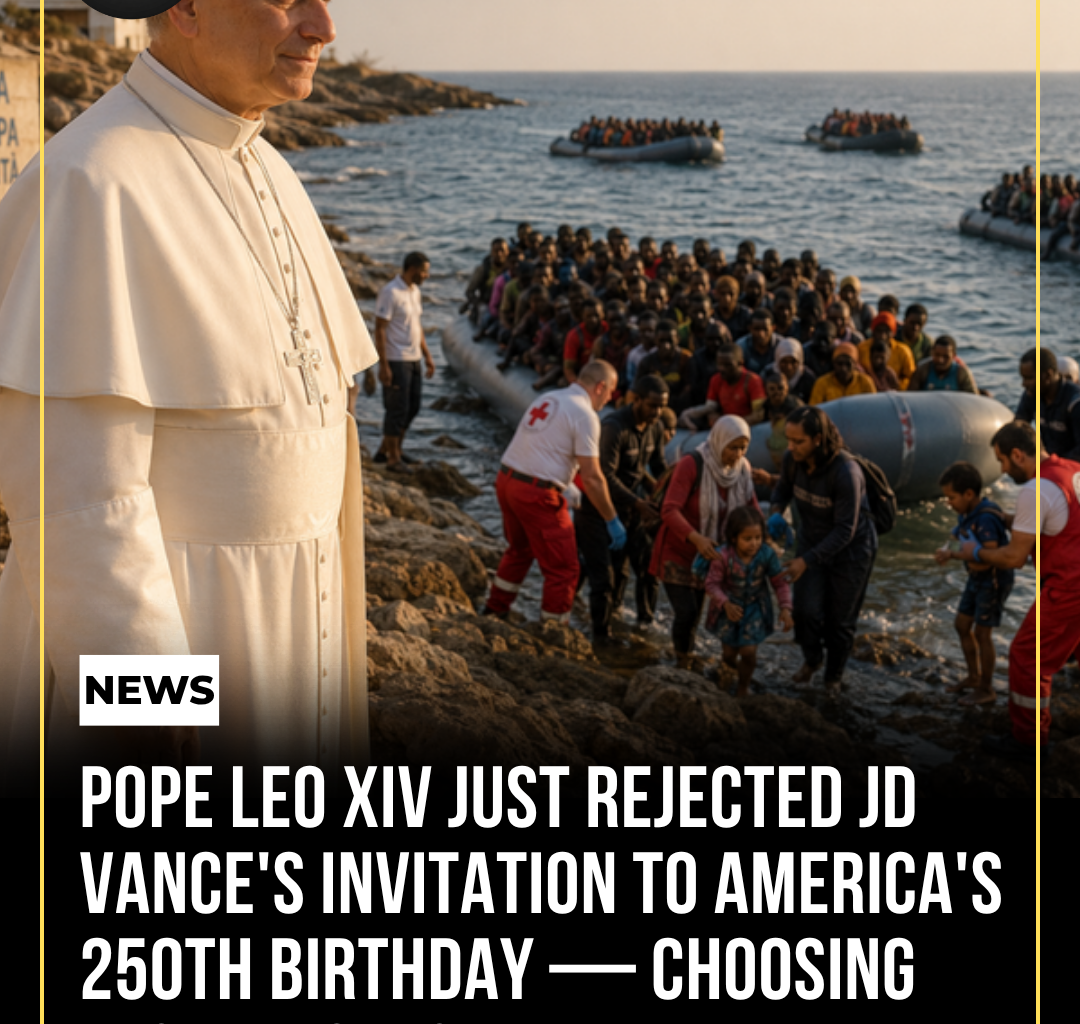
Pope Leo XIV is the first American-born pope in the history of the Catholic Church — and he just made a decision that no American pontiff has ever faced. He is not coming home for the Fourth of July.
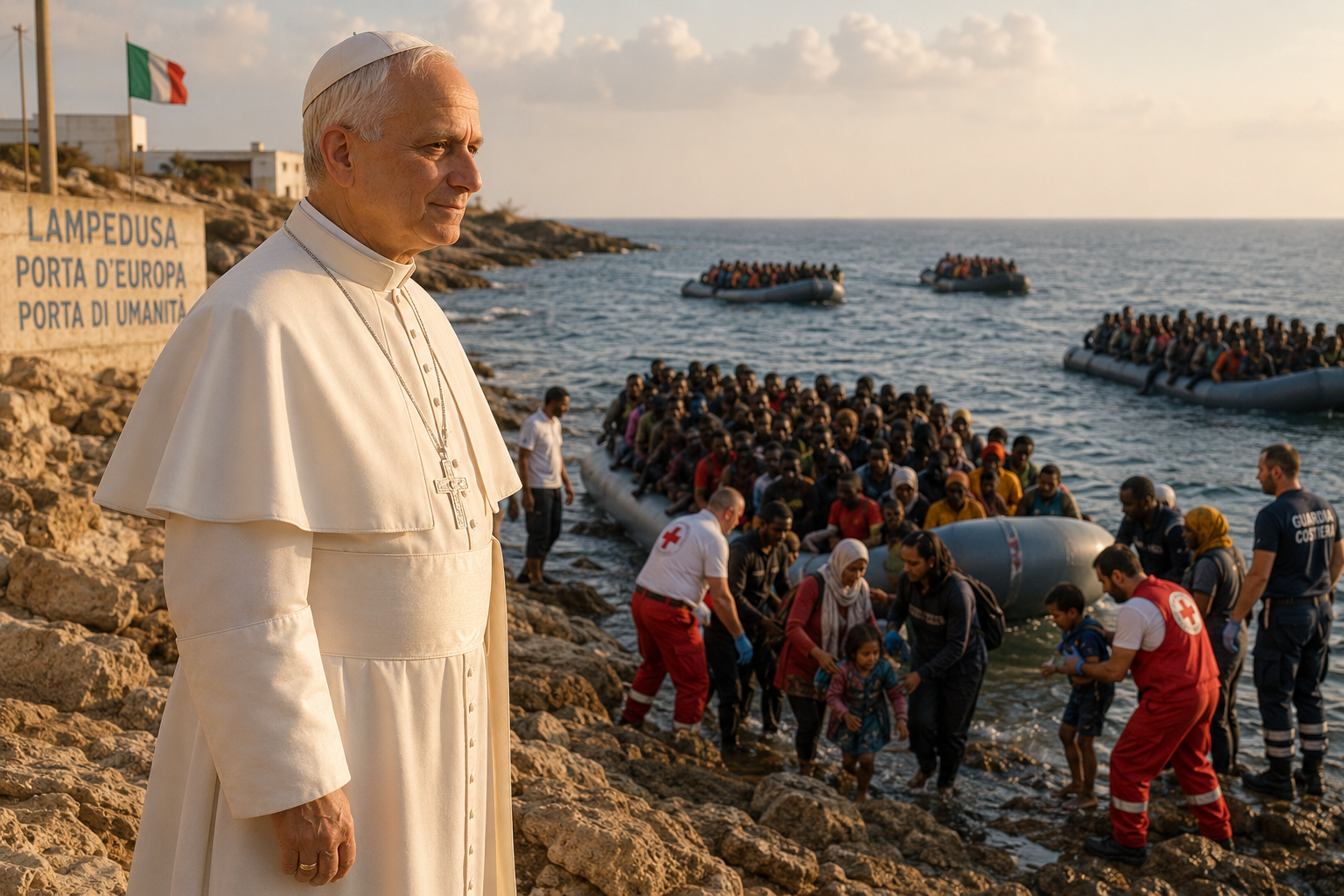
While the United States prepares to mark its 250th birthday on July 4, 2026, Pope Leo XIV will be standing on Lampedusa — a small Italian island in the Mediterranean Sea where thousands of African migrants wash ashore every year after making one of the most dangerous ocean crossings on earth. Vice President JD Vance personally traveled to Rome and handed Leo a formal letter on behalf of the administration, requesting that the American-born pontiff stand on U.S. soil to celebrate the milestone alongside the nation of his birth. The Pope’s answer was no.
The Vatican confirmed the decision without apology or elaboration. Leo will not attend the 250th anniversary celebrations in person. Instead, he will appear remotely on a screen at Philadelphia’s Independence Mall to accept the Liberty Medal — a prestigious honor awarded to world leaders who have championed human freedom and dignity. He will not be in the crowd. He will be in Rome, speaking to Americans from across an ocean.
It is a decision that has no precedent in Catholic history. No pope has ever been invited to stand on American soil for a national celebration and declined. The political weight of that refusal is not lost on anyone in Washington or the Vatican.
The relationship between Leo and the current administration had been deteriorating long before Vance arrived in Rome with his letter. In January of this year, Leo delivered a speech at the Vatican that U.S. military officials interpreted as a direct challenge to American foreign policy — strong enough that senior Pentagon officials confronted Vatican representatives at a formal meeting to express their displeasure. The exchange was described as tense. The Vatican did not retract or soften the speech.
The friction extended to the Middle East. When the Trump administration proposed a diplomatic framework for addressing the conflict in Gaza, the Vatican declined to participate. Leo has maintained his public opposition to American military airstrikes in the region, and he has continued to speak forcefully about the moral cost of war on civilian populations — positions that put him on a direct collision course with Washington’s policy posture.
Leo’s decision to spend July 4th on Lampedusa instead of Independence Mall carries its own unmistakable symbolism. Lampedusa is the island that sits between Libya and the Italian coast. Every year, tens of thousands of migrants attempt the crossing in overcrowded boats. Thousands do not survive. The ones who reach Lampedusa alive often arrive with nothing. Leo’s choice to be there rather than at a national celebration of American power reads, to many observers, as a deliberate moral contrast.
The reaction in the United States has been predictably divided. Trump supporters and conservative commentators have framed Leo’s refusal as a political act disguised as a pastoral one — that a pope born in America who declines to celebrate America’s birthday is making an unmistakable statement about how he views the current government. Critics of that reading argue the opposite: that a spiritual leader is doing precisely what spiritual leaders are supposed to do, refusing to lend his presence to a government whose core policies he views as morally incompatible with Church teaching on the dignity of migrants and the ethics of war.
Neither side is wrong about the significance. Whatever Leo’s private reasoning, the image is real: the first American pope in history will spend July 4, 2026, on a Mediterranean island watching refugee boats arrive from Africa while the country of his birth throws itself a 250th birthday party. It is the kind of moment that defines a papacy — and raises questions about the relationship between faith, nationality, and political allegiance that Americans are not used to having to answer about their own pope.