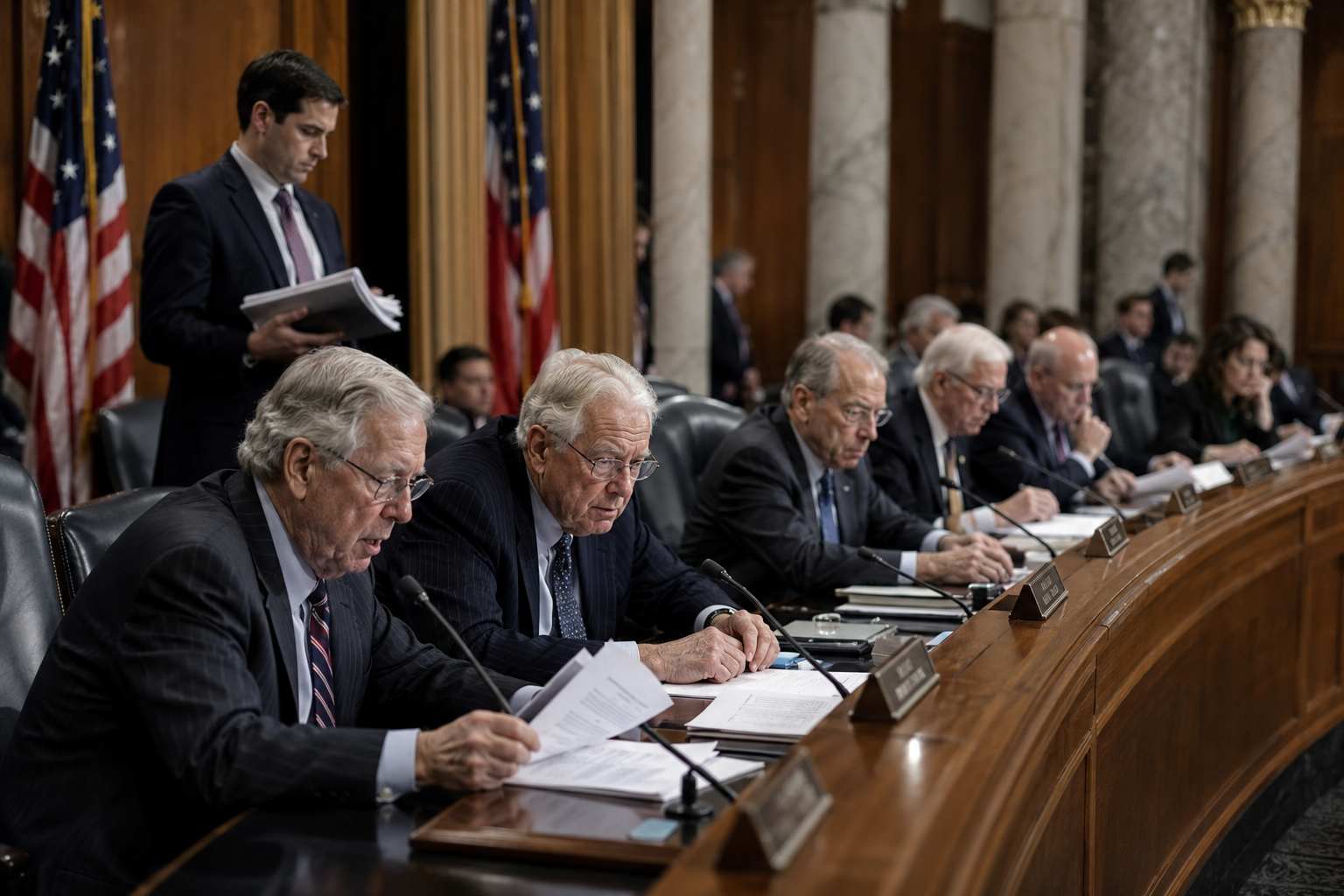
Nearly one in four sitting members of Congress has passed the age of 70 — and under current law, not a single one of them is required to demonstrate that they remain mentally fit for the job. A new bill introduced by a Washington State lawmaker aims to change that, proposing mandatory cognitive fitness testing for all sitting and incoming members of Congress, administered through a newly created independent oversight office.
A Growing Problem in Plain Sight
The push for cognitive standards in public office has gained significant momentum following a string of high-profile incidents in which members of Congress appeared visibly impaired during votes, hearings, and public appearances. The average age of Congress has climbed steadily for decades. Right now, roughly 120 members of the House and Senate are 70 or older — a cohort that helps decide federal budgets, military authorizations, healthcare policy, and Supreme Court confirmations. These are not ceremonial duties. They carry real consequences for every American.
What the Bill Would Do
The proposed legislation would establish a standardized battery of cognitive assessments administered by a newly created independent federal oversight office. All sitting members over 70 would be required to pass upon the bill’s enactment. Incoming members would face the same standards upon taking office. The testing mirrors requirements already in place across industries where cognitive decline poses serious public risk — commercial airline pilots, neurosurgeons, and long-haul truck drivers all face recurring fitness evaluations as a condition of continued licensure. A senator casting votes on healthcare policy or military force faces none of it.
The Opposition — and Why It Has Weight
The proposal has drawn pushback from two distinct directions. Civil liberties advocates argue that cognitive testing amounts to age discrimination — that job performance, not a test score, should be the applicable standard, and that voters already possess the authority to remove unfit legislators at the ballot box. Political strategists from both parties have raised concerns that cognitive evaluations could be weaponized, deployed by opponents as a campaign tool rather than a genuine fitness measure. Both arguments carry real weight and will shape how this debate plays out in Congress and in the courts.
The Constitutional Roadblock
The most significant obstacle is not political — it is constitutional. The U.S. Constitution lists exactly three qualifications for serving in Congress: minimum age, U.S. citizenship, and state residency. Federal courts have consistently struck down attempts to add new criteria beyond that list. Making cognitive testing enforceable would almost certainly require a constitutional amendment — a two-thirds vote in both chambers followed by ratification from 38 states. That threshold has been cleared only 27 times in American history. The path forward is narrow.
What This Means for Americans
Congress controls tax rates, military deployments, healthcare coverage, and the confirmation of lifetime judicial appointments. In virtually every other high-stakes profession — pilot, surgeon, commercial driver — the people performing those functions are subject to recurring fitness standards as a condition of keeping the job. Whether elected officials should be held to the same baseline is a debate that goes directly to who is actually running the country, and whether Americans can trust that those people are fully capable of doing so. The question is simple even if the path forward isn’t.
Stay informed on the stories that matter most. Follow Your Daily Updates on Facebook and bookmark yourdailyupdates.news for breaking news and analysis.