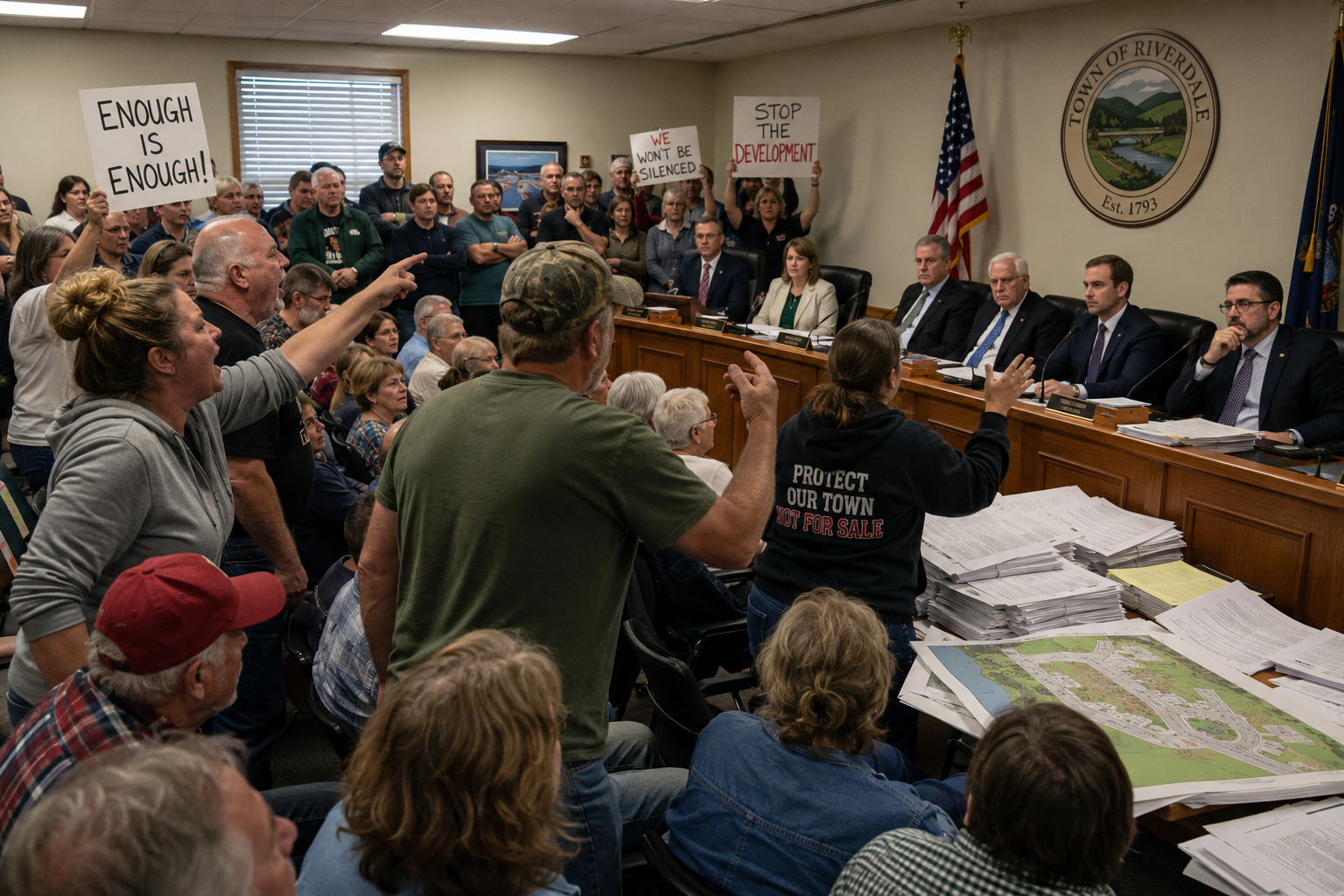
In a rare and stunning act of democratic accountability, voters in Festus, Missouri swept every single city council member who backed a controversial $6 billion AI data center out of office — all in a single election. The April 7 vote sent a message that is reverberating well beyond a small Missouri town: residents are no longer willing to let local governments make transformational decisions about their communities without consequences.
What Happened in Festus
Developer CRG Clayco had proposed a massive AI data center complex spanning 360 acres on the outskirts of Festus — a city of roughly 12,000 people about 30 miles south of St. Louis. The project, backed by the city council, promised jobs and economic development. But residents saw something different: an industrial-scale operation that would permanently alter their community, strain the regional power grid, and consume vast amounts of electricity to run the servers powering artificial intelligence applications.
The council’s approval process added fuel to the fire. Critics accused the city of rushing the project through without adequate public input, holding meetings that should have been open to the public behind closed doors. A lawsuit was filed alleging illegal rezoning and violations of Missouri’s open meetings law. Long before Election Day, a formal recall petition had already been circulating — residents wanted these council members gone, and they weren’t willing to wait.
A Clean Sweep at the Ballot Box
On April 7, Festus voters delivered their verdict. All four incumbent council members who had voted to approve the data center were defeated. Every single one. They were replaced by candidates who had campaigned explicitly on reversing the project’s approval. It was not a close election — it was a repudiation.
The result shocked observers who typically expect incumbents to have a structural advantage in local races, where name recognition and low turnout usually favor those already in office. In Festus, the energy was with the opposition. Residents who had been organizing for months — gathering petition signatures, attending meetings, filing legal challenges — turned that momentum into votes.
The Fight Isn’t Over
The new council inherits both a mandate and a mess. The lawsuit challenging the data center’s approval is still active. The recall petition that was circulating before the election targeted not just the four council members on the ballot, but also remaining council members and the mayor — who also supported the project. Those efforts may continue even after the electoral victory.
The new council members must now decide their next move: honor the voters’ mandate by working to reverse or renegotiate the approval, or risk becoming the next targets of an already-mobilized community. CRG Clayco, for its part, has not publicly commented on whether it will continue pursuing the project under the new political landscape.
A National Pattern
Festus is not alone. Across the country, AI data center projects are meeting fierce community opposition as the infrastructure buildout for artificial intelligence accelerates. Tech companies and developers are rushing to secure land, power, and permits in smaller cities and rural areas where land is cheap and local governments have historically been receptive to major industrial projects.
But residents in many of these communities are pushing back — concerned about noise, water usage, electricity demand, and the fundamental question of whether they were ever meaningfully consulted. In states from Virginia to Texas to Iowa, fights over data center siting have become some of the most contentious local political issues of the past two years.
What This Means for You
What happened in Festus is a reminder that local elections have enormous consequences — and that engaged communities can still hold local officials accountable. As AI infrastructure continues to expand into cities and towns across America, the decisions made by city councils, county boards, and zoning commissions will shape what those communities look like for decades. Festus just proved that voters are paying attention.
Stay informed on the stories that matter most. Follow Your Daily Updates on Facebook and bookmark yourdailyupdates.news for breaking news and analysis.