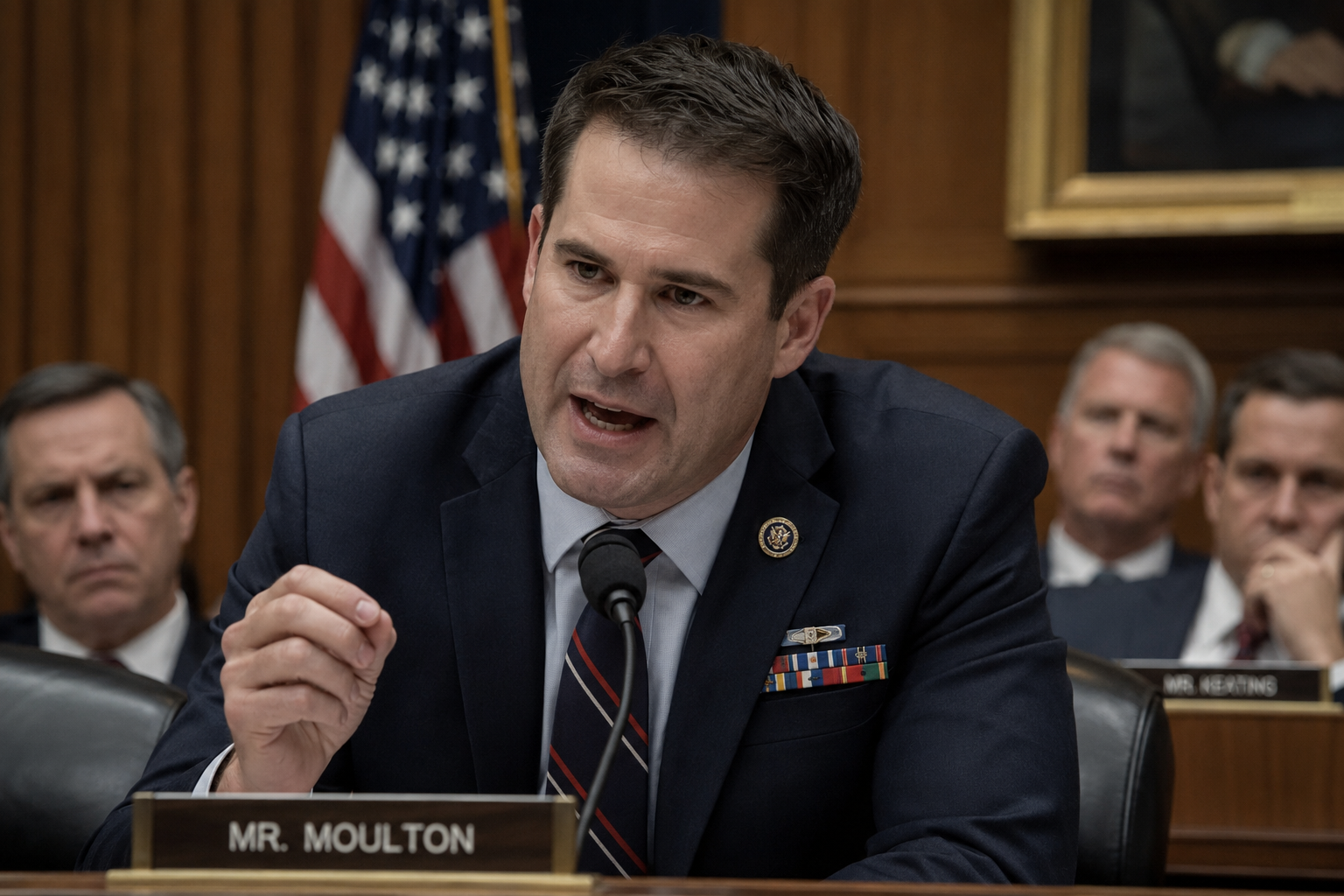
Rep. Seth Moulton of Massachusetts — a Democrat who served four combat tours in Iraq — told CNN anchor Erin Burnett in late April that Defense Secretary Pete Hegseth is guilty of war crimes. He did not hedge. When asked directly, his answer was one word: “Absolutely.”
What Moulton Is Accusing Hegseth Of
The accusation is rooted in a military campaign that has received far less mainstream coverage than its scale warrants: a series of U.S. strikes on boats in the Caribbean, authorized under the Trump administration’s counter-narcotics push. Over recent months, at least 186 people have been killed in these strikes — people the government says were drug traffickers. But the central problem, according to Moulton and others, is that there was no reliable confirmation of who was actually aboard those vessels before the strikes were ordered. That means civilians may have been killed, with no accountability and no way to verify either way.
War crimes under international law do not require intent to kill civilians. They require violations of the laws of armed conflict — including proportionality, distinction between combatants and civilians, and the explicit prohibition on targeting those who are no longer capable of fighting. That last category is what makes Moulton’s specific accusation so legally significant.
The Double Tap and the Nuremberg Comparison
The detail at the center of the accusation is what Moulton described as a “double tap” — a deliberate follow-up strike targeting survivors in the water, clinging to wreckage after the initial hit. Killing survivors who are adrift, unarmed, and incapacitated is specifically prohibited under the Geneva Conventions and the laws of armed conflict at sea. It does not matter that the initial targets were suspected criminals. Once someone is in the water and no longer a combatant, they are protected.
Moulton invoked Nuremberg explicitly — and the comparison is not as dramatic as it sounds. After World War II, Allied powers prosecuted German naval commanders for ordering similar tactics. Officers who directed unrestricted submarine warfare and who authorized strikes on survivors were among those examined in the postwar tribunals. Some were convicted. The legal precedent that emerged from those proceedings is the same body of international law that governs U.S. military conduct today.
Moulton is not a fringe voice making a careless comparison. He is a Harvard graduate, a former Marine infantry officer with four Iraq combat tours, and a longtime member of the House Armed Services Committee. When someone with that background and that level of firsthand military knowledge makes that specific comparison on national television, it carries weight that a political operative’s talking point does not.
The White House Response
The administration pushed back quickly. White House press secretary Karoline Leavitt defended the operations, saying the admiral involved was following orders to fully eliminate the drug trafficking threat. Officials have framed the entire campaign as a lawful counter-narcotics operation targeting America’s maritime approaches — and insist every strike was legal.
Critics are asking the follow-up questions the White House has not answered: If the strikes were lawful, why have the identities of the 186 dead not been made public? Why was no independent verification of the targets conducted before the strikes were ordered? And why are follow-up strikes on survivors — people already in the water — being defended as “fully eliminating the threat” rather than addressed as a potential violation of the laws of war? So far, no congressional investigation has been announced and no Department of Defense review has been publicly launched. Moulton’s accusation aired and then largely moved on.
What This Means for Americans
If Moulton’s accusations are accurate, the U.S. military conducted operations that killed 186 people — some of whom may have been civilians — and then targeted survivors in the water. That would be a violation of the same laws the United States helped write and enforce after World War II. For Americans who believe in accountability and rule of law, regardless of party, the question of whether that happened and who authorized it deserves a real answer — not a dismissal from a press briefing podium. A sitting member of Congress just accused the Secretary of Defense of a crime that, historically, has been punishable by death. Whether that accusation triggers any formal accountability, or quietly disappears into the partisan noise, remains an open question.
Stay informed on the stories that matter most. Follow Your Daily Updates on Facebook and bookmark yourdailyupdates.news for breaking news and analysis.