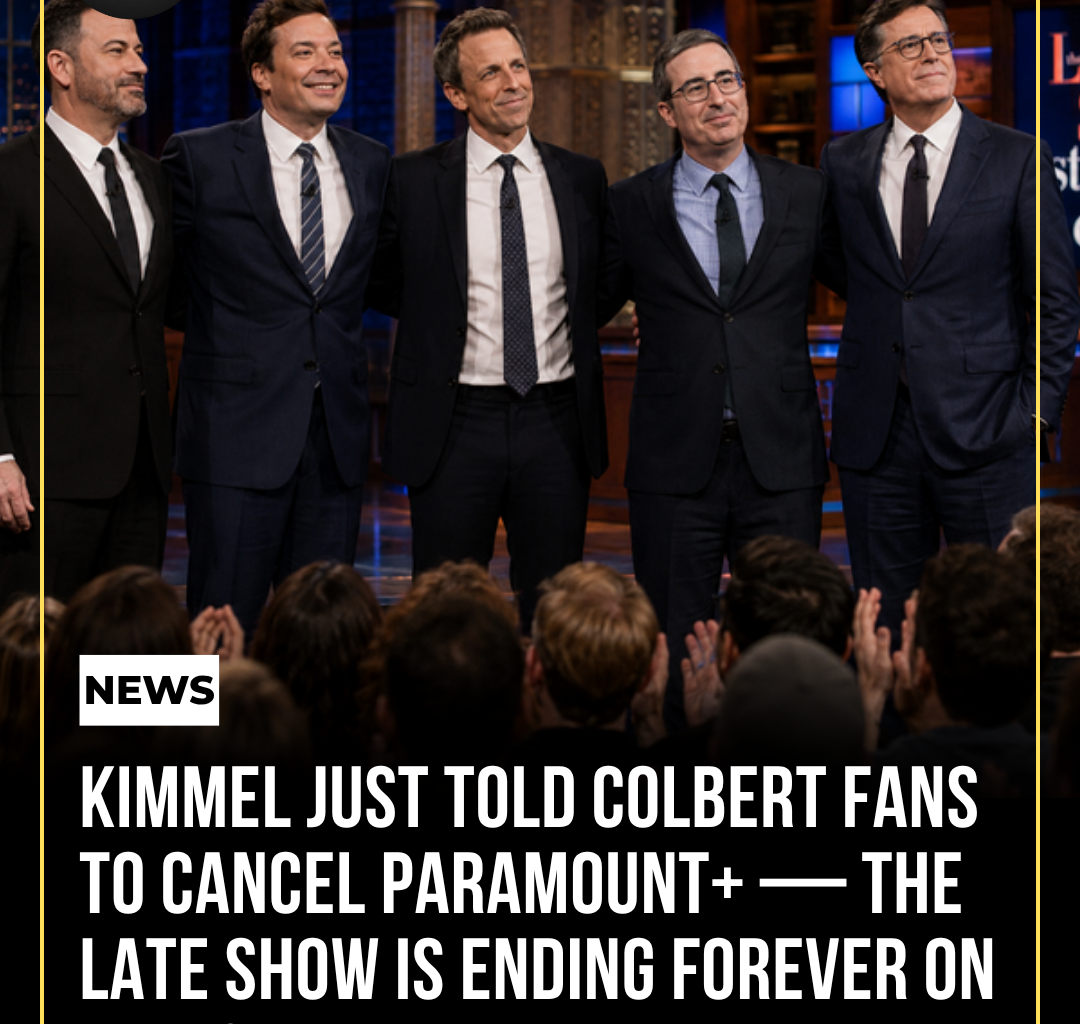
On Monday night, five of late night television’s biggest names shared the same stage — and the message wasn’t just goodbye. With eight days left before The Late Show with Stephen Colbert airs its final episode on May 21, 2026, Jimmy Kimmel used the moment to call for a boycott of the very network canceling the show, telling the crowd to cancel their Paramount+ subscriptions.
A Farewell Tour Unlike Any Other
The Late Show with Stephen Colbert has been a pillar of CBS’s late night lineup since 2015, when Colbert took over the desk from David Letterman. Over more than a decade, Colbert built one of television’s most politically engaged programs — a show that never backed down from controversy, whether interviewing sitting presidents, skewering the political class, or giving a platform to voices the mainstream media often ignored. The cancellation, announced earlier this spring, stunned the television industry.
What followed has been anything but a quiet exit. Colbert and his team have turned the final stretch into a full public reckoning — packing the stage with legends and peers, and making clear they are not going quietly into the night.
Kimmel, Fallon, Oliver, and Meyers All Show Up
Monday’s episode brought Jimmy Fallon, John Oliver, and Seth Meyers alongside Kimmel to the Ed Sullivan Theater for what is shaping up to be the biggest farewell in late night history. Each appearance has carried its own weight — but Kimmel’s was the sharpest. He didn’t just come to say goodbye. He told the audience in plain terms to cancel their Paramount+ subscriptions, turning the farewell into something more pointed: a direct economic protest against the parent company’s decision.
The stakes behind that message are significant. CBS is owned by Paramount Global, which is currently in the final stages of a merger with Skydance Media — a multi-billion dollar deal that requires approval from the Federal Communications Commission. That approval falls under the Trump administration. Critics have speculated openly that Paramount moved to cancel its most politically outspoken late night host as a strategic calculation — a way to reduce friction with federal regulators at a critical moment. CBS has denied any connection between the merger and the cancellation, maintaining the decision was made on business grounds alone.
Letterman Calls CBS ‘Lying Weasels’
The backlash has not been limited to current hosts. David Letterman — the man Colbert succeeded, whose own Late Show ran on CBS for over two decades — broke his silence and called CBS “lying weasels,” saying the show and its audience deserved far better treatment. Letterman’s words landed with force. Coming from the man who built the franchise, they carried an institutional credibility that no current host could match. His statement spread rapidly and extended the story beyond entertainment news into a broader conversation about media consolidation, corporate pressure, and who controls the airwaves.
Colbert himself has made no attempt to soften the moment. The final episodes have been framed not just as a celebration, but as a statement — each appearance, each monologue, each guest adding to the argument that what CBS is doing is wrong, that the decision has consequences, and that the audience is owed an honest accounting of why it happened.
What This Means for Americans
The story of The Late Show’s cancellation is ultimately about who decides what voices Americans get to hear in primetime. When a major network cancels its most politically engaged program weeks before a high-stakes regulatory decision — and then denies any connection between the two — viewers are left to draw their own conclusions. The FCC approval process, the Skydance merger, the cancellation timeline: each piece of the story is public record. What isn’t settled is whether anyone will be held accountable for how they fit together.
Stay informed on the stories that matter most. Follow Your Daily Updates on Facebook and bookmark yourdailyupdates.news for breaking news and analysis.