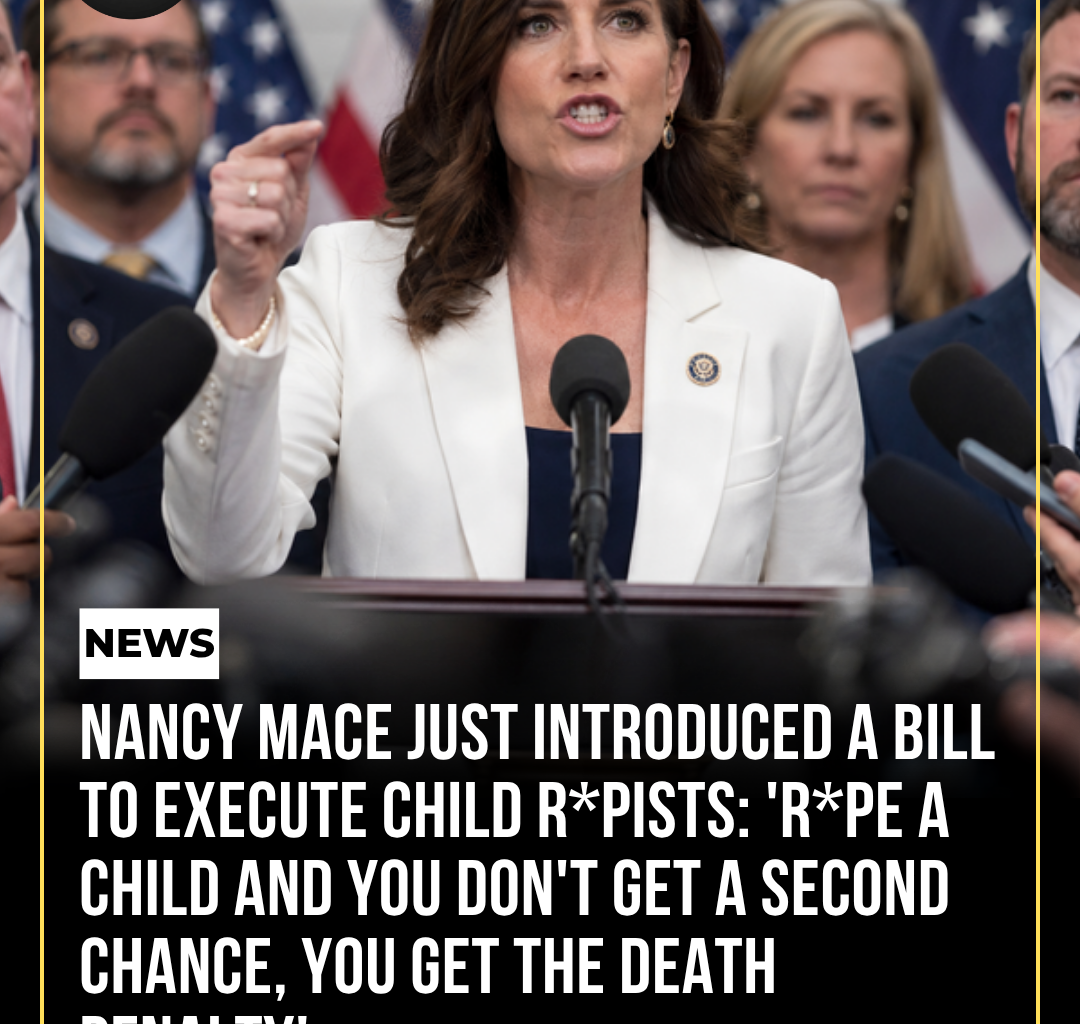
South Carolina Congresswoman Nancy Mace introduced federal legislation in February 2026 that would authorize the death penalty for convicted child rapists — one of the most sweeping legislative pushes against child sexual abuse in recent congressional history. Mace, a Republican and a sexual assault survivor herself, didn’t mince words: “Rape a child and you don’t get a second chance, you get the death penalty.”
What the Bill Would Do
The Death Penalty for Child Rapists Act targets three specific federal crimes: aggravated sexual abuse of a child, sexual abuse of a minor, and abusive sexual contact against a child. Under current federal law, none of these offenses carry the death penalty. Mace’s bill would change that, adding capital punishment as an available sentence for anyone convicted of these crimes in federal court.
The legislation goes beyond civilian law. It also extends death penalty eligibility to child rape committed under the Uniform Code of Military Justice — meaning servicemembers convicted of these crimes in a military court would face the same potential punishment as civilian defendants in federal court.
A Bill Born From Personal Experience
Mace has spoken publicly about being gang-raped as a teenager. That personal history distinguishes her bill from typical political posturing. When she says the criminal justice system has been too lenient on child sex offenders, she’s speaking from a place very few legislators can.
Her statement introducing the bill made no apologies: “We will never apologize for protecting America’s children.” That line drew immediate attention from supporters who cheered the bill’s intent and critics who questioned its constitutional viability.
The Supreme Court Problem
Here’s the legal obstacle: in 2008, the Supreme Court ruled 5-4 in Kennedy v. Louisiana that the Eighth Amendment’s prohibition on cruel and unusual punishment bars the death penalty for a non-homicide crime — even child rape. That ruling has stood for nearly 18 years.
Any federal law imposing capital punishment for child rape that doesn’t result in the victim’s death would face an immediate constitutional challenge — and under current Supreme Court precedent, it would almost certainly be struck down. Some critics argue this makes the bill more symbolic than substantive, contending that passing legislation you know the courts will invalidate does a disservice to victims by creating expectations of accountability the justice system cannot actually deliver.
Why Supporters Aren’t Backing Down
Supporters counter that Supreme Court precedent has changed before — most dramatically in 2022 when the court overturned Roe v. Wade after nearly five decades as settled law. Kennedy v. Louisiana was a 5-4 decision. With a reconstituted court, there’s at least a theoretical argument that the right case could lead to a different outcome.
The legislation also serves a political purpose: it forces every member of Congress to go on record. Voting against a death penalty bill for child rapists is a difficult vote to explain to constituents, regardless of the constitutional arguments.
Mace Has Pushed This Issue Before
Mace didn’t start with this bill. She previously secured an amendment in the National Defense Authorization Act — a must-pass military spending bill — authorizing the death penalty for child rape under military law. Getting that provision into the NDAA was a significant legislative achievement, giving the military justice system a tool it didn’t previously have.
The Death Penalty for Child Rapists Act is a much larger ask. A standalone bill targeting civilian federal law faces a tougher path through a divided Congress, and any version that passes would face immediate legal challenges.
What This Means for Americans
For American families, Mace’s bill puts a stark question on the national table: what is the appropriate punishment for someone who rapes a child? For a significant portion of the country, the answer is the same as for murder. Whether the courts agree is a separate fight — but the political push to treat the worst crimes against children as capital offenses is clearly not going away.
Stay informed on the stories that matter most. Follow Your Daily Updates on Facebook and bookmark yourdailyupdates.news for breaking news and analysis.