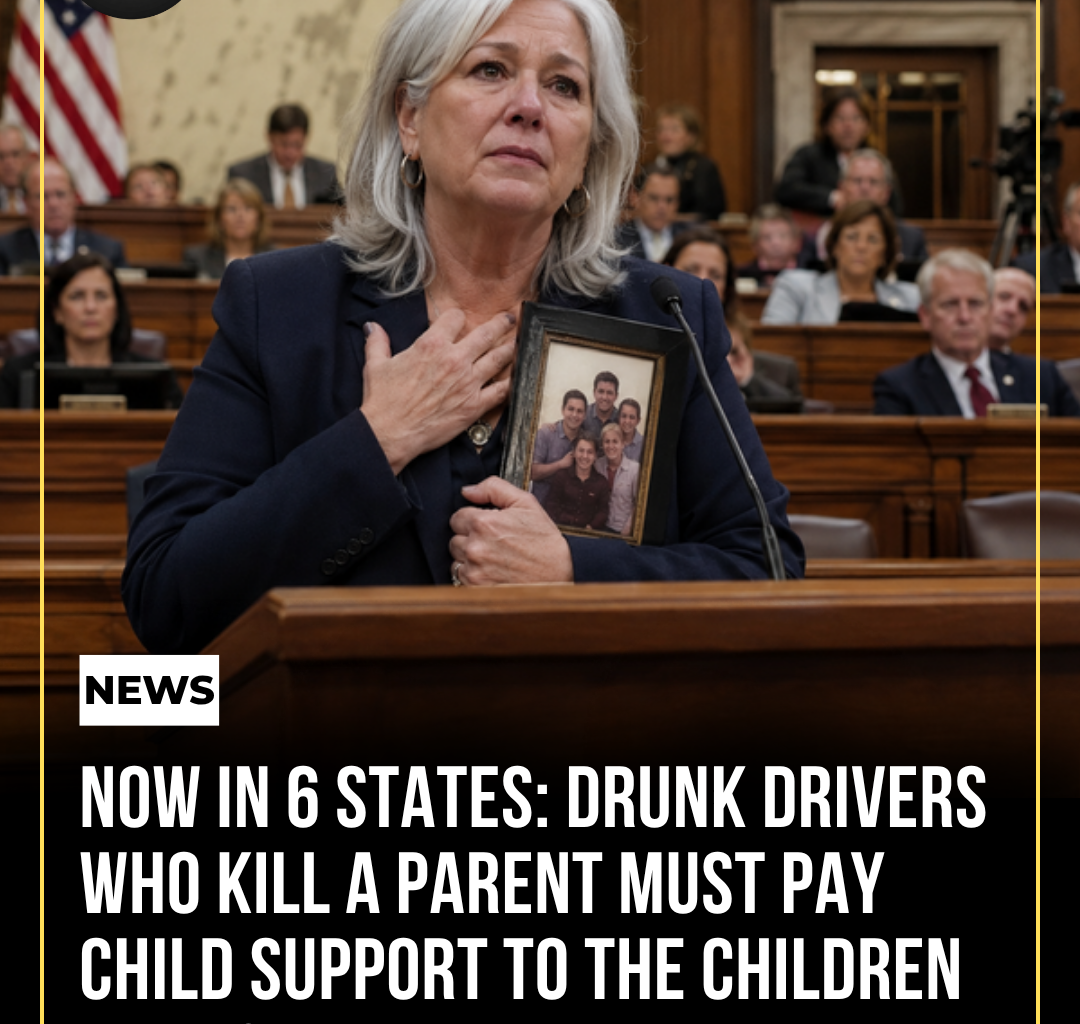
Six states have signed Bentley’s Law into effect — legislation requiring convicted drunk drivers who kill a parent to pay child support to the surviving children left behind. The law was born from a devastating crash on a Missouri highway, and advocates are now pushing hard to make it the law of the land in all 50 states.
A Family Destroyed in Seconds
On a Missouri highway, a drunk driver rear-ended a car and destroyed an entire family. The vehicle left the road and burst into flames. Cordell Williams, his fiancée Lacey Newton, and their 4-month-old baby did not survive. Two young boys — Bentley and Mason — walked away from the wreckage without parents. They had each other. They had nothing else.
Their grandmother, Cecilia Williams, stepped in and took the boys in. And rather than simply grieving, she made a promise. She would fight to make sure that drunk drivers who take parents from children face financial accountability — real consequences that extend beyond a prison sentence and into the lives of the families they shattered.
What Bentley’s Law Does
Bentley’s Law requires that any drunk driver convicted of killing a parent must pay child support to the surviving children for the duration of childhood. The payment amount is calculated through standard child support guidelines based on the driver’s income — the same framework courts use in family law cases. The difference is the cause: rather than a divorce or separation, the obligation arises from a criminal act.
Missouri was among the first states to sign the law. Since then, five more states have enacted similar legislation, bringing the total to six. More than a dozen additional states currently have Bentley’s Law bills moving through their legislatures. Advocates are also actively lobbying Congress to establish a federal standard that would cover all 50 states, ensuring uniform protection for every child orphaned by a drunk driver regardless of where they live.
The core argument behind the law is straightforward: existing drunk driving sentencing rarely accounts for the full, lasting damage a crash causes. A driver who kills a parent leaves behind children who may face decades of financial hardship. Fines go to the state. Prison time ends. But the financial hole in that family’s life doesn’t close — and Bentley’s Law is designed to ensure the person responsible helps fill it.
Rare Bipartisan Support
The legislation has attracted support from lawmakers on both sides of the aisle — a rarity in today’s political environment. Republican and Democratic legislators in multiple states have backed the bills, with many citing the simplicity and moral clarity of the principle: if you choose to drive drunk and your choice destroys a family, you bear responsibility for the children left behind.
Some criminal defense attorneys have raised concerns about enforceability — particularly the challenge of collecting long-term payments from a driver who is serving a lengthy prison sentence. Supporters counter that even structured obligations beginning after release provide meaningful support, and that courts already manage complex payment arrangements in family law. Cecilia Williams has testified at hearings across multiple states, and her firsthand account of what Bentley and Mason lost has become one of the most powerful arguments for the law.
What This Means for American Families
Approximately 10,000 people are killed in drunk driving crashes every year in the United States. Many of them are parents. The children they leave behind often face years of financial instability on top of the emotional devastation of losing a parent to a preventable crime. Bentley’s Law attempts to address that gap — not by undoing the tragedy, but by ensuring the person responsible shares in the burden of what they caused. If the push for federal legislation succeeds, it could become a nationwide standard within the next few years.
Stay informed on the stories that matter most. Follow Your Daily Updates on Facebook and bookmark yourdailyupdates.news for breaking news and analysis.