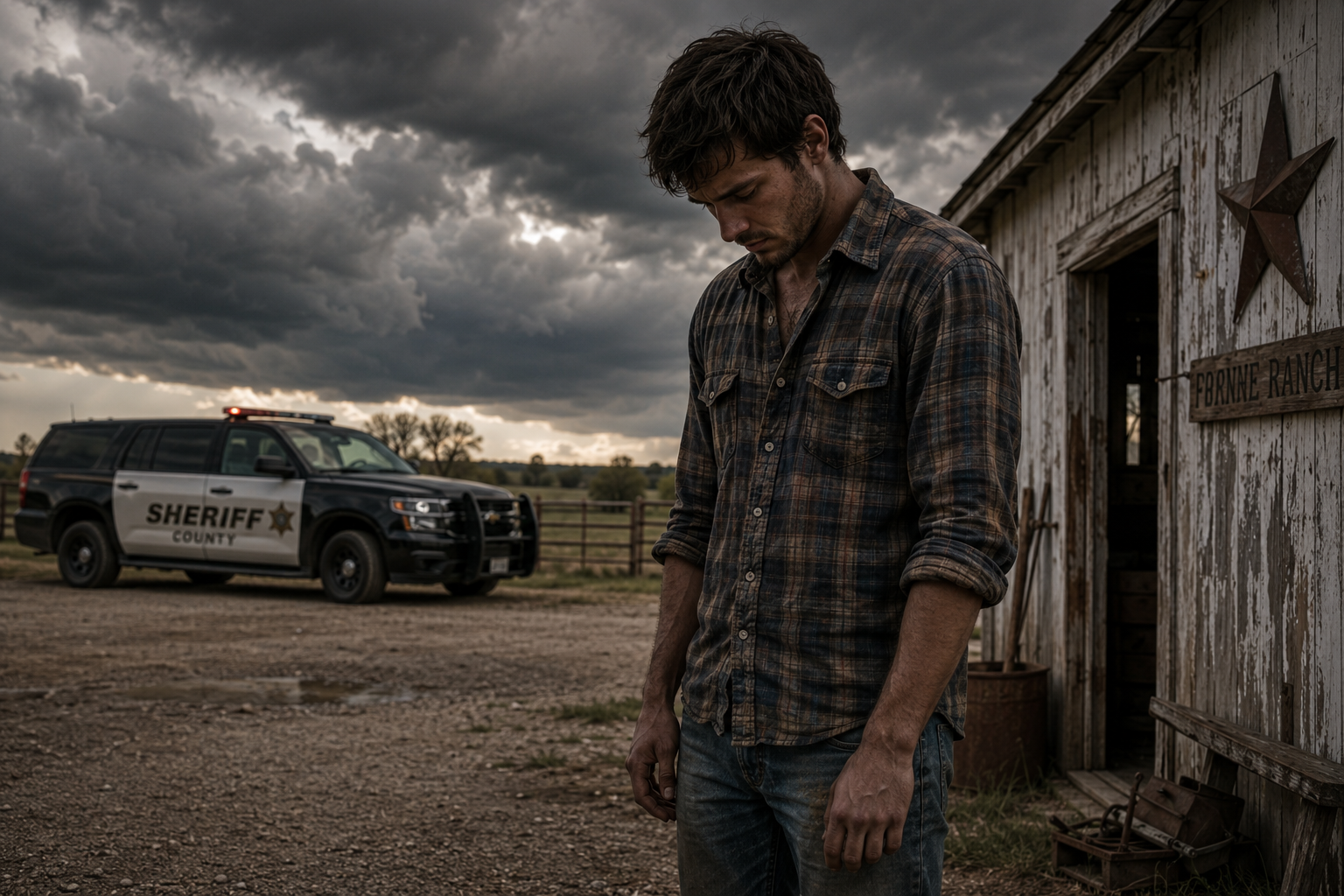
A Texas grand jury has declined to charge a 23-year-old father who beat a 47-year-old ranch hand to death after catching him sexually assaulting his 5-year-old daughter on the family property. Under Texas law, the use of deadly force to stop a sexual assault is explicitly permitted — and in this case, prosecutors agreed the father’s actions fell squarely within the law.
How It Happened
The incident unfolded on a ranch in rural Lavaca County, Texas. The father had sent his children outside to feed the chickens when his young son came running back alone, clearly distressed. His 5-year-old daughter had been grabbed and carried into a shed by a ranch hand — a man who had been working on the family’s property.
The father ran to the shed, found the ranch hand in the act of assaulting his daughter, and intervened immediately. He pulled the man off his child and struck him repeatedly with his bare hands. He then called 911 himself, asking for help and telling the dispatcher he didn’t know what to do. The ranch hand, 47-year-old Jesus Mora Flores, died from his injuries before emergency services arrived.
When authorities arrived and interviewed witnesses, the picture was clear. The father had not set out to kill anyone. He had responded to an immediate, violent threat against his young daughter in real time.
The Legal Decision
A Lavaca County grand jury reviewed the evidence and declined to indict the father — a decision consistent with Texas Penal Code Sections 9.32 and 9.33, which permit the use of deadly force to protect a third party from sexual assault. The law does not require a person to retreat before using force when defending another from a violent attack in progress.
What distinguishes this case from many others is the father’s complete transparency. He called 911 himself, gave full statements to law enforcement, and cooperated throughout the investigation. There was no attempt to conceal what happened. The grand jury — composed of ordinary citizens — reviewed the facts and chose not to charge him.
A Nation Divided
The case has divided people in ways that typical crime stories rarely do. On one side, many argue this is precisely how the law is supposed to work. A parent acted to stop an ongoing assault against his child, called for help immediately, and did not attempt to evade responsibility. The grand jury agreed.
On the other side, critics raise a harder question: what happens when the moral case feels obvious but the precedent it sets is complicated? Vigilante justice, even when emotionally justified, can create legal gray zones. The difference between protection and punishment in the heat of the moment is a line courts are often forced to untangle after the fact. Some legal scholars argue that without a criminal trial, there is no formal public accountability — even when the community broadly agrees with the outcome.
What This Means for Americans
For parents, this case resonates in a way most legal decisions simply don’t. It asks a question most people hope they’ll never have to answer: if you walked in on someone assaulting your child, what would you do? The Texas legal system, in this instance, chose not to punish a parent for acting on the most primal protective instinct that exists. Whether you view that as justice served or as a troubling absence of formal accountability, cases like this reveal where the edges of our legal system sit — and why those edges matter deeply to the people living on them.
Stay informed on the stories that matter most. Follow Your Daily Updates on Facebook and bookmark yourdailyupdates.news for breaking news and analysis.