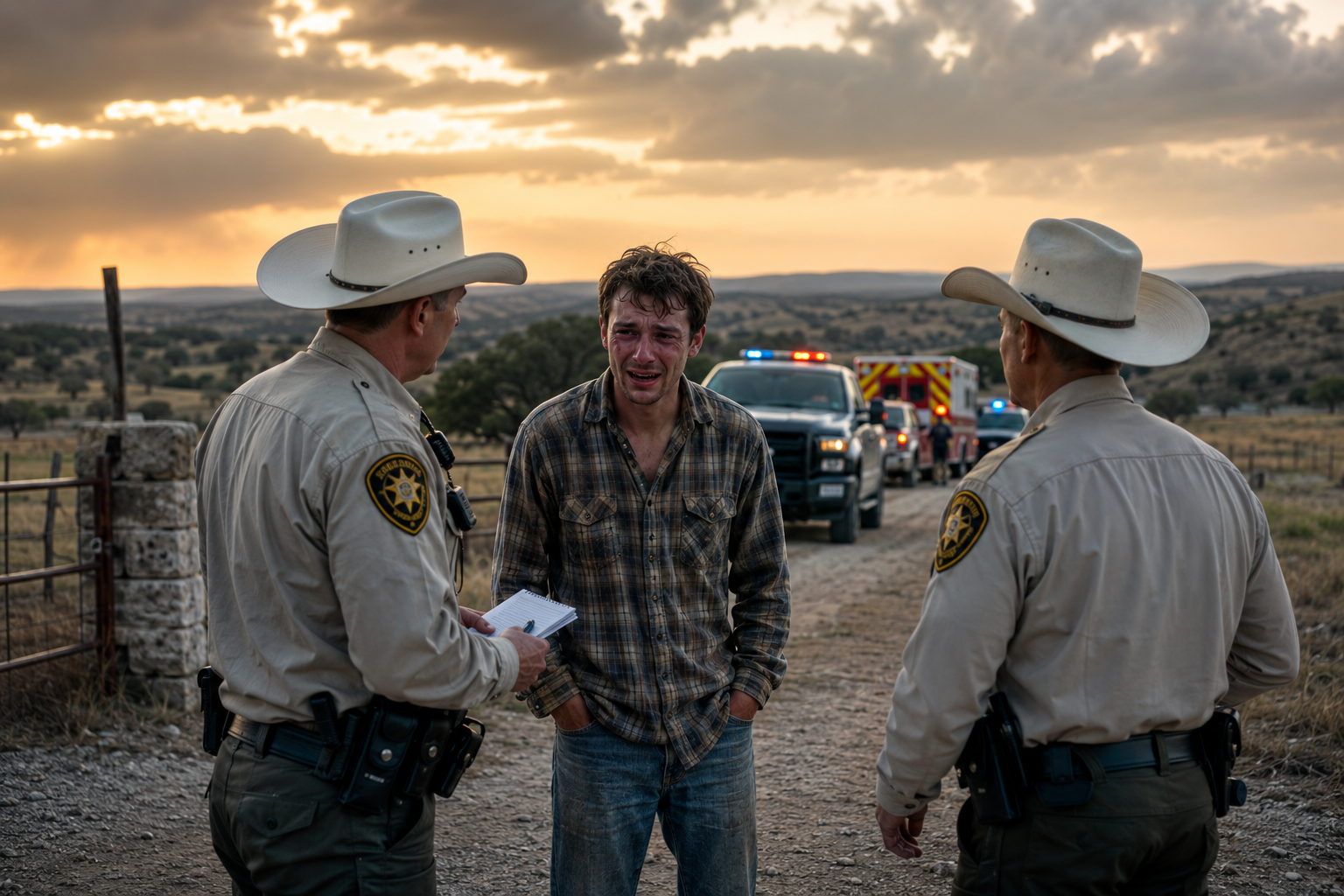
On a summer afternoon in 2012, a 23-year-old Texas father’s world was shattered in an instant. He was working on his family’s ranch in Lavaca County when he heard his 5-year-old daughter scream. What he found when he ran to her side set off one of the most emotionally charged legal debates in recent American history.
The father discovered 47-year-old Jesus Mora Flores assaulting his young daughter. In a matter of moments, he pulled Flores away from the child and beat him with his bare hands. Flores died at the scene. The girl survived.
What happened next surprised many who expected a swift prosecution. The father did not flee. He did not hide. He called 911 immediately — his voice breaking, telling the operator exactly what had happened and what he had done. He stayed on the property and waited for sheriff’s deputies to arrive. When they got there, he cooperated fully.
Lavaca County Sheriff’s deputies investigated the incident. The case was presented to a grand jury — the legal body tasked with deciding whether there was sufficient cause to charge the father with any crime. After reviewing the evidence, the grand jury declined to indict him on any charges.
Their decision rested on a specific provision of Texas law. Texas Penal Code §9.33 — the defense of a third person — states that a person is legally justified in using force, including deadly force, to protect another individual from unlawful attack when they reasonably believe that person is in imminent danger of serious bodily harm. Prosecutors acknowledged that the circumstances fit that standard. Under Texas law, what the father did was legally defensible.
The case drew national attention and sparked a fierce debate that continues today. On one side, supporters argued that the father’s response was not only understandable but just. A parent witnessing the assault of their child and responding with immediate physical force is, in the view of many Americans, the definition of justifiable action. The legal system, they argue, reached the right conclusion.
Critics, however, raised a more uncomfortable question: What happens when private citizens are empowered to act as judge, jury, and executioner in the heat of a moment? Even in cases where the threat is real and the act is horrific, due process exists for a reason. The concern is not about this specific case — it is about the precedent. If individuals can lawfully kill based on what they personally witnessed and how they personally reacted, where does that line get drawn?
The identity of the deceased man added another layer of complexity. Jesus Mora Flores had a prior arrest record but was not listed as a registered sex offender at the time of the incident. He was an undocumented immigrant who had been working as a ranch hand in the area. His death closed any possibility of a criminal prosecution, trial, or official determination of what had occurred beyond the father’s account — corroborated by the child and the physical evidence at the scene.
The father was never charged. His name was not publicly released to protect his daughter’s identity. He returned to his life in Lavaca County. The case was closed, legally speaking, from the moment the grand jury declined to indict.
But the broader conversation never closed. The case surfaces repeatedly in discussions about parental rights, self-defense law, and the limits of private justice in America. Legal scholars have used it as a case study in how existing statutes can create outcomes that feel simultaneously legally sound and morally complicated.
Texas law said the father was justified. The grand jury agreed. But the question of whether immediate deadly force — however understandable — should be the final word in place of the judicial process is one that Americans remain deeply divided on.
Was the father right? Or should deadly private justice — even in the most extreme circumstances — always go through the courts?