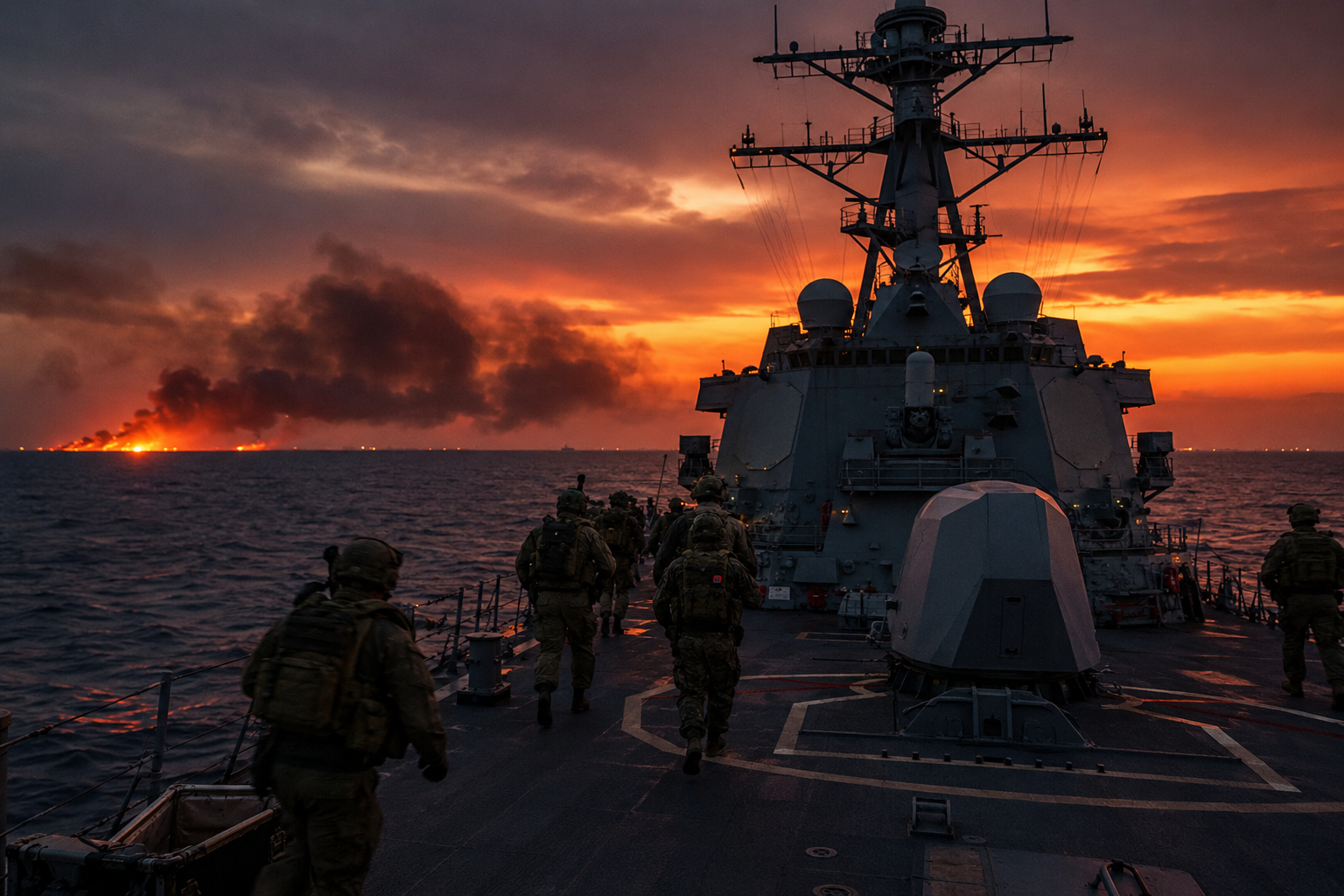
Iran launched missiles and drones at three U.S. Navy destroyers operating in the Strait of Hormuz on Thursday — and American forces fired back. The exchange, which both sides are blaming on the other, is the most serious military incident since a fragile ceasefire was declared on April 8, and it has raised serious questions about whether the truce can survive.
What Happened
According to U.S. military officials, Iranian forces launched an unprovoked attack against three American destroyers conducting operations in the Strait of Hormuz — the narrow waterway through which roughly 20% of the world’s oil passes. U.S. forces intercepted the incoming missiles and drones and immediately struck back, hitting Iranian launch sites, command and control centers, and intelligence infrastructure.
Iran’s account is completely different. Iranian armed forces claimed that the U.S. fired first — striking an Iranian oil tanker — and that their forces “immediately retaliated,” causing what they described as “significant damage” to the American warships. The U.S. military flatly denied that any of its vessels were damaged, saying all incoming projectiles were successfully intercepted.
A War That Was Supposed to Be Over
Thursday’s exchange happened on Day 71 of a conflict that began when U.S. and Israeli forces launched coordinated strikes on Iran earlier this year. The April 8 ceasefire — brokered by Pakistan after weeks of intense back-channel diplomacy — was supposed to create space for a broader peace agreement. American troops remain deployed across at least seven countries in the Middle East. Casualties have continued to mount on both sides throughout the conflict. Iranian-backed proxy groups remain active in Iraq, Syria, Yemen, and Lebanon.
The ceasefire was never airtight. Sporadic skirmishes between U.S. forces and Iranian-backed militias have been reported throughout the supposed pause. But Thursday’s direct exchange between American warships and Iranian military forces is a different category of incident entirely — one that represents a significant escalation of the kind that could unravel the entire truce.
Trump: “Just a Love Tap”
President Trump moved quickly to downplay the incident. In an ABC News interview, he called the entire exchange “just a love tap” and insisted the April 8 ceasefire remains in effect. The White House has been pushing hard for a formal peace deal and clearly does not want the Thursday incident to derail those negotiations. As of Saturday, the U.S. is still waiting on Iran’s formal response to the latest American proposal, with Qatar’s prime minister actively shuttling between Washington and Tehran to keep the talks alive.
Not everyone is buying the “love tap” framing. Congressional critics from both parties have pushed back on the administration’s characterization, arguing that any exchange of fire between American and Iranian military forces during a declared ceasefire is a serious escalation — regardless of the scale. Senate Armed Services Committee members have requested a classified briefing on the incident.
What This Means for Americans
The Strait of Hormuz is the single most important chokepoint for global oil shipments. Any sustained military activity in that waterway sends immediate shockwaves through energy markets — and directly into American gas prices. Beyond the economic stakes, the U.S. has thousands of troops deployed across the region. A collapsed ceasefire does not stay an abstraction. It means more Americans in harm’s way, higher fuel costs at home, and a Middle East that becomes even more unpredictable. The next 72 hours — and Iran’s formal response — will determine whether Thursday was a one-off or the beginning of something much worse.
Stay informed on the stories that matter most. Follow Your Daily Updates on Facebook and bookmark yourdailyupdates.news for breaking news and analysis.