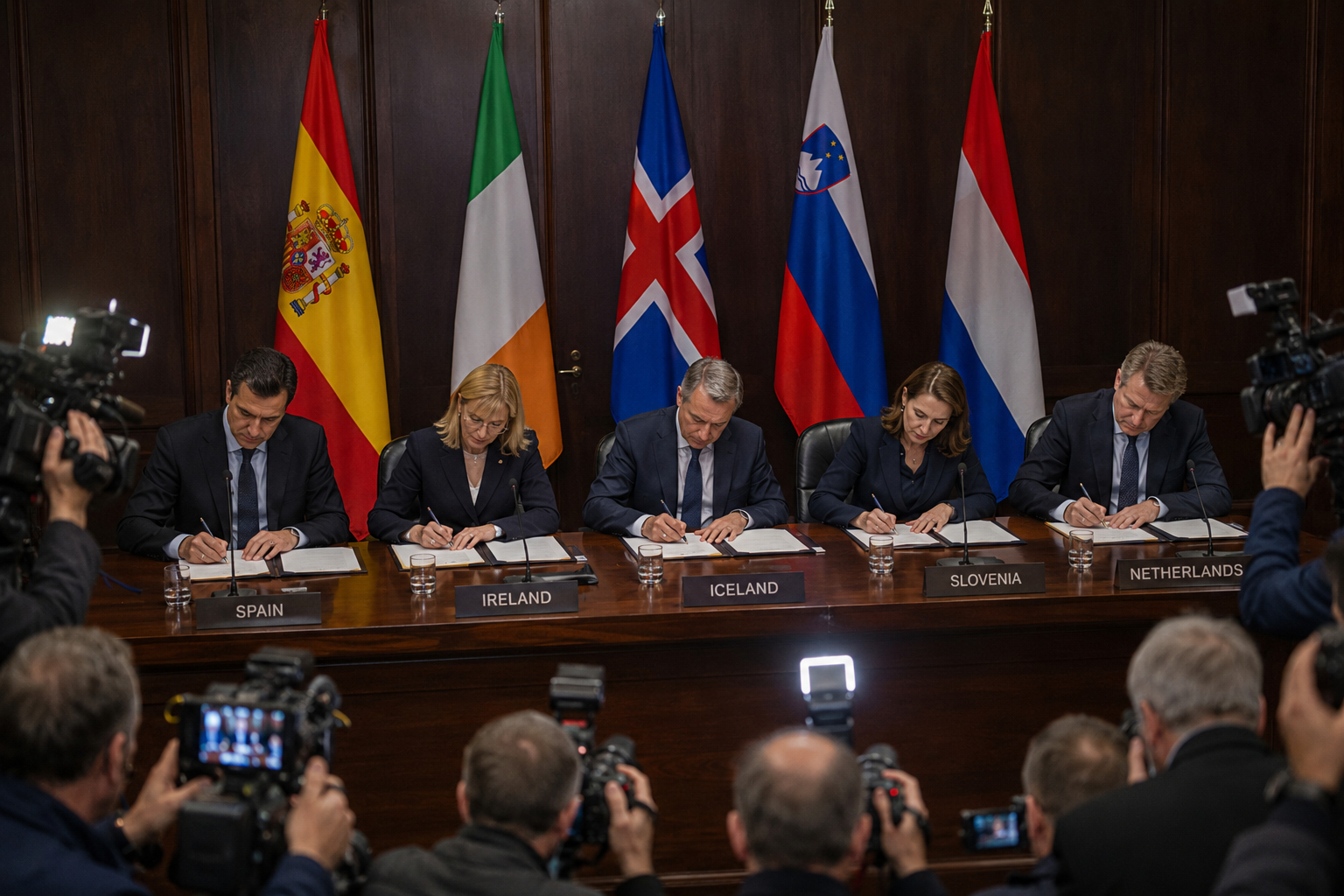
Five countries have officially withdrawn from the Eurovision Song Contest over Israel’s continued participation, as more than 1,100 artists from across the globe signed an open letter demanding the European Broadcasting Union remove the Israeli delegation. The EBU, faced with the largest internal challenge in the contest’s nearly 70-year history, reviewed the petition and refused to put the matter to a vote.
A Contest Built on Unity — Now Torn Apart
Eurovision has long prided itself on being a celebration of music above all else — a space where geopolitics is supposed to stay at the door. But that principle has been tested before. Russia was expelled from the contest in 2022 following its full-scale invasion of Ukraine, setting a precedent that critics of Israel’s inclusion now cite directly. The EBU argued at the time that Russian state broadcaster participation would bring the contest into disrepute. Advocates for Israel’s removal argue the same logic should apply today.
Israel has competed in Eurovision for decades as a member of the European Broadcasting Union, despite not being a European country. Their long-standing inclusion has periodically drawn controversy, but never on this scale.
The Petition, the Refusal, and the Walkouts
The open letter, signed by more than 1,100 artists including Paul Weller, Massive Attack, and Roger Waters, calls on the EBU to remove Israel from this year’s competition. The letter argues that allowing Israel to compete while the war in Gaza continues sends a message that the contest’s values do not extend to accountability for military action.
The EBU declined to put the question of Israel’s exclusion to a member vote — a decision that triggered an immediate wave of withdrawals. Five countries have now officially pulled out of the contest entirely, citing moral objections to competing alongside the Israeli delegation. The EBU has maintained that its charter requires the organization to remain politically neutral, and that exclusion would itself constitute a political act.
The withdrawals mark one of the most significant breakdowns in Eurovision’s history. The contest has survived Cold War tensions, economic crises, and political disputes for nearly seven decades — but the scale of this challenge, with artists and nations both demanding action, is unprecedented.
The Other Side Fires Back
The response from Israel’s supporters has been equally forceful. More than 1,000 industry figures — including actress Helen Mirren and KISS frontman Gene Simmons — signed a counter-letter defending Israel’s right to participate. Their argument centers on the principle that music and artistic expression should remain a universal space, one that cannot and should not be subject to geopolitical gatekeeping.
Supporters of Israel’s inclusion argue that expelling a country’s artists over their government’s actions amounts to collective punishment — targeting performers who have nothing to do with military decisions. The EBU now finds itself caught between two groups of over 1,000 signatories each, with no neutral position available. To exclude is to take a political stand. To include is to take one as well.
What This Means Beyond the Contest
The battle inside Eurovision reflects a broader debate playing out everywhere right now — about where culture and politics intersect, who gets to participate in shared spaces, and whether art can truly remain neutral when wars are being fought. These same arguments are happening in university campuses, corporate boardrooms, and entertainment circles across the world. Eurovision just put them on a global stage.
Stay informed on the stories that matter most. Follow Your Daily Updates on Facebook and bookmark yourdailyupdates.news for breaking news and analysis.