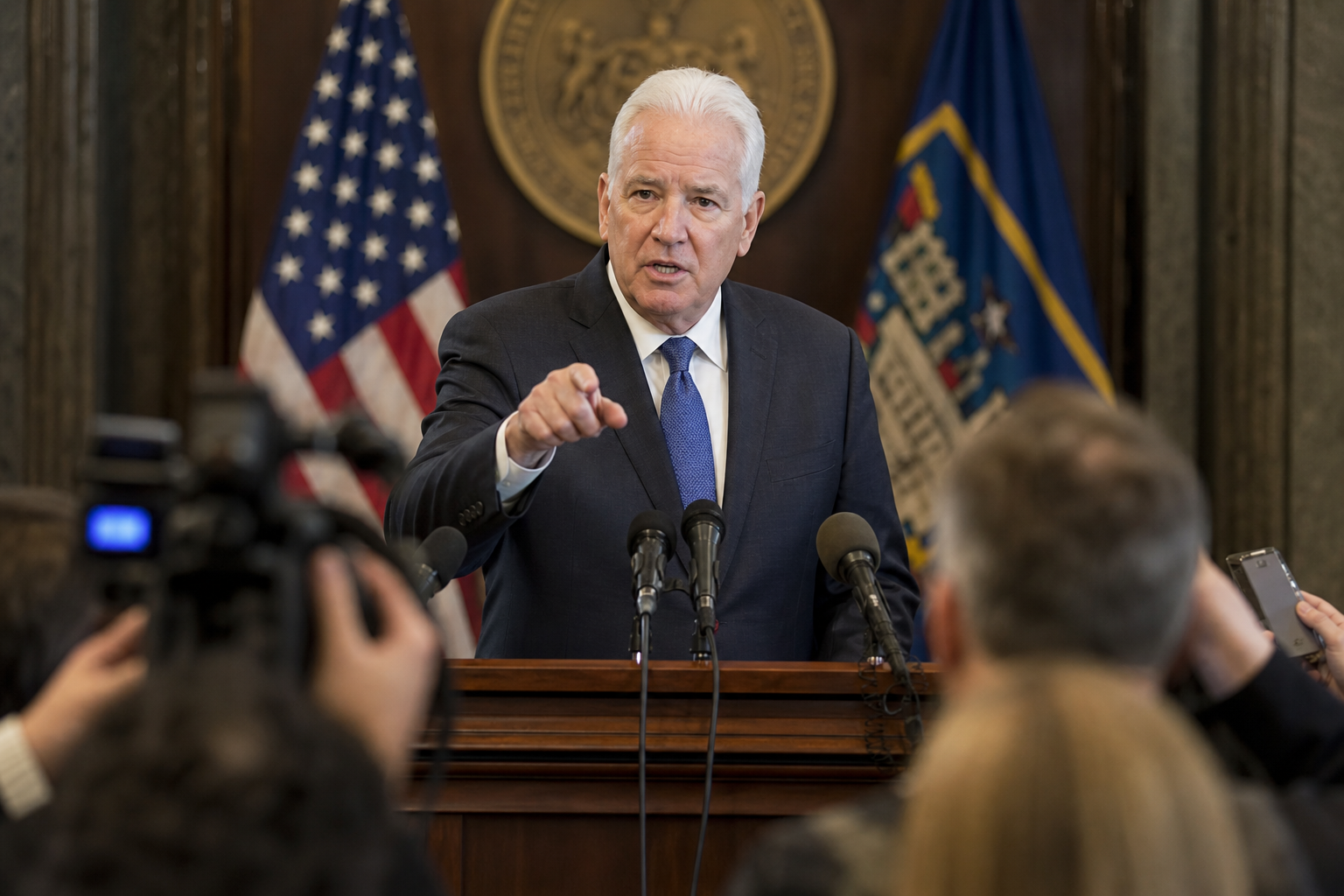
Philadelphia District Attorney Larry Krasner issued a direct warning to associates of the late Jeffrey Epstein this week: a presidential pardon will not shield anyone from state-level prosecution. In a video statement that quickly circulated online, Krasner made clear that his office — and state prosecutors across the country — retain full authority to bring charges that no White House signature can reach.
The Constitutional Reality
The pardon power granted to the president under Article II of the Constitution applies exclusively to federal offenses — crimes committed against the United States. It has no effect on state court proceedings whatsoever. Krasner, a longtime prosecutor and vocal critic of federal overreach, was speaking directly to speculation that potential pardons tied to the Epstein case could close the book on accountability for the powerful figures in Epstein’s orbit.
Epstein died in federal custody in August 2019 under circumstances that remain disputed by millions of Americans. His associate Ghislaine Maxwell was convicted in 2021 on federal sex trafficking charges related to Epstein’s abuse of minors. But a wide network of individuals who allegedly participated in or facilitated Epstein’s crimes has never faced charges of any kind — federal or state.
Why State Charges Are Still on the Table
Krasner’s statement drew a constitutional bright line. Federal crimes — wire fraud, federal sex trafficking, conspiracy — can be pardoned by the president. State crimes cannot. A governor could pardon a state offense, but a president has no such authority. These are entirely separate legal systems operating under separate constitutions.
What makes this particularly significant is the statutes of limitations question. Under many state laws, crimes involving the sexual abuse of minors carry extended or suspended limitation periods. Some states allow victims to bring civil claims or enable prosecutors to file criminal charges well beyond the standard window — particularly when victims were minors at the time of the offense. That means state-level exposure for some individuals in Epstein’s network could still be legally viable, even now, more than six years after Epstein’s death.
Several states have reformed their limitations laws in recent years following sustained pressure from abuse survivors. New York, Florida, and New Mexico — states with direct documented connections to Epstein’s operations — have each updated their statutes in ways that could affect this case. Whether prosecutors in those jurisdictions choose to act is a question of political will, not legal authority.
Reactions and What Comes Next
The statement drew immediate reaction online. Supporters of accountability in the Epstein case called it a signal that the legal system is not done — that doors remain open that many assumed were closed. Critics questioned whether Krasner was grandstanding, noting that his Philadelphia jurisdiction would need a direct nexus to crimes committed in Pennsylvania to file charges.
Legal analysts pointed to New York as the jurisdiction most likely to have both the legal standing and the political environment to act. New York has overhauled its statute of limitations laws and has documented connections to Epstein’s activities. The more pressing question is whether any DA has the evidence, the witnesses, and the will to build a case — and whether victims would be willing to testify in a process that could be years in the making.
What This Means for Americans
For millions of Americans who believe powerful people were shielded from accountability in the Epstein case, Krasner’s message carries real weight. The federal system — where a sweetheart plea deal was struck years ago, charges were sealed, and the case effectively ended when Epstein died in custody — is not the only system. State prosecutors answer to state constitutions, state laws, and state voters. Those systems remain open.
A presidential pardon is not a universal shield. It never was. And if state prosecutors decide to act, no amount of federal clemency will stop them.
Stay informed on the stories that matter most. Follow Your Daily Updates on Facebook and bookmark yourdailyupdates.news for breaking news and analysis.