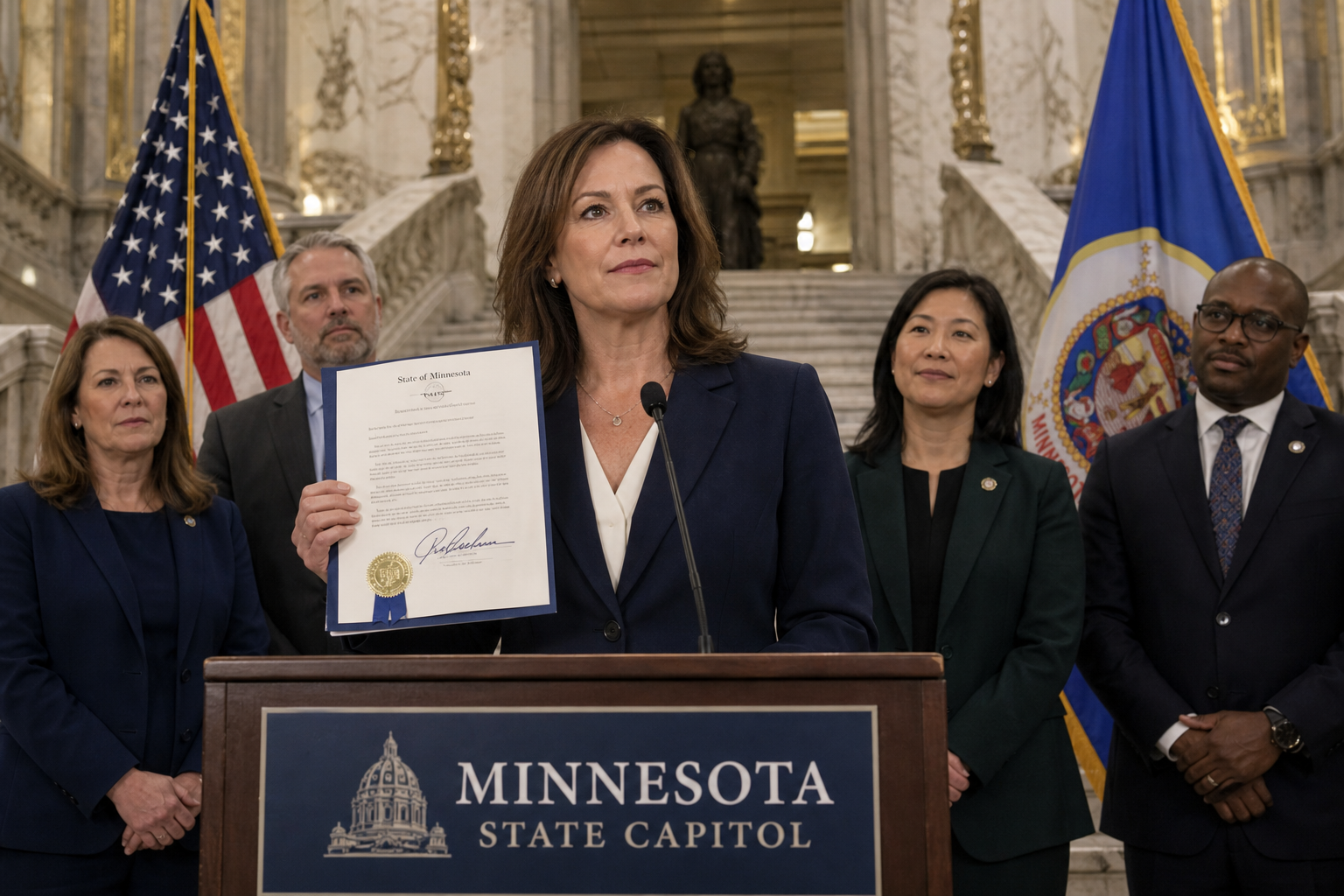
Minnesota made history on April 28, 2026, when the state House passed HF 1606 — the first law in the United States specifically banning AI “nudification” tools. The bill sailed through the chamber by a vote of 132 to 1, a margin that left no doubt about where lawmakers stood.
What Are AI Nudification Tools?
AI nudification tools are apps and websites that use artificial intelligence to generate fake explicit images of real people — taking a normal, fully clothed photo and producing a non-consensual intimate image without the subject’s knowledge or consent. The technology has proliferated rapidly in recent years, enabling widespread image-based abuse against women, teenagers, and children. Victims have no say in the creation or distribution of these images, and until now, the law had struggled to keep pace with how quickly these platforms spread.
Minnesota’s HF 1606 takes a direct approach: instead of only targeting users who create and distribute the images, it goes after the companies that build and operate the platforms themselves. That’s a significant legal shift — and one that legal experts say could set a national precedent.
What the Law Actually Does
Under HF 1606, companies that operate AI nudification tools — particularly those capable of generating child sexual abuse material — face civil penalties of up to $500,000. The law also gives victims the direct right to sue. That private right of action is critical: it means a victim doesn’t have to wait for the government to act. They can take a company to court themselves and seek damages.
The bill was authored by Rep. Jess Hanson, a Democrat from Burnsville. It passed the House on April 28th and a companion bill is now moving through the Minnesota Senate. If both chambers pass the legislation and the governor signs it, Minnesota becomes the first state in the country to specifically outlaw this entire category of AI technology — not just the content it produces, but the tools themselves.
The One ‘No’ Vote — and Why It Matters
Only one lawmaker voted against the bill: Rep. Drew Roach, a Republican from Farmington. His dissent wasn’t a defense of the technology — he was explicit about that. Roach called the material produced by these tools “disgusting” and “vile” and said victims deserve justice. His objection was narrower and procedural: he argued the bill holds software companies responsible for content that individual users choose to create, rather than focusing punishment on those users directly.
Critics of that argument fired back that the bill actually does both. HF 1606 creates liability for the platform operators who make the tools available — but it also preserves victims’ right to pursue individual users in court. Supporters of the bill argued that without platform-level accountability, bad actors will simply keep building new tools as old ones are shut down, and victims will remain trapped in a cycle of litigation against individual perpetrators with no real assets to pursue.
What This Means for Americans
If you have a daughter, a wife, a sister, or a female friend with a social media presence, this law is relevant to you. AI nudification tools have been used to target private citizens — not just celebrities — and the images spread fast once created. This legislation is Minnesota’s answer to a technology that has outpaced the legal system for years. It won’t stop every bad actor, but it puts the companies profiting from these tools on notice: build this, and you’re legally exposed. Whether other states follow Minnesota’s lead now depends on how much political pressure builds from the ground up.
Stay informed on the stories that matter most. Follow Your Daily Updates on Facebook and bookmark yourdailyupdates.news for breaking news and analysis.