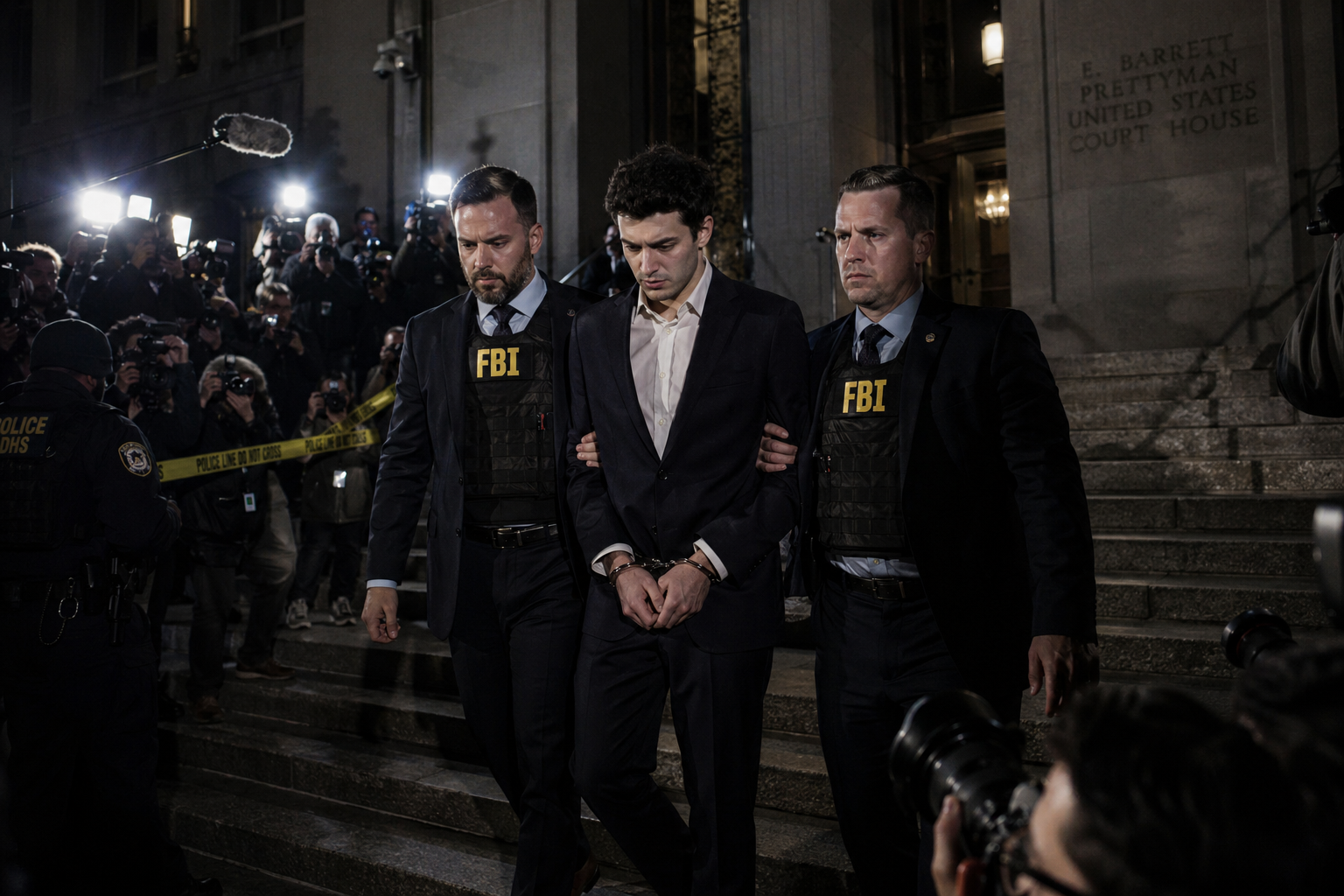
Cole Tomas Allen, a 31-year-old mechanical engineering graduate of Caltech, was arrested at the Washington Hilton on April 25, 2026 — the same night President Trump attended the White House Correspondents’ Dinner — after rushing through a security checkpoint armed with a long gun. Before he left California, he sent a final message to his family. He signed it: “Friendly Federal Assassin.”
Who Is Cole Tomas Allen?
The case is drawing national attention not just for what Allen allegedly did, but for who he is. He is not a career criminal or a known extremist with a prior record of violent threats. Allen is an educated professional who worked as a tutor and was recognized as “Teacher of the Month.” He holds a bachelor’s degree in mechanical engineering from Caltech and a master’s in computer science from California State University, Dominguez Hills.
Federal investigators say Allen spent months filling his social media with anti-Trump writings before making his move. His posts were public. His intentions were, in retrospect, barely concealed. Yet nothing stopped him from loading a long gun into his vehicle and driving across the country toward the President of the United States.
What Happened at the Washington Hilton
On the night of April 25, Allen drove to the Washington Hilton, where Trump was scheduled to appear at the White House Correspondents’ Dinner — one of the most heavily secured annual events on the presidential calendar. Allen approached the venue and ran through a security checkpoint without stopping. He bypassed the magnetometer, discharged his weapon, and was taken into custody by Secret Service and law enforcement personnel within moments. No senior officials were struck in the incident.
The charges he now faces are severe: attempted assassination of the President of the United States, transporting a firearm across state lines with intent to commit a felony, and discharging a firearm during a crime of violence. Federal prosecutors moved swiftly, and Allen was in federal custody within hours.
The Warning Signs Nobody Acted On
What makes this case particularly disturbing is the paper trail Allen left behind. His anti-Trump writings were publicly visible on social media for months. His own family says they had raised concerns about his mental state and behavior before the attempt. And in his final communication before driving to Washington, he didn’t attempt to disguise what he was planning — he signed his farewell message to relatives as “Friendly Federal Assassin,” apparently treating the whole thing as a formal mission.
The incident has reignited a fierce national debate about how a man with this kind of documented, public history was never flagged before reaching the capital. Critics are demanding answers about what social media monitoring did and didn’t catch, and why family concerns raised before the attempt didn’t trigger any intervention. Secret Service and federal law enforcement have not publicly addressed the specific security breakdown, but the questions are reaching the highest levels of government.
A Pattern of Close Calls
This is at least the third widely reported attempt or near-miss involving Trump’s security in recent memory. Butler came first — the bullet that grazed his ear on live television in July 2024. Then the Florida golf course incident. Now this. Each time, there is a burst of outrage, a wave of questions about presidential security, and then — gradually — the urgency fades. Whether Allen’s case produces lasting policy changes to threat detection and venue security protocols remains to be seen.
What This Means for Americans
Most Americans operate under the assumption that the sitting President of the United States is simply unreachable — that the layers of protection between a would-be attacker and the Commander in Chief are impenetrable. Cole Allen’s case challenges that assumption in an uncomfortable way. If a man who publicly branded himself a presidential assassin — in writing, to his own family — can arrive at a major presidential event with a loaded weapon and get close enough to discharge it, the question isn’t just about Trump’s security. It’s about whether the early-warning systems designed to prevent exactly this kind of attack are actually working.
Stay informed on the stories that matter most. Follow Your Daily Updates on Facebook and bookmark yourdailyupdates.news for breaking news and analysis.