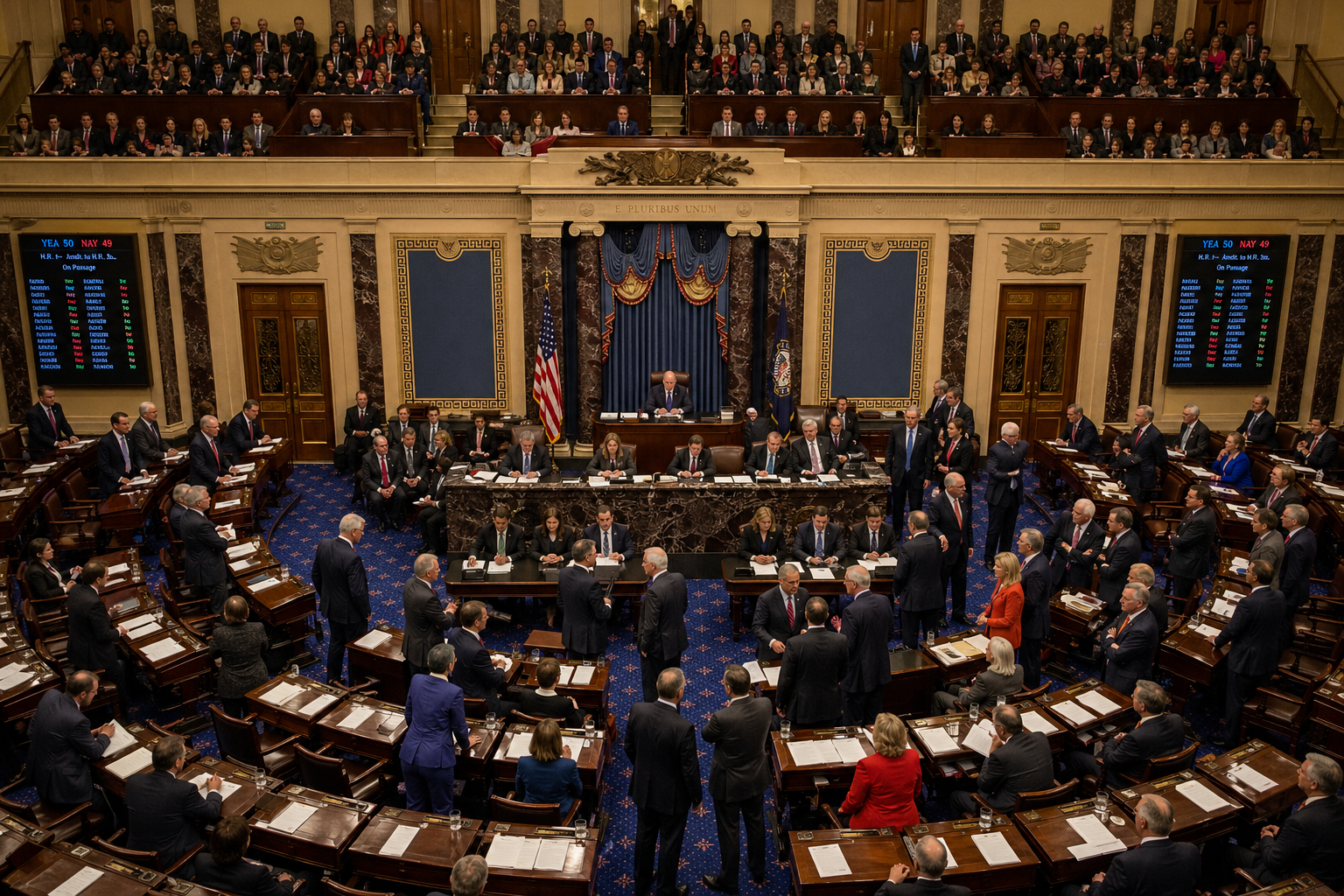
The United States Senate voted 48-50 on Monday to block the SAVE Act — a House-passed bill that would have required Americans to provide documentary proof of U.S. citizenship before registering to vote in federal elections. The vote marks a significant defeat for Republican lawmakers who argued the measure was essential to protecting election integrity.
What the SAVE Act Would Have Done
The Safeguard American Voter Eligibility Act cleared the Republican-controlled House of Representatives with strong GOP support. The bill would have amended the National Voter Registration Act to require that applicants present proof of citizenship — such as a passport, birth certificate, or other government-issued document — when registering to vote in federal elections.
Supporters pointed to what they called a critical gap in the current registration system. Under existing federal law, voters are required to attest under penalty of perjury that they are citizens when registering, but no documentary verification is required. Proponents of the SAVE Act argued this creates a loophole that, while rarely exploited, should be closed before it can influence election outcomes.
The Senate Vote: A Bipartisan Block
The bill failed to reach the 60-vote threshold required to overcome a Democratic filibuster, falling at 48-50. More surprising to many conservatives was who killed it: four Republican senators crossed party lines to vote against advancing the measure. Lisa Murkowski of Alaska, Mitch McConnell of Kentucky, Susan Collins of Maine, and Thom Tillis of North Carolina all joined the unified Democratic caucus in blocking the bill.
Democrats argued the bill would create unnecessary barriers to registration for millions of eligible citizens who may not have easy access to passports or birth certificates — documents that are not universally held, particularly among lower-income Americans, elderly voters, and rural communities.
The Kansas Warning: 31,000 Real Voters Blocked
The debate around the SAVE Act is not theoretical. Kansas enacted a nearly identical citizenship documentation requirement in 2013. Before federal courts struck it down in 2018, Kansas’ own data showed that over 31,000 eligible U.S. citizens had been blocked from registering to vote under the verification requirement. That number — 31,000 real Americans with every legal right to vote — became the central argument for opponents of the SAVE Act at the national level.
Supporters of the measure push back on that figure, arguing the Kansas numbers represented applications placed in a temporary “suspense” file pending verification, not permanent denials, and that the principle of verifying citizenship before voting remains sound even if early implementation was flawed.
What Supporters and Critics Are Saying
Voting rights organizations celebrated the Senate’s vote as a victory against what they characterized as a new form of voter suppression. They argue the bill disproportionately targets the same communities that are already underrepresented at the ballot box. Republican supporters of the bill called the vote a missed opportunity to close a genuine vulnerability in federal election law, and several pledged to bring similar legislation back in future sessions.
The four Republicans who voted against cloture cited concerns ranging from implementation burdens on state election systems to questions about whether the bill’s documentation requirements were too narrow. Their defection almost certainly ends the SAVE Act’s prospects for the current Congress.
What This Means for American Voters
If you vote in federal elections, the rules haven’t changed. But the broader fight over how citizenship is verified at the ballot box is far from over. The SAVE Act’s Senate failure doesn’t end the push — it redirects it. Expect citizenship verification bills to resurface in state legislatures and in the next Congress, particularly as immigration and election integrity continue to dominate political debate heading into the 2026 midterms. The question isn’t whether this debate will return. It’s when.
Stay informed on the stories that matter most. Follow Your Daily Updates on Facebook and bookmark yourdailyupdates.news for breaking news and analysis.