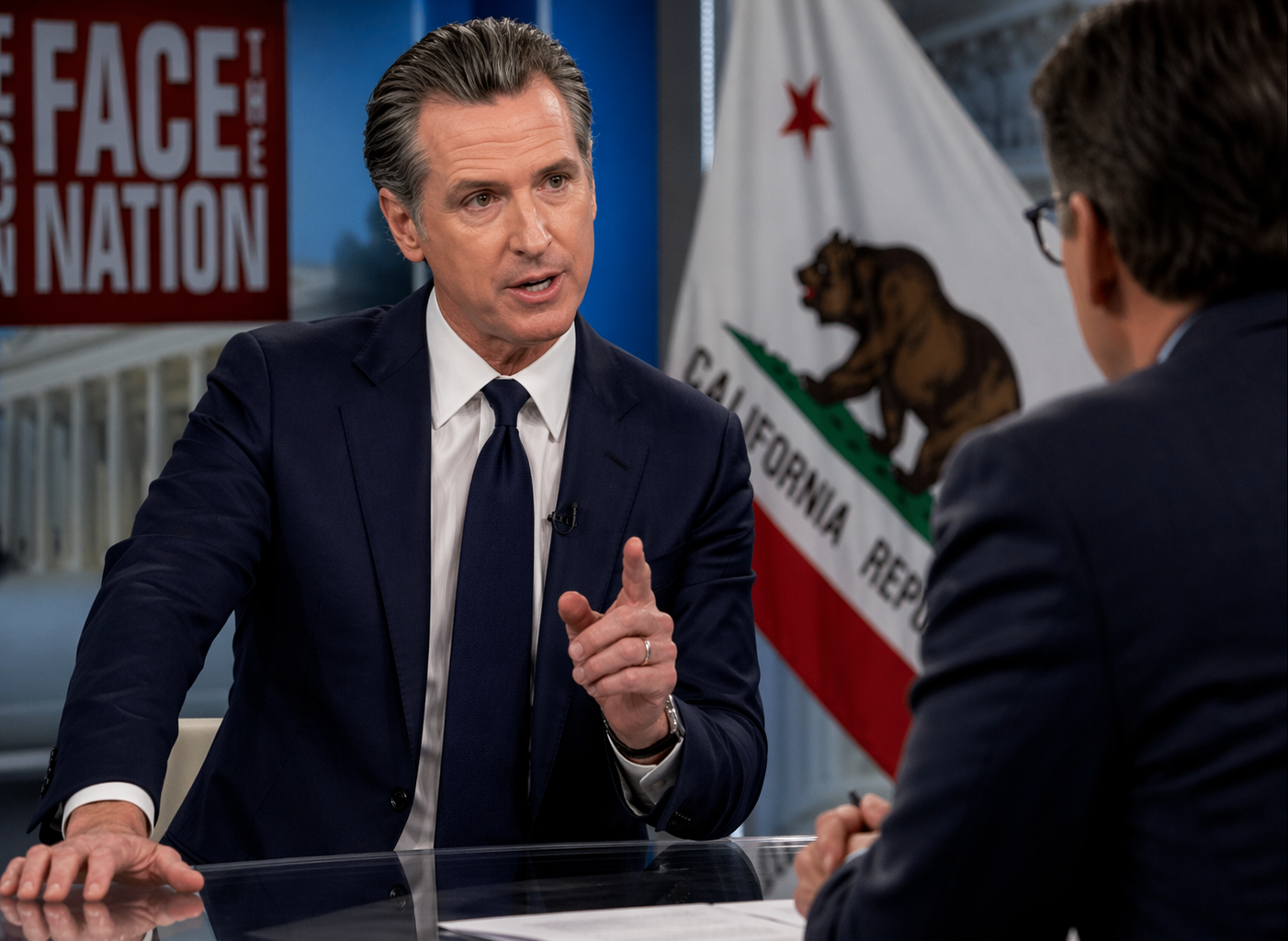
California Governor Gavin Newsom is defending Joe Biden’s record again — and this time, he’s making a claim that’s drawing serious pushback: that Americans were actually better off under the 46th president. During a March 2026 appearance on The Axios Show, Newsom said Biden deserves “more recognition” for what he called a “masterclass of policymaking,” citing the CHIPS Act, the bipartisan infrastructure bill, and the Inflation Reduction Act as proof of an underappreciated presidency.
The Claim vs. The Reality
For millions of Americans who lived through the Biden years, the claim is a hard sell. Inflation peaked at over 9% in June 2022 — the highest rate in four decades — and while the rate has since cooled, prices never came back down to where they were. Groceries, rent, gas, and utilities all climbed steeply, and that price level has largely held. Economists call it “price level persistence.” Most Americans just call it the reason their paycheck doesn’t stretch the way it used to.
Newsom’s argument centers on legislative accomplishments: the bipartisan infrastructure law that is funding roads, bridges, and broadband across the country; the CHIPS Act designed to rebuild domestic semiconductor manufacturing; and the Inflation Reduction Act, which directed hundreds of billions toward clean energy and healthcare. These are real achievements — but they came alongside the sharpest cost-of-living spike in a generation, and many voters felt those wins were invisible compared to what they were paying at checkout.
The Polling Twist
Newsom isn’t making this argument in a vacuum. A February 2026 Axios poll found that, one year into Trump’s second term, a majority of voters looked back more favorably on Biden’s presidency. It’s a pattern that follows nearly every modern presidency — the moment a leader leaves office, nostalgia sets in and approval ratings tick up. Democrats are clearly trying to capitalize on that dynamic as they look toward 2028, framing the Biden era as underappreciated rather than rejected.
The Conservative Counter
Republicans aren’t letting the revisionist history go unanswered. The central argument is simple: if voters were truly better off under Biden, why did they hand Donald Trump a decisive electoral victory in November 2024? The American electorate had a direct opportunity to endorse the Biden record by electing his vice president, Kamala Harris, and they chose not to. Critics argue that Newsom’s framing ignores the clearest possible verdict — the one delivered at the ballot box.
Others point to consumer sentiment data: even before Biden left office, confidence among American consumers had fallen to historic lows in April 2026. That kind of sustained pessimism doesn’t develop in a vacuum — it reflects real, persistent pain that voters experienced under Biden-era economic conditions, regardless of what the headline GDP numbers showed.
Newsom’s Bigger Play
Newsom’s Biden defense almost certainly serves a dual purpose. As the most prominent Democratic voice not named Biden or Harris, he is widely seen as a top contender for the 2028 presidential nomination. Rehabilitating Biden’s image also rehabilitates the Democratic Party’s governing record — and gives Newsom a platform to run on. If he can successfully reframe the Biden years as a success story that voters only appreciate in hindsight, that’s a powerful foundation for a future campaign.
What It Means for You
Whether the argument lands with ordinary Americans is another question entirely. For the family that spent an extra $200 a month on groceries during the Biden years — and is still paying elevated prices today — no amount of legislative scorecard points changes the lived experience. The debate over Biden’s legacy isn’t abstract. It’s about whether the political class is willing to acknowledge what everyday Americans felt, or whether they’ll spend the next two years trying to convince voters their pain wasn’t real.
Stay informed on the stories that matter most. Follow Your Daily Updates on Facebook and bookmark yourdailyupdates.news for breaking news and analysis.